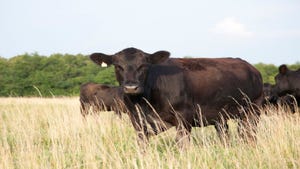
Bull has big impact on beef cattle bottom line

Sep 2, 2009 10:00 AM, By Aimee Nielson, University of Kentucky

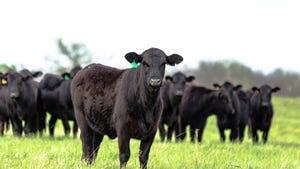
Producers can avoid costly decisions if they go through the proper steps to purchase a bull that fits both their budget and their management and production needs.

Like the rest of the economy, producers in the agricultural livestock sector are feeling the crunch with cattle prices down and operating costs up.

"In these times of economic difficulty, we're all looking for ways to help improve our bottom line," said Darrh Bullock, University of Kentucky Extension beef cattle specialist. "I'm not an economist, but it's pretty clear to me that if you want to improve the bottom line, you have to reduce costs or increase income — or both."

Bullock said a lot of times when cattle producers experience difficult economic times, one of the first areas they look to reduce costs is bull purchases.

"I'm all for commercial beef producers buying a bull that fits their budget," he said, "but you need to be careful that buying a cheap bull now won't cost you dearly in the future."

Bullock said producers can avoid costly decisions if they go through the proper steps to purchase a bull that fits both their budgets and their management and production needs.

One of the first things a producer should consider when purchasing a bull is calving difficulty. Bullock emphasized the importance of finding a bull that meets calving ease needs to save on veterinarian bills and other associated costs. He said producers can also impact their future feed costs by selecting the right genetic match for the environment and management flow of their operations.

"If you have minimal forage quality and/or quantity, the bull's genetics for growth and milk should reflect that if you plan to keep replacement heifers," Bullock said. "If you keep heifers that have high genetic potential for growth and milk, they will demand more feed to remain reproductive. If producers can't meet that demand through forages, they may have to supplement with a large volume of costly purchased feeds to get them bred."

Bullock said that often producers will first try to increase income by increasing the weight of their calves. Weight is important, however, it's the total weight of calves coming off the farm that's the main focus, not individual calf weights, he said.

"That could lead to an imbalanced situation of highly productive cows in a lowly productive environment and that will drive up costs, possibly more than the increased income," he said. "The best way to increase total pounds produced is through improved reproductive efficiency, and the best way to improve reproductive efficiency is to properly match your bull's productivity to the production levels of your operation."

"The moral to this story is that the best way to contain costs and to generate more income when selecting a bull is to find the right bull for your situation, and that might not be the same as your neighbors'," he said.

An operation with high production levels will benefit from a high-producing bull, but the same bull on a less-productive operation may cost the operator more money and income in the future.

Get Copyright ClearanceWant to use this article? Click here for options!
© 2009 Penton Media, Inc.


Latest Jobs

Subscribe to RSS headline updates from:
Powered by FeedBurner

Continuing Education

Accredited in Florida, Georgia, New Mexico, Oklahoma, Texas, South Carolina and Tennessee:


(New Course)
Weed Resistance Management in Cotton

This course covers a wide range of options to effectively control weeds in cotton and reduce the risk of weed resistance management. It is accredited for hours/units for licensed/accredited applicators in 7 U.S. Cotton Belt states (Florida, Georgia, New Mexico, Oklahoma, Texas, South Carolina an d Tennessee. CCA credit is pending).

(New Course)
New Mode of Action Chemistry for Vegetable Production

Integration of a new mode of action compound like Coragen into IPM and IRM programs to control Lepidoptera in leafy greens, fruiting vegetables, peppers and brassica or cole crops is always welcome. This online CE accredited course details how best to use this new mode of action insecticide in intensive vegetable production. It is accredited by the Certified Crop Adviser (CCA) program and by state agencies for licensed applicators in Texas, Georgia, Florida, New Jersey and Pennsylvania.

(New Course)
Utilizing Calcium as Nutrient That Protects Against Disease Organisms

This online accredited course focuses on Calcium, an important plant nutrient in fertilizer management for maximum, healthy plant development as well as disease and pest prevention. It is accredited by the Certified Crop Adviser (CCA) program and for licensed applicators in licensed Georgia, Florida, Pennsylvania and New Jersey. Credit applications are pending in South Carolina, Tennessee, Virginia, West Virginia and Washington.

This course is accredited in Texas, Oklahoma, New Mexico, Virginia, West Virginia and Wyoming as well as for CCA credits:

(New Course)
Spray Drift Management

Keeping crop protection chemicals on the crop for which they are intended has been a cornerstone of farming not only to protect neighboring crops, but to not waste money allowing products to drift off the intended target. This accredited online continuing education course covers the critical elements of spray drift management.

Back to Top

Browse Print Issues

Additional Resources

subscribe to Farm Press Daily Delta Farm Press Southwest Farm Press Western Farm Press