Top Story

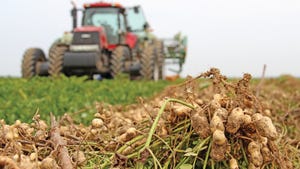
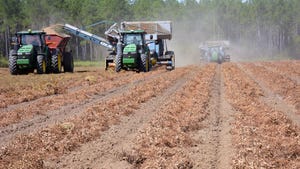
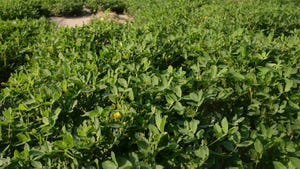
Peanut industry helping solve world hunger

Jul 27, 2010 9:40 AM, By Ron Smith, Farm Press Editorial Staff

Peanuts, in a specially blended formula, have saved tens of thousands of children from death by malnutrition, but if logistic, political and patent battles are resolved, the number could reach into the millions...

Headlines

World needs U.S. cotton

Jul 29, 2010 10:10 AM, By Elton Robinson, Farm Press Editorial Staff

A big U.S. cotton crop could be a much needed salve for U.S. producers and consumers around the world, according to Joe Nicosia, Allenberg president and CEO...

Cattle numbers continue to decline

Jul 29, 2010 10:06 AM, By LeAnn Ormsby, University of Illinois

The nation's beef herd continues to decline. "After several years of financial difficulty, producers show no interest in rebuilding the herd," said Purdue University Extension economist Chris Hurt...

Virginia’s farmland losses slow

Jul 29, 2010 10:03 AM

The Virginia Department of Agriculture and Consumer Services announced earlier this month that loss of farmland to development appears to be slowing in the Commonwealth...

Mid-century water shortage projected

Jul 29, 2010 9:52 AM

More than 1,100 U.S. counties — more than one-third of all counties in the lower 48 states — now face higher risks of water shortages by mid-century as the result of global warming and more than 400 of these counties will be at extremely high risk for water shortages, based on estimates from a new report by Tetra Tech for the Natural Resources Defense Council (NRDC)...

Crop insurance: Cuts, consequences

Jul 28, 2010 9:55 AM, By David Bennett, Farm Press Editorial Staff

Crop insurance companies are warning that farmers will soon have fewer coverage options and fewer agents to interact with...

How do we double exports in five years?

Jul 28, 2010 9:52 AM

The American Farm Bureau Federation (AFBF), the Coalition of Service Industries (CSI) and the National Association of Manufacturers (NAM) have put forth a comprehensive approach to double U.S. exports in five years — a key goal of President Obama’s...

Lincoln comments on catfish inspections

Jul 28, 2010 9:44 AM, By David Bennett, Farm Press Editorial Staff

Questions about the inspection of imported seafood continue to dog the USDA. Arkansas Sen. Blanche Lincoln had the following to say during a July 22 press conference announcing the release of a study on the risks and consequences of not ramping up inspections...

Southeast Farm Press News Archive

Commentaries

Long on cash, short on character

By Elton Robinson, Farm Press Editorial Staff

The housing bust is now creeping into high-priced neighborhoods. According to a recent article in the New York Times, rich folks are walking out on their mortgages in record numbers...

Economic recovery: $825 shirts, $3,000 shoes, a $72 million house

By Hembree Brandon, Farm Press Editorial Staff

Hmm, did I miss something, or did somebody not get the message that the economy is in the tank and conspicuous consumption has been supplanted by fiscal conservatism...

Featured Photo Galleries

2010 Mid-South Farm & Gin Show

2010 High Cotton Winners

Page Two

Cottonseed industry prepares for big crush

Jul 27, 2010 9:35 AM

More cotton acres, favorable weather and strong food industry demand could boost cottonseed oil production 25 percent in 2010-11...

Check out our new blog!

Subscribe to RSS headline updates from:
Powered by FeedBurner

Across the Sunbelt

Resistant weeds in Louisiana?

Through mid-July, Louisiana’s growing season has seen patchy rains, pest worries and increasing fears of resistant weeds...

Rolling Plains producers consider canola

Growing interest has been sparked by some success of winter canola on the Rolling Plains...

California Crop Weather report

The latest California Crop Weather report from the National Agricultural Statistics Service’s Sacramento, Calif., Field Office...

INTERACT WITH US:


Biofuels without credits?

View the new video archive page!

Subscribe to RSS headline updates from:
Powered by FeedBurner

Continuing Education

Accredited in Florida, Georgia, New Mexico, Oklahoma, Texas, South Carolina and Tennessee:


(New Course)
Weed Resistance Management in Cotton

This course covers a wide range of options to effectively control weeds in cotton and reduce the risk of weed resistance management. It is accredited for hours/units for licensed/accredited applicators in 7 U.S. Cotton Belt states (Florida, Georgia, New Mexico, Oklahoma, Texas, South Carolina an d Tennessee. CCA credit is pending).

(New Course)
New Mode of Action Chemistry for Vegetable Production

Integration of a new mode of action compound like Coragen into IPM and IRM programs to control Lepidoptera in leafy greens, fruiting vegetables, peppers and brassica or cole crops is always welcome. This online CE accredited course details how best to use this new mode of action insecticide in intensive vegetable production. It is accredited by the Certified Crop Adviser (CCA) program and by state agencies for licensed applicators in Texas, Georgia, Florida, New Jersey and Pennsylvania.

(New Course)
Utilizing Calcium as Nutrient That Protects Against Disease Organisms

This online accredited course focuses on Calcium, an important plant nutrient in fertilizer management for maximum, healthy plant development as well as disease and pest prevention. It is accredited by the Certified Crop Adviser (CCA) program and for licensed applicators in licensed Georgia, Florida, Pennsylvania and New Jersey. Credit applications are pending in South Carolina, Tennessee, Virginia, West Virginia and Washington.

This course is accredited in Texas, Oklahoma, New Mexico, Virginia, West Virginia and Wyoming as well as for CCA credits:

(New Course)
Spray Drift Management

Keeping crop protection chemicals on the crop for which they are intended has been a cornerstone of farming not only to protect neighboring crops, but to not waste money allowing products to drift off the intended target. This accredited online continuing education course covers the critical elements of spray drift management.

New Course
The ABCs of MRLs

American agriculture exports 20 to 30 percent of its production annually. For specific commodities, the percentage is much higher. When recommending and applying pest management products for crops, license Pest Control Advisers (PCAs)  and applicators and farmers must be aware of which products applied are in compliance with Maximum Residue Limits (MRLs) established by foreign customers. This CE course details the MRL issue and why compliance is critical to marketing into world trade.

Browse Print Issues

Additional Resources

subscribe to Farm Press Daily Delta Farm Press Southwest Farm Press Western Farm Press