Equipment rental benefits Kentucky growers

Feb 23, 2009 10:22 AM, By Chris Aldridge
Kentucky Department of Agriculture

Want to give farming a try, but you don’t have the money to buy some of the expensive farm equipment you’ll need?

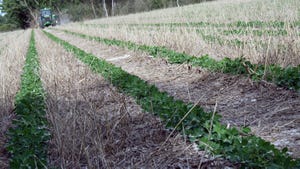
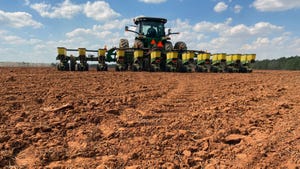
No problem if you live in Lincoln County, Ky. Thanks to a grant from the Kentucky Agricultural Development Fund, Lincoln County Farm Bureau can rent you a no-till drill, lime spreader, silage baler, bale wrapper or fence post driver for a fraction of the cost of buying them yourself.

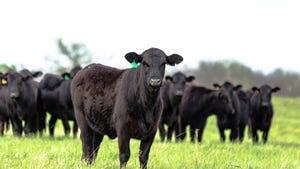
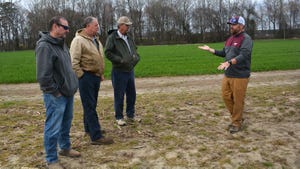
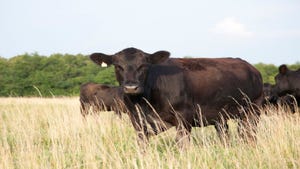
“Most of our farm operations are small,” said Lincoln County Extension Agent Dan Grigson. “Most of our beef producers have only 30 cows, and our dairies are in the 50- to 70-cow range, so they can’t justify the high cost of those machines.

“Thanks to the Shared-use Equipment Program, all our farmers have to pay is a rental fee. They might spend $1,000 or less to use a machine, where there’s no way they could spend $14,000 to $15,000 to buy it.”

Grigson said the availability of 21 pieces of farm equipment for rent has created a noticeable difference in Lincoln County agriculture in the program’s six years of existence.

“It’s had a big economic impact on our beef, dairy and forage production,” he said. “We’ve seen better weight gain on our beef cattle, and milk production has gone up.

“Without those dollars, that equipment could not have reached the roughly 200 farmers (per year) who are using it. The program has been very, very successful down here.”

In 2007, 109 Lincoln County farmers used the no-till drills to seed 2,662 acres, 16 collected 1,472 bales of hay, and 57 wrapped 4,200 bales in plastic to protect them from the elements.

The long summer drought of 2007 caused poor forage yields and, thus, less baling. A more typical year was 2006, when the equipment created more than 2,000 bales and wrapped in excess of 6,000.

“The wrappers alone have been a tremendous help to our livestock industry,” Grigson said. “Many farmers got to use one for the first time and saw how it improved the quality of their hay, resulting in better milk and beef production.”

The Shared-use Equipment Program has even benefited local farm equipment retailers.

“Guys who liked the wrapper went out and bought their own, or two or three got together and bought one,” Grigson said. “Now we have 20-plus wrappers in the county. When the program started (in 2003), I only knew of two.”

The Kentucky Agricultural Development Fund was created by the Kentucky General Assembly in the 2000 session to invest half of Kentucky’s share of master tobacco settlement funds in agricultural development projects. The state had invested $279 million by the end of 2008. The Agricultural Development Board, which oversees the fund, is led by Agriculture Commissioner Richie Farmer and Gov. Steve Beshear.

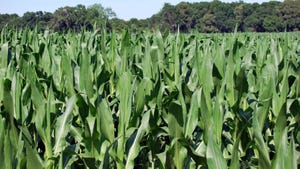
Lincoln County was fifth in the state in alfalfa production in 2007 at 17,760 tons, according to the Kentucky field office of the National Agricultural Statistics Service. County farmers raised 55,840 tons of hay other than alfalfa. In 2006, the county had 38,850 tons of alfalfa and 80,000 tons of all other hay.

Lincoln County was sixth in cattle and calves with 54,400, eighth in beef cows with 23,000, and eighth in milk production with 51.1 million pounds in 2007.

Get Copyright ClearanceWant to use this article? Click here for options!
© 2009 Penton Media, Inc.


Latest Jobs

resources

events icon events

product info icon tradeshows

tradeshow icon digests

research icon photos

Continuing Education

Accredited in Florida, Georgia, New Mexico, Oklahoma, Texas, South Carolina and Tennessee:


(New Course)
Weed Resistance Management in Cotton

This course covers a wide range of options to effectively control weeds in cotton and reduce the risk of weed resistance management. It is accredited for hours/units for licensed/accredited applicators in 7 U.S. Cotton Belt states (Florida, Georgia, New Mexico, Oklahoma, Texas, South Carolina an d Tennessee. CCA credit is pending).

(New Course)
New Mode of Action Chemistry for Vegetable Production

Integration of a new mode of action compound like Coragen into IPM and IRM programs to control Lepidoptera in leafy greens, fruiting vegetables, peppers and brassica or cole crops is always welcome. This online CE accredited course details how best to use this new mode of action insecticide in intensive vegetable production. It is accredited by the Certified Crop Adviser (CCA) program and by state agencies for licensed applicators in Texas, Georgia, Florida, New Jersey and Pennsylvania.

(New Course)
Utilizing Calcium as Nutrient That Protects Against Disease Organisms

This online accredited course focuses on Calcium, an important plant nutrient in fertilizer management for maximum, healthy plant development as well as disease and pest prevention. It is accredited by the Certified Crop Adviser (CCA) program and for licensed applicators in licensed Georgia, Florida, Pennsylvania and New Jersey. Credit applications are pending in South Carolina, Tennessee, Virginia, West Virginia and Washington.

This course is accredited in Texas, Oklahoma, New Mexico, Virginia, West Virginia and Wyoming as well as for CCA credits:

(New Course)
Spray Drift Management

Keeping crop protection chemicals on the crop for which they are intended has been a cornerstone of farming not only to protect neighboring crops, but to not waste money allowing products to drift off the intended target. This accredited online continuing education course covers the critical elements of spray drift management.

Back to Top

Browse Print Issues

Additional Resources

subscribe to Farm Press Daily Delta Farm Press Southwest Farm Press Western Farm Press