Economy weighing on beef cattle markets

Dec 3, 2008 9:41 AM, By Blair Fannin
Texas A&M University

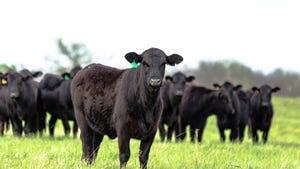
It’s a mixed bag when trying to predict the future of the calf and feeder cattle markets, but there may be some good news heading into 2009, according to a Texas AgriLife Extension Service economist.

“We may see (cattle) prices better than 2008 simply because of where we are in supplies,” says David Anderson.

A continued reduction in beef cattle numbers due to dry weather and higher input costs could cause prices to edge higher in 2009, according to Anderson.

For the short-term, recent price swings in cattle futures have been a direct result of a declining stock market. These factors have lowered prices paid in the calf and feeder markets, Anderson said.

“If we go into a deep recession, we could see some more pullback,” he said. “People are eating out less and grocery store spending is going up. We’re seeing that more people are doing more home cooking.”

Stocker cattle operators are using caution as wheat pastures continue to emerge this fall.

“They’re very cautious right now,” Anderson said. “It’s a wait-and-see approach with the current financial state of the economy.”

The livestock industry is currently in a “cost-price squeeze,” Anderson said. Production inputs, which include everything from feed to fuel, are higher than in years past and those costs are incurred throughout the beef-production chain.

“Even though corn (futures) have moved under $4 a bushel, and we’re seeing some retrenchment in feed costs, these are still very high feed costs,” Anderson said. “And we can’t rule out the speculative fund activity which has affected commodity prices. That’s having an effect on the cattle market.”

Anderson said there’s a current tug-of-war going on in the calf market. Tighter supplies are keeping prices higher for calves, but there’s also the high cost of feed. “(With) the state of the economy, calf prices in the spring may be below what we saw this year,” he said. “We still had fairly high prices during the first part of this year. However, I think we will see higher calf prices during the second quarter of next year. What we may see at the end of 2009 may be higher than now due to tighter calf supplies.”

Right now, there’s incentive to market heavier calves to help feeder operators offset high feed costs.

“If you have grass and a way to hang onto those calves, there’s an opportunity there to make more money by holding onto them into next year,” he said.

For the feeder cattle market, Anderson said he also expects to see prices better than 2008 due to reduced supplies.

“And there’s still good demand for beef,” he said, “If prices stay in the 90s (per hundred weight), that’s still better than where we were in the first quarter of 2008.”

Spring 2009 predictions, according to Anderson, could result in 500-600-pound steers averaging $1.05 a pound for No. 1 steers.

Due to declines in wheat prices, Anderson said, there may be more incentive to have stocker cattle graze those pastures and cash in on the weight gain. Weather will play a big factor in determining that outcome, he said.

Get Copyright ClearanceWant to use this article? Click here for options!
© 2009 Penton Media, Inc.


Latest Jobs

resources

events icon events

product info icon tradeshows

tradeshow icon digests

research icon photos

Continuing Education

Accredited in Florida, Georgia, New Mexico, Oklahoma, Texas, South Carolina and Tennessee:


(New Course)
Weed Resistance Management in Cotton

This course covers a wide range of options to effectively control weeds in cotton and reduce the risk of weed resistance management. It is accredited for hours/units for licensed/accredited applicators in 7 U.S. Cotton Belt states (Florida, Georgia, New Mexico, Oklahoma, Texas, South Carolina an d Tennessee. CCA credit is pending).

(New Course)
New Mode of Action Chemistry for Vegetable Production

Integration of a new mode of action compound like Coragen into IPM and IRM programs to control Lepidoptera in leafy greens, fruiting vegetables, peppers and brassica or cole crops is always welcome. This online CE accredited course details how best to use this new mode of action insecticide in intensive vegetable production. It is accredited by the Certified Crop Adviser (CCA) program and by state agencies for licensed applicators in Texas, Georgia, Florida, New Jersey and Pennsylvania.

(New Course)
Utilizing Calcium as Nutrient That Protects Against Disease Organisms

This online accredited course focuses on Calcium, an important plant nutrient in fertilizer management for maximum, healthy plant development as well as disease and pest prevention. It is accredited by the Certified Crop Adviser (CCA) program and for licensed applicators in licensed Georgia, Florida, Pennsylvania and New Jersey. Credit applications are pending in South Carolina, Tennessee, Virginia, West Virginia and Washington.

This course is accredited in Texas, Oklahoma, New Mexico, Virginia, West Virginia and Wyoming as well as for CCA credits:

(New Course)
Spray Drift Management

Keeping crop protection chemicals on the crop for which they are intended has been a cornerstone of farming not only to protect neighboring crops, but to not waste money allowing products to drift off the intended target. This accredited online continuing education course covers the critical elements of spray drift management.

Back to Top

Browse Print Issues

Additional Resources

subscribe to Farm Press Daily Delta Farm Press Southwest Farm Press Western Farm Press