University of Georgia gets corn improvement grant

Sep 29, 2004 9:42 AM, By Cat Holmes, University of Georgia

The University of Georgia was recently awarded a $5.6 million grant for work that could one day lead to the development of artificial chromosomes in corn.

The ability to create artificial chromosomes would provide crop geneticists a quantum leap in their ability to create corn varieties adapted to specific production needs.

“Right now we work with one trait at a time instead of the whole shebang,” says Wayne Parrott, a UGA crop geneticist and co-investigator of the new grant. “It's a very time-consuming process.”

And while simple traits, such as drought tolerance or insect resistance, are time-consuming enough, many of the traits, such as pigmentation or oil expression, are complex traits.

“The greatly limiting step is getting (multiple traits) to work together,” Parrott says.

Artificial chromosomes would allow scientists to compile a “package” of desired traits in a test tube and then put it in the corn. “It's the difference between having access to a book or an entire library,” says Parrott.

And once artificial chromosomes are developed for corn, Parrott says, the lion's share of the work is done for other crops as well.

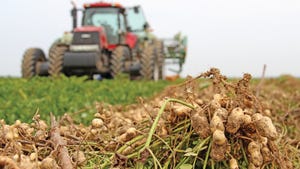
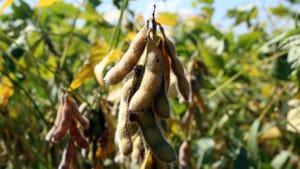
“Once you have this package for corn, with very little modification you should be able to put it in soybeans, cotton or peanuts,” he says.

The current focus of the work is centromeres, the middle part of a cell's chromosomes.

“We know that chromosomes have ends and a middle,” Parrott explains. “The ends are highly conserved. That means there is no difference between the ends of your chromosomes and that of a plant.

“However, in the middle of the chromosomes, the centromere, very little is conserved, even between very related species. That has made it tough to elucidate.”

Scientists do know that the centromere is very important in keeping the chromosome stable in the cell, a quality that's critical for plant breeding.

To study the centromere, “we had to ramp up the industry standard,” Parrott says. Typically, scientists engineer little snippets of DNA, only about 20,000 base pairs.

For this study, the scientists studied and engineered 150,000 base pairs at once. “That's the difference between a little Cesna aircraft and a 747 jumbo jet in terms of complexity and effort,” Parrott says.

The scientists, who include James Birchler of the University of Missouri, Jiming Jiang of the University of Wisconsin, Gernot Prestling of the University of Hawaii and the grant's principal investigator, Kelly Dawe of UGA, now have a good grasp of the sequence of the corn centromere.

“Part of the key is (that) centromeres have an off and on switch to make them work,” Parrott says. “It's not so much the sequence of the centromere as the shape, how it's folded, that determines this off and on switch.”

Part of the work now is to determine how to turn that off-and- on switch better, Parrott says. It sounds simple but will involve a tremendous amount of research and work.

Get Copyright ClearanceWant to use this article? Click here for options!
© 2010 Penton Media, Inc.


Latest Jobs

Subscribe to RSS headline updates from:
Powered by FeedBurner

Continuing Education

Accredited in Florida, Georgia, New Mexico, Oklahoma, Texas, South Carolina and Tennessee:


(New Course)
Weed Resistance Management in Cotton

This course covers a wide range of options to effectively control weeds in cotton and reduce the risk of weed resistance management. It is accredited for hours/units for licensed/accredited applicators in 7 U.S. Cotton Belt states (Florida, Georgia, New Mexico, Oklahoma, Texas, South Carolina an d Tennessee. CCA credit is pending).

(New Course)
New Mode of Action Chemistry for Vegetable Production

Integration of a new mode of action compound like Coragen into IPM and IRM programs to control Lepidoptera in leafy greens, fruiting vegetables, peppers and brassica or cole crops is always welcome. This online CE accredited course details how best to use this new mode of action insecticide in intensive vegetable production. It is accredited by the Certified Crop Adviser (CCA) program and by state agencies for licensed applicators in Texas, Georgia, Florida, New Jersey and Pennsylvania.

(New Course)
Utilizing Calcium as Nutrient That Protects Against Disease Organisms

This online accredited course focuses on Calcium, an important plant nutrient in fertilizer management for maximum, healthy plant development as well as disease and pest prevention. It is accredited by the Certified Crop Adviser (CCA) program and for licensed applicators in licensed Georgia, Florida, Pennsylvania and New Jersey. Credit applications are pending in South Carolina, Tennessee, Virginia, West Virginia and Washington.

This course is accredited in Texas, Oklahoma, New Mexico, Virginia, West Virginia and Wyoming as well as for CCA credits:

(New Course)
Spray Drift Management

Keeping crop protection chemicals on the crop for which they are intended has been a cornerstone of farming not only to protect neighboring crops, but to not waste money allowing products to drift off the intended target. This accredited online continuing education course covers the critical elements of spray drift management.

New Course
The ABCs of MRLs

American agriculture exports 20 to 30 percent of its production annually. For specific commodities, the percentage is much higher. When recommending and applying pest management products for crops, license Pest Control Advisers (PCAs)  and applicators and farmers must be aware of which products applied are in compliance with Maximum Residue Limits (MRLs) established by foreign customers. This CE course details the MRL issue and why compliance is critical to marketing into world trade.

Back to Top

Browse Print Issues

Additional Resources

subscribe to Farm Press Daily Delta Farm Press Southwest Farm Press Western Farm Press