Commentary: Renewable fuels are coming of age

Sep 28, 2006 8:24 AM, By Under Secretary Thomas C. Dorr
United States Department of Agriculture

Renewable fuels are coming of age and that's great for rural America. As the nation works to reduce our dependence on foreign sources of oil, the potential for renewable fuels on the agricultural economy can be summed up in three words: positive, significant and imminent.

The road to energy independence runs through the farm, and USDA Rural Development is playing a key role in encouraging the new agriculture economy represented by the renewable fuels industry.

Since the beginning of the Bush Administration, USDA Rural Development has invested $420.6 million in renewable energy and energy efficiency projects and in doing so has leveraged over $1.3 billion in private investment. We're not alone in this effort. Other USDA agencies are also working to increase America's renewable fuel output. In 2006 alone, USDA's outlay for bioenergy and biobased product development will total an estimated $272 million. The Department of Energy is also a key player in this effort.

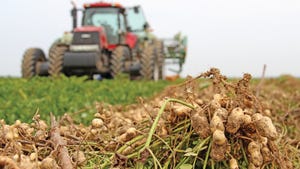
This emergence of renewable fuels has been long in the making. Renewable energy is not new: Rudolf Diesel ran some of his early engines on peanut oil, and as far back as the 1920s Henry Ford thought ethanol would be the fuel of the future.

For most of the last century, however, abundant and cheap petroleum dominated the transportation fuel market. But thanks to soaring oil costs, that era is coming to an end.

Ethanol and biodiesel production in the U.S. is skyrocketing. America last year produced 4 billion gallons of ethanol, and that figure is expected to rise to 10 billion gallons by 2010. Biodiesel production has risen from an insignificant 500,000 gallons per year in 1999 to 245 million gallons this year. Demand for these fuels is having a positive impact on corn and soybean prices.

While the future for biofuels — and other renewable energy sources including wind, solar and geothermal — is bright, much is still to be done in the area of research and development. With that in mind, the Department of Energy and USDA will co-host an important conference "Advancing Renewable Energy, An American Rural Renaissance." This event, which will be held in St. Louis, Mo., from Oct. 10-12, will bring together leaders from across the spectrum of government and the renewable fuels industry to promote clean, domestically produced renewable energy. I encourage you to attend and hope you will visit www.advancingrenewableenergy.com for details.

This gathering furthers the objectives outlined in President Bush's Advanced Energy Initiative (AEI). Even before he took office, the President was a leader in the effort to increase energy production here at home. He advanced a comprehensive energy strategy in 2001, led the fight to enact the Energy Policy Act of 2005, and outlined an accelerated strategy for new energy technologies — the AEI — in his most recent State of the Union Address.

As the President has emphasized, America is clearly awash in energy potential. The challenge is funding the research and development needed to unlock these resources and get them to market. This is urgent: some studies have shown that America's energy demand could increase by 30 percent by the year 2030. While America's energy output is also expected to increase, demand is projected to outstrip supply.

The drive for energy independence will therefore continue. While high energy costs pose a challenge for farm economies (the cost of energy for farms has doubled since 2003) rural America is also poised to reap substantial benefits from energy production.

Renewable energy is rural energy. Through the construction of wind farms, fuel production facilities and even geothermal sites, many locally owned, new sources of jobs and wealth are being created. This wealth will help renew rural America, creating a renaissance that will not only boost rural America, but will benefit our nation for generations to come.

Get Copyright ClearanceWant to use this article? Click here for options!
© 2010 Penton Media, Inc.


Latest Jobs

Subscribe to RSS headline updates from:
Powered by FeedBurner

Continuing Education

Accredited in Florida, Georgia, New Mexico, Oklahoma, Texas, South Carolina and Tennessee:


(New Course)
Weed Resistance Management in Cotton

This course covers a wide range of options to effectively control weeds in cotton and reduce the risk of weed resistance management. It is accredited for hours/units for licensed/accredited applicators in 7 U.S. Cotton Belt states (Florida, Georgia, New Mexico, Oklahoma, Texas, South Carolina an d Tennessee. CCA credit is pending).

(New Course)
New Mode of Action Chemistry for Vegetable Production

Integration of a new mode of action compound like Coragen into IPM and IRM programs to control Lepidoptera in leafy greens, fruiting vegetables, peppers and brassica or cole crops is always welcome. This online CE accredited course details how best to use this new mode of action insecticide in intensive vegetable production. It is accredited by the Certified Crop Adviser (CCA) program and by state agencies for licensed applicators in Texas, Georgia, Florida, New Jersey and Pennsylvania.

(New Course)
Utilizing Calcium as Nutrient That Protects Against Disease Organisms

This online accredited course focuses on Calcium, an important plant nutrient in fertilizer management for maximum, healthy plant development as well as disease and pest prevention. It is accredited by the Certified Crop Adviser (CCA) program and for licensed applicators in licensed Georgia, Florida, Pennsylvania and New Jersey. Credit applications are pending in South Carolina, Tennessee, Virginia, West Virginia and Washington.

This course is accredited in Texas, Oklahoma, New Mexico, Virginia, West Virginia and Wyoming as well as for CCA credits:

(New Course)
Spray Drift Management

Keeping crop protection chemicals on the crop for which they are intended has been a cornerstone of farming not only to protect neighboring crops, but to not waste money allowing products to drift off the intended target. This accredited online continuing education course covers the critical elements of spray drift management.

New Course
The ABCs of MRLs

American agriculture exports 20 to 30 percent of its production annually. For specific commodities, the percentage is much higher. When recommending and applying pest management products for crops, license Pest Control Advisers (PCAs)  and applicators and farmers must be aware of which products applied are in compliance with Maximum Residue Limits (MRLs) established by foreign customers. This CE course details the MRL issue and why compliance is critical to marketing into world trade.

Back to Top

Browse Print Issues

Additional Resources

subscribe to Farm Press Daily Delta Farm Press Southwest Farm Press Western Farm Press