Farmers having their say at hearings, but is anybody listening?

May 12, 2006 9:40 AM, By Paul Hollis Farm Press Editorial Staff

U.S. farmers find themselves in an anxious position these days, with their own government appearing to be hell-bent on placing agriculture on the scrap-heap along with textiles and other industries that have practically become non-existent in this country.

To their credit, the commodity groups and organizations that lobby for farmers have worked with the current Administration and Congress to insure a “fair shake” for farmers in the upcoming farm bill. But it hasn’t done much good. It has resulted in broken promises — promises that were made when the current farm bill was passed and signed into law.

There has been an extreme amount of posturing by our government to give the appearance of “listening” to farmers, and finding out what they want from a new farm bill. The much-ballyhooed listening sessions held throughout the country were a prime example. Having attended two of these, I’m still not sure to whom our secretary of agriculture was listening. Or maybe he was listening but it didn’t really matter what the farmers said — decisions already have been made on the shape and size of our next farm legislation, and nothing said at the hearings would make a difference.

U.S. Secretary of Agriculture Mike Johanns reportedly listened to more than 66 hours of farmer testimony, yet he continued to criticize the 2002 farm bill and warned farmers that world trade would dictate future legislation.

Southeastern farmers who have appeared at the various listening sessions and Congressional hearings could not have been clearer about their positions — there should be no confusion over what they expect from the next farm bill.

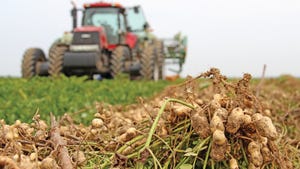
Mike Newberry, a fourth-generation family farmer from Early County, Ga., told a farm bill panel that it is critical for Congress to provide adequate budget authority in order to craft an effective farm bill. Testifying recently at one in a series of hearings being held by the U.S. House Agriculture Subcommittee on General Farm Commodities and Risk Management, Newberry said, “Secondly, we understand that the outcome of the current DOHA trade negotiations could impact the makeup of our next farm bill. Peanut producers are very concerned about granting market access to less developed countries,” said Newberry.

He added, “Given the challenges of these two critical policy areas, we support the continuation of the current structure of farm programs as contained in the 2002 Act. The combination of direct and counter-cyclical payments provides an effective means of income support, especially in periods of low prices, without distorting planting decisions. We strongly support continuation of a marketing loan program without limitations so we can be competitive in domestic and international markets,” he said.

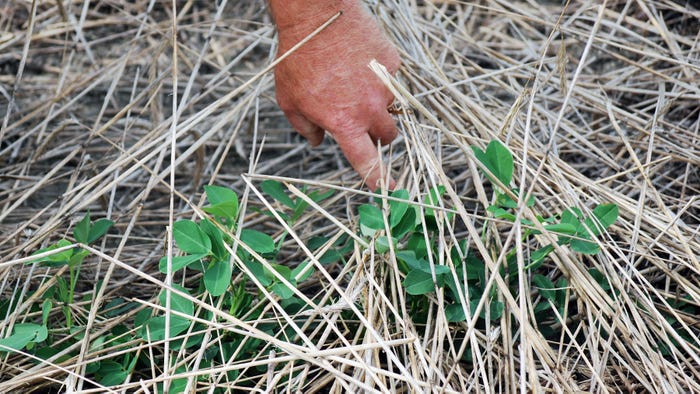
Currently, limitations on payment limits unfairly penalize highly efficient operations that include combinations of high-value crops such as cotton, peanuts and rice, said Newberry. “We believe Congress should at the very least maintain current limits, including a separate limit for peanuts.”

Maybe it’s time that farmers and those who lobby for farmers’ benefits and rights stop “playing nice” with our current appointed and elected officials, perhaps take a cue from Henry David Thoreau, who pioneered the modern theory of civil disobedience. Thoreau refused to pay taxes back in the 1800s as an act of protest against slavery and against the Mexican-American War. He argued that you don’t have to physically fight a government with which you disagree, but you can show, in very clear terms, that you don’t agree with its position.

If an issue like immigration can cause hundreds of thousands of protestors to take to the streets, surely agriculture — and maintaining our independence in food production — can do just as well.

e-mail: phollis@farmpress.com

Get Copyright ClearanceWant to use this article? Click here for options!
© 2010 Penton Media, Inc.


Latest Jobs

Subscribe to RSS headline updates from:
Powered by FeedBurner

Continuing Education

Accredited in Florida, Georgia, New Mexico, Oklahoma, Texas, South Carolina and Tennessee:


(New Course)
Weed Resistance Management in Cotton

This course covers a wide range of options to effectively control weeds in cotton and reduce the risk of weed resistance management. It is accredited for hours/units for licensed/accredited applicators in 7 U.S. Cotton Belt states (Florida, Georgia, New Mexico, Oklahoma, Texas, South Carolina an d Tennessee. CCA credit is pending).

(New Course)
New Mode of Action Chemistry for Vegetable Production

Integration of a new mode of action compound like Coragen into IPM and IRM programs to control Lepidoptera in leafy greens, fruiting vegetables, peppers and brassica or cole crops is always welcome. This online CE accredited course details how best to use this new mode of action insecticide in intensive vegetable production. It is accredited by the Certified Crop Adviser (CCA) program and by state agencies for licensed applicators in Texas, Georgia, Florida, New Jersey and Pennsylvania.

(New Course)
Utilizing Calcium as Nutrient That Protects Against Disease Organisms

This online accredited course focuses on Calcium, an important plant nutrient in fertilizer management for maximum, healthy plant development as well as disease and pest prevention. It is accredited by the Certified Crop Adviser (CCA) program and for licensed applicators in licensed Georgia, Florida, Pennsylvania and New Jersey. Credit applications are pending in South Carolina, Tennessee, Virginia, West Virginia and Washington.

This course is accredited in Texas, Oklahoma, New Mexico, Virginia, West Virginia and Wyoming as well as for CCA credits:

(New Course)
Spray Drift Management

Keeping crop protection chemicals on the crop for which they are intended has been a cornerstone of farming not only to protect neighboring crops, but to not waste money allowing products to drift off the intended target. This accredited online continuing education course covers the critical elements of spray drift management.

New Course
The ABCs of MRLs

American agriculture exports 20 to 30 percent of its production annually. For specific commodities, the percentage is much higher. When recommending and applying pest management products for crops, license Pest Control Advisers (PCAs)  and applicators and farmers must be aware of which products applied are in compliance with Maximum Residue Limits (MRLs) established by foreign customers. This CE course details the MRL issue and why compliance is critical to marketing into world trade.

Back to Top

Browse Print Issues

Additional Resources

subscribe to Farm Press Daily Delta Farm Press Southwest Farm Press Western Farm Press