South Carolina wants reports of cogongrass

May 10, 2007 9:48 AM, By Tom Lollis
Clemson University


Cogongrass, one of the world’s worst weeds, has begun flowering in South Carolina. “We’ll be seeing blooms from now through June, and South Carolinians need to keep an eye out for it and report it to their county Extension office or the Clemson University Department of Plant Industry if they think they’ve seen it,” said George Kessler, Clemson professor of forest resources.

“The first cogongrass in flower seen in South Carolina was recently found at a site in Hampton County, just down the road from a formerly identified site,” he said. The site has been treated and will be monitored.

Cogongrass has now been found in seven South Carolina counties — Allendale, Anderson, Aiken, Beaufort, Charleston, Hampton and Pickens.

A native of Asia, cogongrass spreads through wind-blown seed and rhizomes, and once established it can choke out native plants, destroy sources of food for wildlife and raise the potential for forest fires, according to Kessler.

“Cogongrass poses a special problem,” said Steve Compton, one of the regulatory agents with DPI. “People find the white, fluffy seed heads attractive and some dig it up for home gardens.” His department has aggressively encouraged plant retailers and nurseries to remove cogongrass varieties from their inventories.

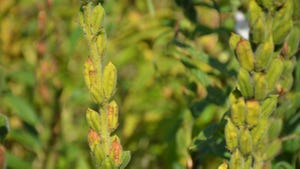
The flower, or seedhead, is silvery white in color, cylindrical in shape, and ranges in length from 2 to 8 inches. The seeds are light and fluffy, similar to the seeds on a mature dandelion.

More identification information can be found on the Internet at www.cogongrass.org/identification.cfm.

Kessler said that information, brochures, posters and assistance with cogongrass identification can be found at local Clemson Extension offices and local South Carolina Forestry Commission offices.

“Please notify these offices or the Department of Plant Industry at (864) 646-2130 if you think you have seen the plant in your area,” he said.

e-mail: tlollis@clemson.edu

Get Copyright ClearanceWant to use this article? Click here for options!
© 2008 Penton Media, Inc.


Latest Jobs

resources

events icon events

product info icon tradeshows

tradeshow icon digests

research icon photos

Continuing Education

For National Certified Crop Advisers

A free, accredited, self-study 1-CEU on spray drift management for all for all American Society of Agronomy Certified Crop Advisers in the U.S. and Canada.

ACCREDITED IN CALIFORNIA ONLY:


Almond Pest Management

Get the latest info on almond insect pest management and earn 2 hrs. CE DPR and CCA credit in California.

California Groundwater Protection Regulations

Earn 2 hrs. in California laws and regs CE and learn how to protect California groundwater supplies.

Powdery Mildew Control in California Grapevines

Learn about the No. 1 grape disease in California; earn 2 California CE hours.

ACCREDITED IN CALIFORNIA AND ARIZONA:


Insecticide Resistance Management in Agronomic and Row Crops

A 3-hr. CE approved for California and Arizona licensees and CCAs in both states.

Agronomic Weed Resistance Management in Row Crops, Trees Nuts and Vines

Weeds Resistance Management is approved for 3 hours of CE credit for all California and Arizona licensees and Certified Crop Advisers.

Lepidopterous Pest Management/ Pesticide Safety

This course is approved for 2 hours in Arizona and California (1 hr. of laws/regs; 1 hour Other) and for CCAs.

Managing Spray Drift to Minimize Problems

2-hrs laws and regs for California licensees; 2 hours in Arizona and for CCAs.

Back to Top

Browse Print Issues

Additional Resources

subscribe to Farm Press Daily Delta Farm Press Southwest Farm Press Western Farm Press