ASA urges China to accept greater access for agricultural imports

Mar 31, 2006 8:22 AM

American Soybean Association (ASA) Vice-President Gary Joachim has stressed the importance of opening the Chinese market to further agricultural imports in the current Doha round of World Trade Organization (WTO) trade negotiations.

Joachim testified during a Senate Finance Committee hearing March 29 on U.S./China economic relations where he cited preliminary analysis that China will account for between 35 and 40 percent of total world agricultural trade gains from a new WTO agreement.

A soybean farmer from Owatonna, Minn., Joachim presented findings of the analysis prepared by the American Farm Bureau Federation. He said, "Unless China is a full participant in the market access negotiations, it is doubtful there can be enough expansion in trade to justify the concessions the United States has offered on reducing trade-distorting domestic support."

Noting concerns of some Members of Congress with China’s $200 billion trade surplus with the United States, Joachim encouraged the Committee "to ensure that China undertakes full market access commitments in the Doha negotiations, and that the number of agricultural commodities that can be designated as Sensitive or Special Products be extremely limited."

As an alternative to imposing punitive tariffs on Chinese imports and facing potential retaliation on U.S. exports to China, Joachim added, "this course of action would increase U.S. agricultural exports to China, rather than causing them to be further restricted.

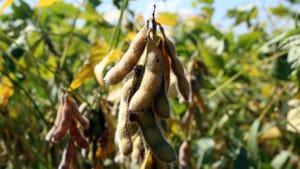
"It is impossible to overstate the importance of China as a market for U.S. soybeans, and prospects for continued growth are excellent," Joachim said.

In 1996, the United States sold $414 million worth of soybeans to China — a significant market at that time. Last year, the value of U.S. soybean exports reached a record of nearly $3 billion — a seven-fold increase in a decade in which China emerged as the largest foreign buyer of U.S. soybeans. The 405 million bushels of U.S. soybeans exported to China in 2005 represented 40 percent of total U.S. soybean exports, and 13.5 percent of last year’s U.S. soybean harvest.

According to the preliminary Farm Bureau analysis, China will play a significant role in the final economic impact of a WTO agreement on global agricultural trade. Assuming that China is subject to whatever market access commitments are required of developing countries, the analysis indicates that China would account for 35-40 percent of total world agricultural trade gains from a new WTO agreement. This amount includes 85-90 percent of increased global trade in soybeans and soybean oil, and 40-45 percent of the trade gain for soybean meal. China would also account for a substantial amount of the increase in world trade for other agricultural commodities: wheat (85-90 percent), corn (60-65 percent), barley (50-55 percent), poultry (45-50 percent), and beef (35-40 percent).

ASA is the policy advocate for 25,000 U.S. soybean producers on domestic and international issues of importance to all U.S.

Get Copyright ClearanceWant to use this article? Click here for options!
© 2009 Penton Media, Inc.


Latest Jobs

resources

events icon events

product info icon tradeshows

tradeshow icon digests

research icon photos

Continuing Education

Accredited in Florida, Georgia, New Mexico, Oklahoma, Texas, South Carolina and Tennessee:


(New Course)
Weed Resistance Management in Cotton

This course covers a wide range of options to effectively control weeds in cotton and reduce the risk of weed resistance management. It is accredited for hours/units for licensed/accredited applicators in 7 U.S. Cotton Belt states (Florida, Georgia, New Mexico, Oklahoma, Texas, South Carolina an d Tennessee. CCA credit is pending).

(New Course)
New Mode of Action Chemistry for Vegetable Production

Integration of a new mode of action compound like Coragen into IPM and IRM programs to control Lepidoptera in leafy greens, fruiting vegetables, peppers and brassica or cole crops is always welcome. This online CE accredited course details how best to use this new mode of action insecticide in intensive vegetable production. It is accredited by the Certified Crop Adviser (CCA) program and by state agencies for licensed applicators in Texas, Georgia, Florida, New Jersey and Pennsylvania.

(New Course)
Utilizing Calcium as Nutrient That Protects Against Disease Organisms

This online accredited course focuses on Calcium, an important plant nutrient in fertilizer management for maximum, healthy plant development as well as disease and pest prevention. It is accredited by the Certified Crop Adviser (CCA) program and for licensed applicators in licensed Georgia, Florida, Pennsylvania and New Jersey. Credit applications are pending in South Carolina, Tennessee, Virginia, West Virginia and Washington.

This course is accredited in Texas, Oklahoma, New Mexico, Virginia, West Virginia and Wyoming as well as for CCA credits:

(New Course)
Spray Drift Management

Keeping crop protection chemicals on the crop for which they are intended has been a cornerstone of farming not only to protect neighboring crops, but to not waste money allowing products to drift off the intended target. This accredited online continuing education course covers the critical elements of spray drift management.

Back to Top

Browse Print Issues

Additional Resources

subscribe to Farm Press Daily Delta Farm Press Southwest Farm Press Western Farm Press