USDA proposes new BSE import rules

Jan 25, 2007 9:16 AM

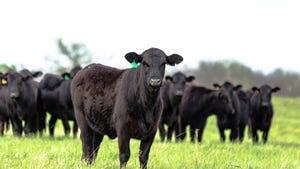
The U.S. Department of Agriculture's Animal and Plant Health Inspection Service has announced a proposal to expand the list of allowable imports from countries recognized as presenting a minimal risk of introducing bovine spongiform encephalopathy (BSE) into the United States.

Currently, Canada is the only minimal-risk country designated by the United States.

"This proposal would continue to protect against BSE in the United States while taking the next step forward in our efforts to implement science-based trade relations with countries that have appropriate safeguards in place to prevent BSE," said Agriculture Secretary Mike Johanns.

"We previously recognized Canada's comprehensive set of safeguards and we have now completed a risk assessment confirming that additional animals and products can be safely traded. Our approach is consistent with science-based international guidelines."

The proposal expands upon a rule published by APHIS in January 2005 that allowed the importation of certain live ruminants and ruminant products, including cattle under 30 months of age for delivery to a slaughterhouse or feedlot, from countries recognized as minimal-risk. In the rule announced today, APHIS is proposing to allow the importation of:

• Live cattle and other bovines for any use born on or after, March 1, 1999, the date determined by APHIS to be the date of effective enforcement of the ruminant-to-ruminant feed ban in Canada.

• Blood and blood products derived from bovines, collected under certain conditions.

• Casings and part of the small intestine derived from bovines.

Meat and meat products from animals of any age, with specified risk materials removed, were addressed in the January 2005 final rule.

In March 2005, APHIS published a notice of a delay of applicability of certain provisions of that rule. This delay affected only meat and meat products from animals 30 months of age or older. If the proposed rule announced today is made final, it would be consistent to lift the delay and also allow the importation of these products.

As part of the proposal, APHIS conducted a thorough risk assessment following guidelines put forth by the World Organization for Animal Health, or OIE, and found that the risk associated with these commodities is minimal. This assessment evaluated the entire risk pathway, including mitigations in place both in Canada and the United States.

The assessment included evaluating the likelihood of introduction of BSE via imports, the likelihood of animal exposure if this were to occur and the subsequent consequences. All of these were combined to give the overall minimal risk estimation.

It is important to note that BSE transmission is prevented in bovines by a series of safeguards, including; slaughter controls and dead animal disposal, rendering inactivation, feed manufacturing and use controls, and biologic limitations to susceptibility. These layers of protection work together to prevent spread of the disease.

In the United States, human health is protected by a system of interlocking safeguards that ensure the safety of U.S. beef. The most important of these safeguards is the ban on specified risk materials from the food supply and the Food and Drug Administration's ruminant-to-ruminant feed ban. Canada has similar safeguards in place.

The risk assessment concluded that for all the commodities considered under the current proposal, the risk of BSE infectivity is minimal and the disease will not become established in the United States. The proposed rule was published in the Jan. 9, 2007 Federal Register and is available at www.aphis.usda.gov .

APHIS invites comments on this proposed rule. Consideration will be given to comments received on or before March 12, 2007. Send an original and three copies of postal mail or commercial delivery comments to Docket No. APHIS-2006-0041, Regulatory Analysis and Development, PPD, APHIS, Station 3A-03.8, 4700 River Road, Unit 118, Riverdale, Md. 20737-1238. If you wish to submit a comment using the Internet, go to the Federal eRulemaking portal at http://www.regulations.gov , select "Animal and Plant Health Inspection Service" from the agency drop-down menu; then click on "Submit." In the Docket ID column, select APHIS-2006-0041 to submit or view public comments and to view the proposal and the supporting and related materials available electronically.

Comments are posted on the Regulations.gov Web site and may also be viewed at USDA, Room 1141, South Building, 14th St. and Independence Ave., S.W., Washington, D.C., between 8 a.m. and 4:30 p.m., Monday through Friday, excluding holidays. To facilitate entry into the comment reading room, please call (202) 690-2817.

Get Copyright ClearanceWant to use this article? Click here for options!
© 2009 Penton Media, Inc.


Latest Jobs

resources

events icon events

product info icon tradeshows

tradeshow icon digests

research icon photos

Continuing Education

Accredited in Florida, Georgia, New Mexico, Oklahoma, Texas, South Carolina and Tennessee:


(New Course)
Weed Resistance Management in Cotton

This course covers a wide range of options to effectively control weeds in cotton and reduce the risk of weed resistance management. It is accredited for hours/units for licensed/accredited applicators in 7 U.S. Cotton Belt states (Florida, Georgia, New Mexico, Oklahoma, Texas, South Carolina an d Tennessee. CCA credit is pending).

(New Course)
New Mode of Action Chemistry for Vegetable Production

Integration of a new mode of action compound like Coragen into IPM and IRM programs to control Lepidoptera in leafy greens, fruiting vegetables, peppers and brassica or cole crops is always welcome. This online CE accredited course details how best to use this new mode of action insecticide in intensive vegetable production. It is accredited by the Certified Crop Adviser (CCA) program and by state agencies for licensed applicators in Texas, Georgia, Florida, New Jersey and Pennsylvania.

(New Course)
Utilizing Calcium as Nutrient That Protects Against Disease Organisms

This online accredited course focuses on Calcium, an important plant nutrient in fertilizer management for maximum, healthy plant development as well as disease and pest prevention. It is accredited by the Certified Crop Adviser (CCA) program and for licensed applicators in licensed Georgia, Florida, Pennsylvania and New Jersey. Credit applications are pending in South Carolina, Tennessee, Virginia, West Virginia and Washington.

This course is accredited in Texas, Oklahoma, New Mexico, Virginia, West Virginia and Wyoming as well as for CCA credits:

(New Course)
Spray Drift Management

Keeping crop protection chemicals on the crop for which they are intended has been a cornerstone of farming not only to protect neighboring crops, but to not waste money allowing products to drift off the intended target. This accredited online continuing education course covers the critical elements of spray drift management.

Back to Top

Browse Print Issues

Additional Resources

subscribe to Farm Press Daily Delta Farm Press Southwest Farm Press Western Farm Press