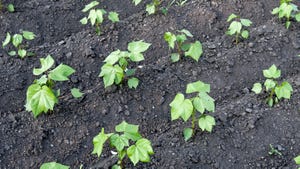
The International Cotton Advisory Committee is projecting world cotton production will fall 5 percent to 103 million bales in the 2009-10 marketing year; potentially sending cotton prices 9 percent higher....
From the American Soybean Association
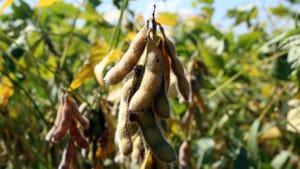
Soybean farming has changed dramatically since 1920. ...
The Virginia Department of Agriculture and Consumer Services (VDACS) is offering Virginia specialty producers the opportunity to introduce their products to the upscale Japanese market through a partnership with the Southern United States Trade Association (SUSTA). ...
By Elton Robinson, Farm Press Editorial Staff
Extremes of weather throughout the growing and harvest seasons have prompted USDA to lower projections for the 2009 U.S. cotton crop. ...
Strong export and crush demand and a tighter-than-expected supply report from the Agriculture Department on Oct. 9 should mean an improving price picture for soybeans, according to Terry Francl, senior economist with the American Farm Bureau Federation....
By April Sorrow, University of Georgia
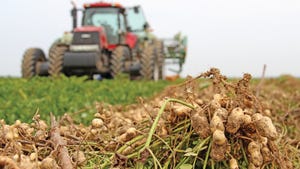
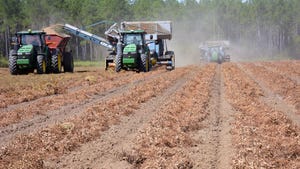
Peanut harvest is under way in Georgia, and farmers are on track to set record-breaking yields for the state, say University of Georgia peanut experts....
Members from the Texas Peanut Producers Board (TPPB) and the American Peanut Council (APC) traveled oversees last month to meet with the Japan Nut Association and U.S. Embassy trade officials to look for ways to promote and increase imports of American peanuts into Japan....
By Cary Blake, Farm Press Editorial Staff
U.S. cotton prices in 2009-2010 are expected to flounder between 57 and 65 cents per pound as the U.S. tries to market a crop of about 13 million bales, according to Jarral Neeper, president of Calcot, the grower-owned cotton marketing cooperative based in Bakersfield, Calif....
The American Soybean Association (ASA) has signed a Joint Communiqué with Taiwanese grain and oilseed buyers that describes Taiwan’s intentions to purchase 3 million to 3.2 million metric tons (equivalent to 110 to 118 million bushels) of U.S. soybeans during 2010 and 2011. ...
By Katie Pratt, University of Kentucky
Over the past year, a shift has occurred in the grain markets, which has made prices considerably lower than the record highs seen in the summer of 2008....
advertisement

This course covers a wide range of options to effectively control weeds in cotton and reduce the risk of weed resistance management. It is accredited for hours/units for licensed/accredited applicators in 7 U.S. Cotton Belt states (Florida, Georgia, New Mexico, Oklahoma, Texas, South Carolina an d Tennessee. CCA credit is pending).
Integration of a new mode of action compound like Coragen into IPM and IRM programs to control Lepidoptera in leafy greens, fruiting vegetables, peppers and brassica or cole crops is always welcome. This online CE accredited course details how best to use this new mode of action insecticide in intensive vegetable production. It is accredited by the Certified Crop Adviser (CCA) program and by state agencies for licensed applicators in Texas, Georgia, Florida, New Jersey and Pennsylvania.
(New Course)This online accredited course focuses on Calcium, an important plant nutrient in fertilizer management for maximum, healthy plant development as well as disease and pest prevention. It is accredited by the Certified Crop Adviser (CCA) program and for licensed applicators in licensed Georgia, Florida, Pennsylvania and New Jersey. Credit applications are pending in South Carolina, Tennessee, Virginia, West Virginia and Washington.
Keeping crop protection chemicals on the crop for which they are intended has been a cornerstone of farming not only to protect neighboring crops, but to not waste money allowing products to drift off the intended target. This accredited online continuing education course covers the critical elements of spray drift management.