New test detects bone disease in Red Angus

What is in this article?:

• A bone disorder that affects humans, cattle, and other animals, osteopetrosis is characterized by overly dense yet brittle bones that shatter easily.

• Calves that suffer from the mutation have deformed skulls, receding lower jaws, and protruding tongues. They usually are stillborn or die within 24 hours of birth.

• Breeders now have a test they can use to manage the defect, identify cattle that may be carriers, and make decisions on whether the animal’s other traits make it valuable enough to continue using it for breeding.

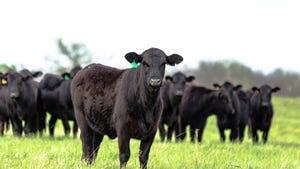
Photo: USDA

When a rare and deadly birth defect called “marble bone disease” struck Black Angus cattle in the 1960s, producers had little alternative but to cull all animals related to affected calves in an effort to get rid of the mutation.

When the same disorder resurfaced in Red Angus 3 years ago, scientists had a better and less costly option: Develop a DNA test to identify carriers responsible for the disease.

The return of marble bone disease, also known as “osteopetrosis,” became a high priority for Larry Keenan, director of breed improvement at the Red Angus Association of America (RAAA) in Denton, Texas.

To stop it from spreading, Keenan teamed up with Tim Smith, a chemist in the Genetics and Breeding Research Unit at the Agricultural Research Service’s Roman L. Hruska U.S. Meat Animal Research Center (USMARC) at Clay Center, Nebraska, and Jonathan Beever, a molecular geneticist at the University of Illinois in Champaign.

A bone disorder that affects humans, cattle, and other animals, osteopetrosis is characterized by overly dense yet brittle bones that shatter easily.

Calves that suffer from the mutation have deformed skulls, receding lower jaws, and protruding tongues. They usually are stillborn or die within 24 hours of birth.

Though osteopetrosis is not common in cattle, it has been reported in Hereford, Simmental, Holstein, and Angus breeds in the past, Smith says.

“Calves have to inherit the mutation from both parents,” he says. With the recent incident in the Northern Plains, there was significant concern because the breed’s most popular bull was related to some of the animals that had produced osteopetrosis-affected calves.

“A lot of calves were indirectly linked to that bull, so breeders wanted to make sure they weren’t continuously putting the DNA for the disease into their herd,” adds geneticist Tara McDaneld at USMARC.

Smith, McDaneld, Beever, and geneticist Tad Sonstegard at the Henry A. Wallace Beltsville [Maryland] Agricultural Research Center collaborated with veterinary researchers at the University of Nebraska and University of Wyoming to identify the gene mutation responsible for the disorder and to develop a diagnostic test that identifies osteopetrosis carriers.

Discuss this article 0

Post new comment
Sign In or register to use your Southeast Farm Press ID
(optional)

Continuing Education Courses
New Course

The 2,000-member Weed Science Society of America’s (WSSA) Herbicide Resistance...

New Course
The course details six of the primary diseases affecting citrus: Huanglongbing (Citrus...
Potassium nitrate has a positive effect in controlling plant pests and diseases when applied...
Farmer-to-Farmer Used Equipment