Kentucky exploring alternative possibilities for switchgrass

Good source of grazing, hay

• The advantage of switchgrass over other biomass crops is that it is a dual purpose crop that can be used for grazing or hay, in addition to biomass.

• Native, warm-season grasses are often seen as lower quality forages, but when harvested or grazed at the correct stage, switchgrass can provide quality forage, especially during hot, dry summers.

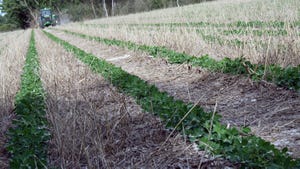
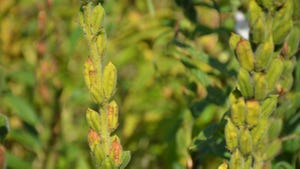
A SWITCHGRASS field in Bracken County that was cut for hay twice this summer.

Photo by Katie Pratt, University of Kentucky

Five years ago, University of Kentucky Cooperative Extension Service agents and forage specialists began working with northeastern Kentucky farmers on a project to produce switchgrass for biomass.

Now, they are jointly exploring other possibilities for the native, warm-season grass.

“The advantage of switchgrass over other biomass crops is that it is a dual purpose crop that can be used for grazing or hay, in addition to biomass,” said Ray Smith, forage extension specialist in the UK College of Agriculture.

With funding from the Kentucky Agricultural Development Fund, Smith, UK hay specialist Tom Keene and 20 farmers within a 60-mile radius of Maysville spent four years determining the biomass potential of switchgrass.

Since that research project has ended and Kentucky does not have any mandates that require renewable fuels to be used in energy production, producers are uncertain about the demand for the forage as a biomass crop.

Smith and Keene recently received a Conservation Innovation Grant from the Kentucky office of theNatural Resources Conservation Service to study the environmental and economic impact of switchgrass as a forage and wildlife habitat. In the next two years, they will work with six of the farmers and their Extension agents.

“Native, warm-season grasses are often seen as lower quality forages, but when harvested or grazed at the correct stage, switchgrass can provide quality forage, especially during hot, dry summers,” Smith said. “Switchgrass stands are an excellent small-animal habitat, and the presence of small animals is often an indicator of overall ecosystem health. It also has the potential for carbon sequestration.”

David Appelman, Bracken County agricultural and natural resources Extension agent, believes the forage is well suited to the area’s rolling terrain and has been a beneficial crop for the producers in his county who have grown it for biomass production and forage.

“We don’t have the topography here to produce row crops, such as corn and soybeans, used to make ethanol and biodiesel,” Appelman said. “Switchgrass works well because our land is better suited to growing forages, and our farmers have the knowledge, experience and equipment to grow this crop.”

Lyndall Harned, Boyd County agriculture and natural resources Extension agent, agreed.

“We’re going to need a combination of alternative energies in the future, but the attractiveness of perennial switchgrass is that its stand can last for 20 years,” he said.

Danny Blevins farms in Boyd and Lawrence counties and is a study participant. He’s already been harvesting the crop for hay and sees additional potential for the forage.

“I think it could be pelletized for home heating use,” he said. “When folks realize that it’s local, clean and environmentally friendly, they will be interested in it.”


Discuss this Article 0

Post new comment
Sign In or register to use your Southeast Farm Press ID
(optional)

Continuing Education Courses
New Course
The 2,000-member Weed Science Society of America’s (WSSA) Herbicide Resistance Action...
New Course
The course details six of the primary diseases affecting citrus: Huanglongbing (Citrus...
Potassium nitrate has a positive effect in controlling plant pests and diseases when applied...

Newsletter Sign Up