No-till, cover crops helping Texas grower fight heat, drought

What is in this article?:

• Three years ago Tommy Henderson took a leap of faith and made a drastic change in his farming operation.

• With encouragement from the USDA’s Natural Resource Conservation Service (NRCS) and other sources, he became a no-till farmer.

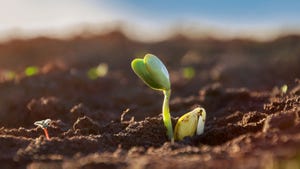
• Three years of minimum-till, followed by three years of no-till has resulted in significant improvement in the soil health in his fields.

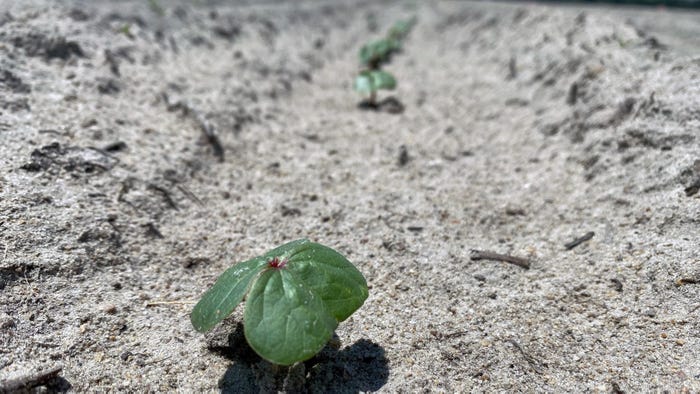
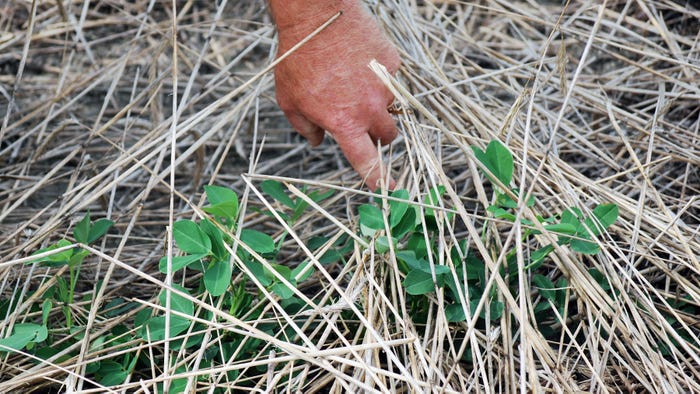
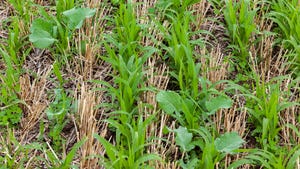
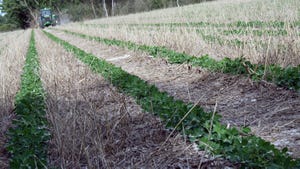
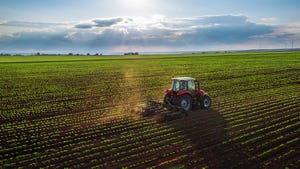
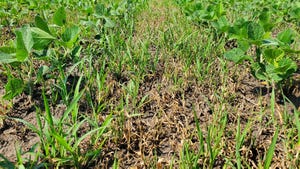
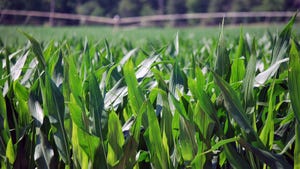
DESPITE RECEIVING only 50 percent of his average annual rainfall, dryland wheat farmer Tommy Henderson's wheat crop is thriving thanks to three years of no-till and the cover crops he planted this past summer.

Clay County, Texas farmer Tommy Henderson may not know everything about farming, but he’s got more than the basics covered.

Drought. Got it covered.

Excessive heat. Got it covered.

High winds. Got it covered.

In the middle of one of the worst ongoing droughts in Texas history, how can Henderson remain so optimistic about his dryland winter wheat crop?

Because he’s got it covered.

Over the last two years Henderson has only received half of the average annual rainfall that would water his crops.

“Yeah, I need rain,” he admits, but then looking across the fence line adds, “But I think my neighbors need it a little worse than I do.”
Change on the horizon
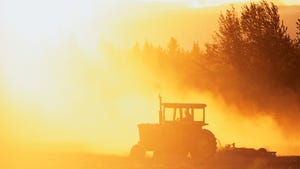
On this December morning a breeze gusting through the Red River Valley swirls dust as it blows across the neighboring land. His neighbors are conventional farmers, plowing their fields over many times to prepare a seedbed for their wheat crop.

With less than an inch of rain falling since the beginning of October, many wheat crops in the area are beginning to fail.

Not Henderson’s. Three years ago he took a leap of faith and made a drastic change in his farming operation. With encouragement from the USDA’s Natural Resource Conservation Service (NRCS) and other sources, he became a no-till farmer.

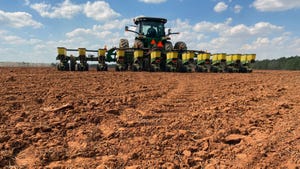
This meant instead of spending countless hours on the tractor plowing his land multiple times, Henderson would now only make one trip to plant the seeds with special no-till equipment and one trip to fertilize.

Because of his history of conservation efforts on his land, Henderson was awarded a Conservation Stewardship Program (CSP) contract from NRCS in 2009. This provided him with some financial assistance that made it feasible for him to purchase the no-till equipment.

“Going no-till has changed my life,” he says. “My wife is a school teacher and I actually have time to go on vacations with her in the summer now.”

Discuss this Article 1

Raju Titus (not verified)
on Dec 15, 2012

I am doing no-till natural farming. This my 27th year. I know that rain water do not absorbed by land due to tillage. The porosity of the land blocked by tilled soil,it convert into mud in rain. Therefore if we want get rid of droughts we must stop tilling. When water goes down to earth it does not erode soil (Organics) means that there is no need of any chemical fertilizer.

Post new comment
Sign In or register to use your Southeast Farm Press ID
(optional)

Continuing Education Courses
New Course
The 2,000-member Weed Science Society of America’s (WSSA) Herbicide Resistance Action...
New Course
The course details six of the primary diseases affecting citrus: Huanglongbing (Citrus...
Potassium nitrate has a positive effect in controlling plant pests and diseases when applied...

Newsletter Sign Up