Solar-powered well pumps helping Georgia farmers protect cattle, water quality

What is in this article?:

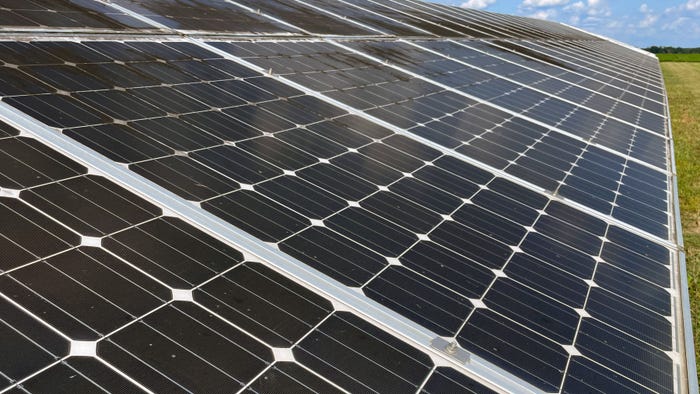
• The system uses solar panels to power an electric well pump that provides water for cattle on isolated pastures.

• It has been used for the past year in Madison County where a farmer found that less than five hours of sunlight a day was enough to keep water tanks full.

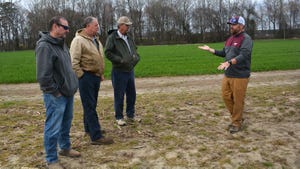
GARY HAWKINS, UGA College of Agriculture and Environmental Sciences Crop and Soil Science researcher, talks to cattle farmers at a recent field day demonstrating solar-powered wells for cattle. Hawkins designed and installed the system on the Madison County farm.

Photo, by Adam Speir, UGA

University of Georgia researchers are hoping solar-powered wells will help preserve water quality and cattle health on isolated cattle farms.

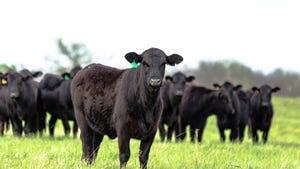
The system uses solar panels to power an electric well pump that provides water for cattle on isolated pastures. It has been used for the past year in Madison County where a farmer found that less than five hours of sunlight a day was enough to keep water tanks full.

“Isolated livestock need water, and either the farmer has to take water to the livestock or we can use solar power to pump water (from a well),” said Gary Hawkins, the UGA College of Agricultural and Environmental Sciences researcher who designed and installed the system.

The Madison County site is a demonstration system installed as part of a U.S. Department of Agriculture Natural Resource Conservation Service Conservation Innovation Grant. The grant provided funds to test how these systems work and how much they cost to operate.

Hawkins and Madison County Extension agent Adam Speir hosted a field day on Dec. 6 that attracted about 40 farmers from middle and northeast Georgia.

The solar-powered pumps allow farmers to install watering troughs on their most isolated pastures, helping keep livestock out of streams and ponds. Allowing cows to wade into and drink from farm ponds and streams can have a severely negative impact on water quality across the state.

Discuss this Article 1

dave wilson (not verified)
on Jan 4, 2013

I;d like to talk tio the individuals involved in this project--Allen, Hawkins etc. I've been in Africa for 2 tours last year---3 weeks each time. I worked with 23 peanut farmers to improve production. They get 250 pounds per acre whereas in the U.S. we average 4000 pounds per acre!!.These farmers subsist on $1.00 per day and we're working together to improve income and the availability of food. One of those projects involves building ponds for fish production to provide both food and income. I'd like to talk to someone about taking a set of these plans to Arica on my next trip---which I'm leaving on Jan. 20. for 2 weeks. I'd be willing to visit the site to understand the components better. 4-5 hours of sunlight in Africa is not a problem.!!! Please call as my departure date is quickly approaching.
dave wilson
8630 Camp Rd.
Chestertown, Md. 21620
443-235-8514--cell

Post new comment
Sign In or register to use your Southeast Farm Press ID
(optional)

Continuing Education Courses
New Course
The 2,000-member Weed Science Society of America’s (WSSA) Herbicide Resistance Action...
New Course
The course details six of the primary diseases affecting citrus: Huanglongbing (Citrus...
Potassium nitrate has a positive effect in controlling plant pests and diseases when applied...

Newsletter Sign Up