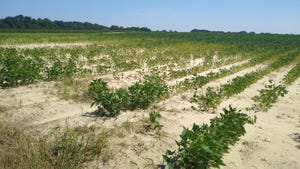
Hurricane Sandy brushes Virginia, Carolina crops

Being called a near miss

• Most areas of North Carolina’s Blacklands Region have already received 4-5 inches of rain, which will do some damage to crops, but nothing like the damage that it could have caused.

• In Suffolk, Va., near the coast, they have received 3-3.5 inches of rain and steady winds near gale force. 

• All in all for the Upper Southeast, it appears that Hurricane Sandy will be a near miss, but how much damage won’t be certain until cotton and soybean harvesting ends up over the next few weeks.

NOAA graphic

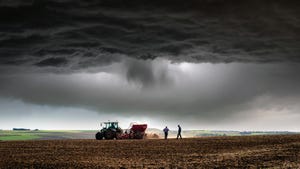
 “It could have been bad — really bad,” says veteran North Carolina Crop Consultant Bill Peele in Washington N.C., referring to damage from Hurricane Sandy.

Peele says most areas of North Carolina’s Blacklands Region have already received 4-5 inches of rain, which will do some damage to crops, but nothing like the damage that it could have caused.

“If the path of the hurricane had been 50-60 miles farther to the west, it would have caused really serious damage to our crops,” he adds.

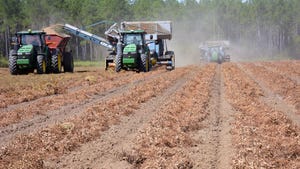
Peele says more than 50 percent of the cotton crop is yet to be harvested in eastern North Carolina.

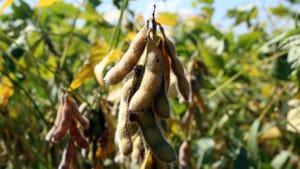
A high percentage of soybeans grown in the region are grown in a late-planted, double-crop with wheat and a big bean crop still is at risk from wind damage, but appears to have avoided major damage from the wind and rain combination that could easily have occurred from the storm.

Wind from Hurricane Sandy buffeted the Outer Banks of North Carolina with gale force winds and farther inland steady 35-45 mph winds are likely to cause some problems with heavily loaded cotton and soybean plants.

Further north in Suffolk, N.C., veteran Crop Consultant Wendell Cooper says most of the early damage from Sandy appears to be along the coast, especially in areas around Virginia Beach, Va.

Cooper works extensively with Mid-Atlantic Cotton Gin in Emporia, Va.

“In our grower basin, we probably have 60 percent of our cotton left to be picked. Thankfully, we have received less rain than the folks farther to the South in North Carolina, but we are still at risk from high winds,” Cooper says.

In Suffolk, Va. near the coast, he says they have received 3-3.5 inches of rain and steady winds near gale force.  

Farther inland in Emporia, Va., less than an inch of rainfall had been recorded from the storm by Monday morning. The final impact of the storm on Virginia growers is yet to be known, but appears they too have missed the brunt of the big storm.

Peele, who has seen his share of bad storms hit North Carolina, says he’s never seen one act quite like Sandy. It seemed to veer away from us at just the right moment and now looks like it will be a direct hit a couple hundred miles up the coast.

On the Maryland Eastern Shore, growers were faced with an unprecedented weather phenomena — sea foam. What looked like several inches of snow along the Maryland Coast was a mixture of sea foam, whipped by the storm, and near freezing temperatures.

All in all for the Upper Southeast, it appears that Hurricane Sandy will be a near miss, but how much damage won’t be certain until cotton and soybean harvesting ends up over the next few weeks.

rroberson@farmpress.com


Discuss this Article 0

Post new comment
Sign In or register to use your Southeast Farm Press ID
(optional)

Continuing Education Courses
New Course
The 2,000-member Weed Science Society of America’s (WSSA) Herbicide Resistance Action...
New Course
The course details six of the primary diseases affecting citrus: Huanglongbing (Citrus...
Potassium nitrate has a positive effect in controlling plant pests and diseases when applied...

Newsletter Sign Up