The Virginia Department of Agriculture and Consumer Services (VDACS) has just announced the state’s Top Twenty agricultural commodities for the 2008 production year....
By Katie Pratt, University of Kentucky
With harvest nearing completion, high humidity levels caused by an exceptionally moist year could potentially cause curing problems for growers of burley and dark tobacco, said specialists with the University of Kentucky College of Agriculture....
By Leah Chester-Davis, North Carolina State University
North Carolina State University’s Program for Value-Added & Alternative Agriculture became N.C. MarketReady on Oct. 20. ...
By Sharon Dowdy, University of Georgia
Of the more than 170,000 acres of Georgia farmland devoted to growing vegetables, only 3,000 acres are dedicated to growing organic produce. ...
Hugh Weathers, Commissioner of Agriculture, has announced that South Carolina is the recipient of a USDA Agriculture Marketing Service (AMS) grant. ...
By Chris Bickers, Contributing Writer
It wasn’t so long ago that Greg Hyman’s farm near Conway, S.C., grew lush every summer with the green leaves of the flue-cured tobacco he grew annually....
Innovative projects that address agricultural issues and the needs of communities and North Carolina farmers affected by the changes in the tobacco industry can apply now for grant funds. ...
By Aimee Nielson, University of Kentucky
Two years ago on a visit to Canada, Sarah Fannin saw something she was sure would be a good fit for east Kentucky agriculture — sweet potatoes....
Organic growers in North Carolina can apply for partial reimbursement of the cost of becoming certified or re-certified producers through a program offered by the North Carolina Department of Agriculture and Consumer Services....
Florida vegetable growers began to prepare fields for the fall crop in early August, tilling ground and laying plastic....
1 | 2 | 3 | 4 | 5 | 6 | 7 | 8 | 9 | 10 | 11 | 12 | 13 | 14 | 15 | 16 | 17 | 18 | 19 | 20 | 21 | 22 | Next
advertisement

This course covers a wide range of options to effectively control weeds in cotton and reduce the risk of weed resistance management. It is accredited for hours/units for licensed/accredited applicators in 7 U.S. Cotton Belt states (Florida, Georgia, New Mexico, Oklahoma, Texas, South Carolina an d Tennessee. CCA credit is pending).
Integration of a new mode of action compound like Coragen into IPM and IRM programs to control Lepidoptera in leafy greens, fruiting vegetables, peppers and brassica or cole crops is always welcome. This online CE accredited course details how best to use this new mode of action insecticide in intensive vegetable production. It is accredited by the Certified Crop Adviser (CCA) program and by state agencies for licensed applicators in Texas, Georgia, Florida, New Jersey and Pennsylvania.
(New Course)This online accredited course focuses on Calcium, an important plant nutrient in fertilizer management for maximum, healthy plant development as well as disease and pest prevention. It is accredited by the Certified Crop Adviser (CCA) program and for licensed applicators in licensed Georgia, Florida, Pennsylvania and New Jersey. Credit applications are pending in South Carolina, Tennessee, Virginia, West Virginia and Washington.
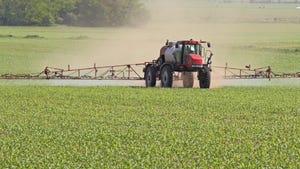
Keeping crop protection chemicals on the crop for which they are intended has been a cornerstone of farming not only to protect neighboring crops, but to not waste money allowing products to drift off the intended target. This accredited online continuing education course covers the critical elements of spray drift management.