Share

Natural predators tested for stink bug control

Nov 20, 2009 9:40 AM, By Roy Roberson, Farm Press Editorial Staff

The use of parasitic wasps to keep stink bug populations low in Southeastern crop fields will likely become a big part of integrated pest management strategies as more and more farmers move to highly effective, genetically altered seed for management of worm species that attack crops.

The arrival of bacillus thuriengensis-containing seed a few years back created a good environment for stink bug buildups across the Southeast. In recent years, increased use of improved Bt-containing varieties has created a major stink bug problem.

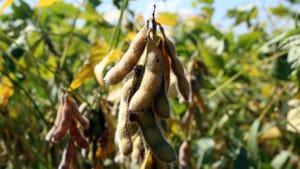
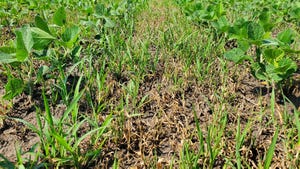
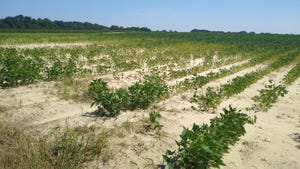
AMANDA KOPPEL, Virginia Tech University graduate student, checks soybean plots for stink bug damage.

Virginia Tech University researchers, in a cooperative project with the universities of Maryland and Delaware, are looking at some natural control options for stink bugs on soybeans.

Virginia Tech doctoral student Amanda Koppel, working with veteran Virginia IPM leader Ames Herbert, has studied biological control of stink bugs for the past five years.

She raised stink bugs in a laboratory and put them in a soybean field, then collected eggs from the field. Koppel found several species of parasitic wasps in the stinkbug eggs.

Almost half the brown and green stink bug eggs she found were parasitized by these wasps. “That is amazing to think in a few weeks half the stink bugs in a field of newly planted wheat may be parasitized and killed by these wasps,” Koppel says.

Also encouraging, a low percentage (16 percent) of the egg mass of spine soldier bug, a beneficial insect, was parasitized by these wasps. Other beneficial insects showed similar low levels of parasitic wasp activity.

The good news is there are plenty of natural enemies parasitizing stink bugs in the field right now. The bad news is these low numbers came from fields not sprayed with insecticides.

Extending her study to a more real life situation in which crops are treated with insecticides, Koppel looked at four different insecticide classes commonly used on row crops and vegetable crops in the Southeast: Organophosphates, pyrethroids, neonicotinoid, and spinosad.

The results, she says, may be surprising to growers. A high percentage (up to 70 percent) of the stink bug eggs survived the various insecticide treatments. The bottom line, she stresses, is that growers may kill off a high percentage of the nymphs and adults, but you are not killing what is inside these eggs. That means later generations of stinkbugs will be in the field to damage crops.

The worse news is that of the stink bug eggs that contained parasitic wasps, virtually all were killed by insecticide application. “I think what happens in the field is that these parasite-containing eggs are already stressed, then they are hit with an insecticide and that’s the last nail in the coffin,” Koppel explains.

Bottom line is the parasite-containing stinkbug eggs are less hardy than pure stink bugs. Bad weather and any number of environmental factors will take these beneficial parasites out, while the pure stink bugs tend to roll with the punches and survive both environmental and man made obstacles, she says.

Some of the parasitic wasps can be raised in a lab and released in farmer fields. The increase in numbers of these beneficials obviously raises the potential of having more parasitic wasps in the egg mass of stinkbugs. However, the reality is a high percentage of these beneficial insects either leaves the target field or is killed by insecticides or environmental factors.

A better option for farmers, Koppel says, is to understand when and where these beneficials are likely to occur and spray insecticides more wisely to increase the chances of survival.

“One thing I’ve seen is that spraying a high rate of insecticide at the beginning of the crop season takes out a high percentage of these parasitic wasps. If these beneficial wasps are left in the field long enough, they will parasitize first generation stink bug eggs, preventing some of these damaging insects from hatching,” Koppel explains.

In an ideal situation, she says, growers would keep a high number of parasitic wasps in the field. These parasites would keep stinkbug numbers down, and if the wasps remain in high enough numbers to over-winter, they could help keep stink bug damage down in subsequent crops.

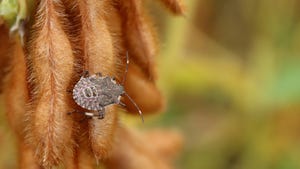
On the horizon, Southeastern growers might well have another species of stink bug to worry about. The brown marmorated stink bug, Koppel says, is now an infrequent pest around houses, but has the potential to become a pest of crops.

This true bug in the insect family Pentatomidae is known as an agricultural pest in its native range of China, Japan, Korea and Taiwan. It becomes a nuisance pest both indoors and out when it is attracted to the outside of houses on warm fall days in search of protected, over-wintering sites. It occasionally reappears during warmer sunny periods throughout the winter, and again as it emerges in the spring.

Koppel recently visited China and found parasitic wasps that are natural enemies of the marmorated stink bugs. So far, this species has not shown up in crops in southeast Virginia. If it becomes a pest of crops, Virginia Tech researchers will have biological head start in figuring out ways to manage it.

Managing stinkbugs in a variety of Southeastern crops is an economic must. In cotton, researchers estimate 3-5 percent of the crop is lost each year to stink bugs.

The increase in soybean acreage and the increased value of the soybean crop has spurred the increased use of Bt-containing soybean seeds. As expected, stinkbug damage to soybeans continues to increase.

In soybeans, stink bugs inflict mechanical injury to the seed as well as transmit the yeast-spot disease organism. The degree of damage caused by this pest depends to some extent on the developmental stage of the seed when it is pierced by the stink bug's needle-like mouthparts. The younger the seed when damaged, the greater the yield reduction.

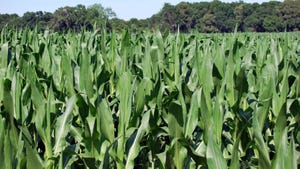
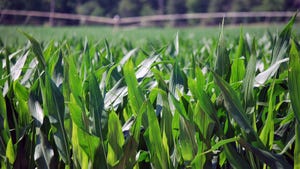
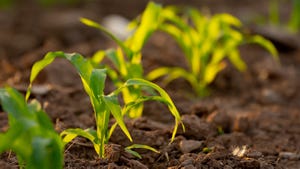
Corn and wheat yields also can be lowered by stink bug damage. In corn, stinkbugs may kill small seedlings, resulting in stand reduction. Surviving corn plants are stunted and have reduced root mass and tillering is reduced. Corn yield losses on plants attacked by stink bugs can reach 10 percent.

Wheat tillering is similarly affected by stink bug damage.

As growers switch to even more effective worm-controlling genetically altered seed, stink bugs are almost certain to become an even bigger problem for Southeastern growers in the coming years. Understanding when and what to spray to kill these bugs, yet maintain beneficial insects, will surely be a big part of stink bug management strategy.

e-mail: rroberson@farmpress.com

Get Copyright ClearanceWant to use this article? Click here for options!
© 2010 Penton Media, Inc.


Latest Jobs

resources

events icon events

product info icon tradeshows

tradeshow icon digests

research icon photos

Continuing Education

Accredited in Florida, Georgia, New Mexico, Oklahoma, Texas, South Carolina and Tennessee:


(New Course)
Weed Resistance Management in Cotton

This course covers a wide range of options to effectively control weeds in cotton and reduce the risk of weed resistance management. It is accredited for hours/units for licensed/accredited applicators in 7 U.S. Cotton Belt states (Florida, Georgia, New Mexico, Oklahoma, Texas, South Carolina an d Tennessee. CCA credit is pending).

(New Course)
New Mode of Action Chemistry for Vegetable Production

Integration of a new mode of action compound like Coragen into IPM and IRM programs to control Lepidoptera in leafy greens, fruiting vegetables, peppers and brassica or cole crops is always welcome. This online CE accredited course details how best to use this new mode of action insecticide in intensive vegetable production. It is accredited by the Certified Crop Adviser (CCA) program and by state agencies for licensed applicators in Texas, Georgia, Florida, New Jersey and Pennsylvania.

(New Course)
Utilizing Calcium as Nutrient That Protects Against Disease Organisms

This online accredited course focuses on Calcium, an important plant nutrient in fertilizer management for maximum, healthy plant development as well as disease and pest prevention. It is accredited by the Certified Crop Adviser (CCA) program and for licensed applicators in licensed Georgia, Florida, Pennsylvania and New Jersey. Credit applications are pending in South Carolina, Tennessee, Virginia, West Virginia and Washington.

This course is accredited in Texas, Oklahoma, New Mexico, Virginia, West Virginia and Wyoming as well as for CCA credits:

(New Course)
Spray Drift Management

Keeping crop protection chemicals on the crop for which they are intended has been a cornerstone of farming not only to protect neighboring crops, but to not waste money allowing products to drift off the intended target. This accredited online continuing education course covers the critical elements of spray drift management.

New Course
The ABCs of MRLs

American agriculture exports 20 to 30 percent of its production annually. For specific commodities, the percentage is much higher. When recommending and applying pest management products for crops, license Pest Control Advisers (PCAs)  and applicators and farmers must be aware of which products applied are in compliance with Maximum Residue Limits (MRLs) established by foreign customers. This CE course details the MRL issue and why compliance is critical to marketing into world trade.

Back to Top

Browse Print Issues

Additional Resources

subscribe to Farm Press Daily Delta Farm Press Southwest Farm Press Western Farm Press