By Roy Roberson, Farm Press Editorial Staff
The arrival of bacillus thuriengensis-containing seed a few years back created a good environment for stink bug buildups across the Southeast. ...
The American Soybean Association (ASA) has unveiled its new online Advocacy Training Center that teaches basic skills and protocols for advocating farmer-friendly policy to elected officials. ...
By Forrest Laws, Farm Press Editorial Staff

2008 was a heady year for Pat Westhoff and other analysts at the University of Missouri’s Food and Agricultural Policy Research Institute....
By Dave Caldwell, North Carolina State University
Growers of organic crops in North Carolina and across the Southeast will get some much needed help as plant breeders at North Carolina State University launch an effort to develop corn, peanut, soybean and wheat varieties adapted to being grown organically....
The United Soybean Board (USB) and soybean checkoff are currently seeking nominations for USB’s annual Outstanding Achievement Award and Excellence Award....
The American Soybean Association (ASA) has communicated to United States Trade Representative (USTR) Ron Kirk its priorities for restarting World Trade Organization (WTO) negotiations on the Doha Development Agenda on a foundation that offers an improved opportunity for a successful outcome for U.S. farmers....
Based on a survey of growers contacted around Nov. 1, Georgia’s crop yields remained the same as last month for corn and peanuts, while cotton and soybeans showed a decline in yields....
By Elton Robinson, Farm Press Editorial Staff
A statistical picture of the impact of wet weather on Mid-South crops still has not come into focus, although USDA is acknowledging significant problems with a portion of the Mid-South cotton crop....
By Elton Robinson, Farm Press Editorial Staff

Huge soybean crops in North America and South America could push world inventories higher and prices lower in 2010, according to a market analyst speaking at the CME Group press briefing on USDA’s Nov. 9 Crop Production Report and World Agricultural Supply and Demand Estimates....
By Sharon Dowdy, University of Georgia
Researchers from the University of Georgia and Dow AgroSciences have identified a kudzu-eating pest in northeast Georgia that has never been found in the Western Hemisphere. ...
By Paul L. Hollis, Farm Press Editorial Staff
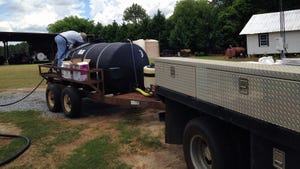
The best marketing advice for corn producers who did not price their crops in 2008 is to forget about last year…let bygones be bygones....
By Katie Pratt, University of Kentucky
Planning for the coming growing season is an important, but sometimes challenging task for producers of grain crops. ...
By Paul L. Hollis, Farm Press Editorial Staff
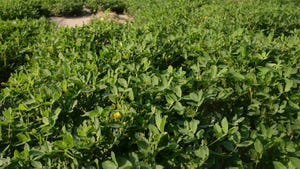
Alabama Commissioner of Agriculture Ron Sparks is calling it a “potential crisis” — the rainy weather conditions throughout most of September and October that have frustrated growers who were eyeing pretty good cotton, peanut, soybean and corn crops....
The Virginia Department of Agriculture and Consumer Services (VDACS) has just announced the state’s Top Twenty agricultural commodities for the 2008 production year....
By Roy Roberson, Farm Press Editorial Staff
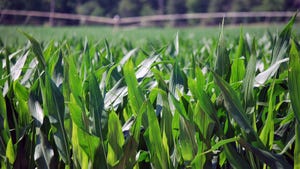
Stink bugs come in three distinct flavors in the Southeast — all of them a problem for growers. ...
From the American Soybean Association
Soybean farming has changed dramatically since 1920. ...
Speakers painted a “cautiously optimistic” outlook for U.S. agriculture at Farm Bureau’s mid-October commodity outlook conference, in Albuquerque, N.M. ...
By Katie Pratt, University of Kentucky
While the rains have stopped and harvest is progressing, Kentucky growers continue to deal with the ramifications of a cool, wet growing season....
The 13th annual National Conservation Systems Cotton and Rice Conference, Southern Corn and Soybean Conference, and the Southern Precision Agriculture Conference will be joined in 2010 by the newly-organized Southern Field Crop Alliance....
By Roy Roberson, Farm Press Editorial Staff

How low can you go with seeding rates on indeterminate varieties of soybeans? ...
By Katie Pratt, University of Kentucky
Harvesting this year's crop is an uphill battle for Kentucky’s corn and soybean producers as frequent, heavy rains are keeping combines out of the fields for days at a time....
Strong export and crush demand and a tighter-than-expected supply report from the Agriculture Department on Oct. 9 should mean an improving price picture for soybeans, according to Terry Francl, senior economist with the American Farm Bureau Federation....
Based on a survey of Georgia growers contacted around Oct. 1, corn yields were down slightly from September....
By Paul L. Hollis, Farm Press Editorial Staff
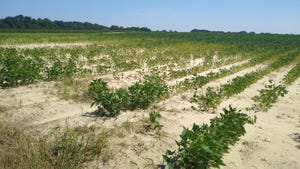
Much has been invested in recent years in learning how to detect and control Asian soybean rust, says Dennis Delaney, Auburn University Extension soybean specialist. ...
By Elton Robinson, Farm Press Editorial Staff
Excessive rainfall in September is eroding yield expectations for Mid-South corn and cotton crops, according to USDA’s Oct. 9 Crop Production Report....
1 | 2 | 3 | 4 | 5 | 6 | 7 | 8 | 9 | 10 | 11 | 12 | 13 | Next
advertisement

This course covers a wide range of options to effectively control weeds in cotton and reduce the risk of weed resistance management. It is accredited for hours/units for licensed/accredited applicators in 7 U.S. Cotton Belt states (Florida, Georgia, New Mexico, Oklahoma, Texas, South Carolina an d Tennessee. CCA credit is pending).
Integration of a new mode of action compound like Coragen into IPM and IRM programs to control Lepidoptera in leafy greens, fruiting vegetables, peppers and brassica or cole crops is always welcome. This online CE accredited course details how best to use this new mode of action insecticide in intensive vegetable production. It is accredited by the Certified Crop Adviser (CCA) program and by state agencies for licensed applicators in Texas, Georgia, Florida, New Jersey and Pennsylvania.
(New Course)This online accredited course focuses on Calcium, an important plant nutrient in fertilizer management for maximum, healthy plant development as well as disease and pest prevention. It is accredited by the Certified Crop Adviser (CCA) program and for licensed applicators in licensed Georgia, Florida, Pennsylvania and New Jersey. Credit applications are pending in South Carolina, Tennessee, Virginia, West Virginia and Washington.
Keeping crop protection chemicals on the crop for which they are intended has been a cornerstone of farming not only to protect neighboring crops, but to not waste money allowing products to drift off the intended target. This accredited online continuing education course covers the critical elements of spray drift management.