By Paul L. Hollis, Farm Press Editorial Staff
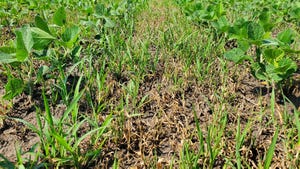
To say that it has been an interesting year for the peanut industry is a great understatement. ...
Agriculture Secretary Thomas J. Vilsack has appointed four members and four alternate members to serve on the National Peanut Board. ...
By Dave Caldwell, North Carolina State University
Growers of organic crops in North Carolina and across the Southeast will get some much needed help as plant breeders at North Carolina State University launch an effort to develop corn, peanut, soybean and wheat varieties adapted to being grown organically....
Peanut production in the United States is forecast at 3.63 billion pounds, down slightly from the Oct. 1 forecast and down 30 percent from last year....
Based on a survey of growers contacted around Nov. 1, Georgia’s crop yields remained the same as last month for corn and peanuts, while cotton and soybeans showed a decline in yields....
By Paul L. Hollis, Farm Press Editorial Staff

Alabama Commissioner of Agriculture Ron Sparks is calling it a “potential crisis” — the rainy weather conditions throughout most of September and October that have frustrated growers who were eyeing pretty good cotton, peanut, soybean and corn crops....
By Roy Roberson, Farm Press Editorial Staff
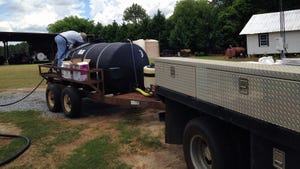
A new peanut variety recently approved by the Peanut Variety and Quality Evaluation (PVQE) Advisory Committee has the potential to fit niche markets for super extra large kernel Virginia type peanuts. ...
By Paul L. Hollis, Farm Press Editorial Staff
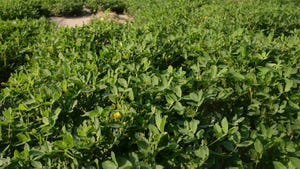
In a production year in which rainfall is plentiful and some growers even have to cope with flooding, it’s easy to forget about the specter of drought....
Virginia Farmers who grow corn, soybeans, cotton, hay and peanuts are expecting a successful fall harvest. ...
By Paul L. Hollis, Farm Press Editorial Staff
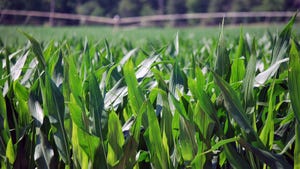
There’s at least one point of unanimous agreement on Georgia’s 2009 peanut crop: it’ll be a late one. ...
1 | 2 | 3 | 4 | 5 | 6 | 7 | 8 | 9 | 10 | 11 | 12 | 13 | 14 | 15 | 16 | 17 | 18 | 19 | Next
advertisement

This course covers a wide range of options to effectively control weeds in cotton and reduce the risk of weed resistance management. It is accredited for hours/units for licensed/accredited applicators in 7 U.S. Cotton Belt states (Florida, Georgia, New Mexico, Oklahoma, Texas, South Carolina an d Tennessee. CCA credit is pending).
Integration of a new mode of action compound like Coragen into IPM and IRM programs to control Lepidoptera in leafy greens, fruiting vegetables, peppers and brassica or cole crops is always welcome. This online CE accredited course details how best to use this new mode of action insecticide in intensive vegetable production. It is accredited by the Certified Crop Adviser (CCA) program and by state agencies for licensed applicators in Texas, Georgia, Florida, New Jersey and Pennsylvania.
(New Course)This online accredited course focuses on Calcium, an important plant nutrient in fertilizer management for maximum, healthy plant development as well as disease and pest prevention. It is accredited by the Certified Crop Adviser (CCA) program and for licensed applicators in licensed Georgia, Florida, Pennsylvania and New Jersey. Credit applications are pending in South Carolina, Tennessee, Virginia, West Virginia and Washington.
Keeping crop protection chemicals on the crop for which they are intended has been a cornerstone of farming not only to protect neighboring crops, but to not waste money allowing products to drift off the intended target. This accredited online continuing education course covers the critical elements of spray drift management.