North Carolina updates pesticide record rules

May 6, 2009 10:33 AM

Several new pesticide record-keeping rules went into effect May 1 following approval by the North Carolina Pesticide Board.

The new rules involve recording the ending time of applications, the recording of daily applications and how long growers must maintain records.

The changes reflect recommendations of the 2008 Governor’s Task Force on Preventing Agricultural Pesticide Exposure and implement the requirements of Senate Bill 847.

Growers making applications that fall under the scope of the federal Worker Protection Standard must now add the actual “end time” of application to the records under the change. This is in addition to the “time of the application” that is required to be posted before the application takes place under the current WPS regulations.

Also, each day of application must be recorded as a separate application record. After application information has been displayed for the appropriate time (30 days after the restricted-entry period expires), the application information must now be maintained for a period of two years. This coincides with the USDA Requirements for Restricted-Use Pesticides.

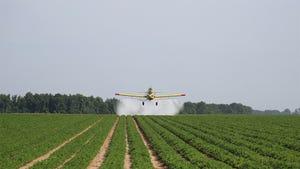
Also effective May 1, aerial applicators must record the year, month, date and time of day when each pesticide application was completed for every pesticide application. Additionally, each day of aerial applications must be recorded as a separate record.

The commercial ground applicators regulation addressing the same issues for restricted-use pesticides became effective April 1.

Revised record keeping forms may be downloaded from the Structural Pest Control and Pesticides Division’s Web page, www.ncagr.gov/SPCAP/pesticides/Cmfo.htm#RecordKeeping, or from your local Cooperative Extension Service. Applicators requiring assistance with these or any pesticide regulation, may contact the NCDA&CS Pesticide Section at (919) 733-3556 for help.

Get Copyright ClearanceWant to use this article? Click here for options!
© 2009 Penton Media, Inc.


Latest Jobs

Subscribe to RSS headline updates from:
Powered by FeedBurner

Continuing Education

Accredited in Florida, Georgia, New Mexico, Oklahoma, Texas, South Carolina and Tennessee:


(New Course)
Weed Resistance Management in Cotton

This course covers a wide range of options to effectively control weeds in cotton and reduce the risk of weed resistance management. It is accredited for hours/units for licensed/accredited applicators in 7 U.S. Cotton Belt states (Florida, Georgia, New Mexico, Oklahoma, Texas, South Carolina an d Tennessee. CCA credit is pending).

(New Course)
New Mode of Action Chemistry for Vegetable Production

Integration of a new mode of action compound like Coragen into IPM and IRM programs to control Lepidoptera in leafy greens, fruiting vegetables, peppers and brassica or cole crops is always welcome. This online CE accredited course details how best to use this new mode of action insecticide in intensive vegetable production. It is accredited by the Certified Crop Adviser (CCA) program and by state agencies for licensed applicators in Texas, Georgia, Florida, New Jersey and Pennsylvania.

(New Course)
Utilizing Calcium as Nutrient That Protects Against Disease Organisms

This online accredited course focuses on Calcium, an important plant nutrient in fertilizer management for maximum, healthy plant development as well as disease and pest prevention. It is accredited by the Certified Crop Adviser (CCA) program and for licensed applicators in licensed Georgia, Florida, Pennsylvania and New Jersey. Credit applications are pending in South Carolina, Tennessee, Virginia, West Virginia and Washington.

This course is accredited in Texas, Oklahoma, New Mexico, Virginia, West Virginia and Wyoming as well as for CCA credits:

(New Course)
Spray Drift Management

Keeping crop protection chemicals on the crop for which they are intended has been a cornerstone of farming not only to protect neighboring crops, but to not waste money allowing products to drift off the intended target. This accredited online continuing education course covers the critical elements of spray drift management.

Back to Top

Browse Print Issues

Additional Resources

subscribe to Farm Press Daily Delta Farm Press Southwest Farm Press Western Farm Press