UT Bull Test Open House a success

Nov 26, 2008 8:10 AM

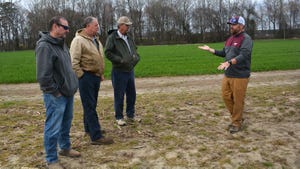
Dozens of commercial beef producers, as well as purebred cattle breeders, recently converged at the Middle Tennessee AgResearch and Education Center near Spring Hill for the 2008 Bull Test Open House.

The event began with educational presentations from University of Tennessee Institute of Agriculture Professors, Neal Schrick and David Kirkpatrick, as well as Kevin Thompson, the director of genetics for Tennessee Livestock Producers. The presentations focused on cattle herd improvement through good management, bull selection and striving for herd uniformity.

Those in attendance also heard from veteran cattleman Dell King, owner of King Livestock Company. KLC is one of the most successful livestock companies in the southeast. King shared his personal experiences and observations from years of working in the cattle industry.

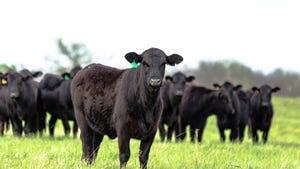
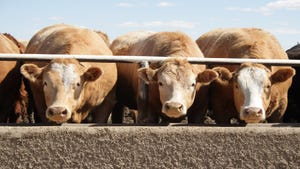
Following the presentations, visitors had the opportunity to observe the Senior and Junior Performance Tested Bulls that will be featured in upcoming sales at the UT Bull Test Station. The Senior Bull Test is set for Jan. 22, 2009, while the Junior Bull Test will take place March 12, 2009.

For a summary of the Open House presentations, visit the Web site http://middletennessee.tennessee.edu.

The University of Tennessee Central Bull Test Station is a cooperative program involving AgResearch, the Extension Service and the Tennessee Beef Cattle Improvement Association. It is located at the Middle Tennessee AgResearch and Education Center in Spring Hill, one of 10 outdoor laboratories operated by UT AgResearch, a division of the University of Tennessee Institute of Agriculture.

In addition to its agricultural research programs, the UT Institute of Agriculture also provides instruction, research and public service through the UT College of Agricultural Sciences and Natural Resources, the UT College of Veterinary Medicine, and UT Extension offices in every county in the state.

Get Copyright ClearanceWant to use this article? Click here for options!
© 2010 Penton Media, Inc.


Latest Jobs

Subscribe to RSS headline updates from:
Powered by FeedBurner

Continuing Education

Accredited in Florida, Georgia, New Mexico, Oklahoma, Texas, South Carolina and Tennessee:


(New Course)
Weed Resistance Management in Cotton

This course covers a wide range of options to effectively control weeds in cotton and reduce the risk of weed resistance management. It is accredited for hours/units for licensed/accredited applicators in 7 U.S. Cotton Belt states (Florida, Georgia, New Mexico, Oklahoma, Texas, South Carolina an d Tennessee. CCA credit is pending).

(New Course)
New Mode of Action Chemistry for Vegetable Production

Integration of a new mode of action compound like Coragen into IPM and IRM programs to control Lepidoptera in leafy greens, fruiting vegetables, peppers and brassica or cole crops is always welcome. This online CE accredited course details how best to use this new mode of action insecticide in intensive vegetable production. It is accredited by the Certified Crop Adviser (CCA) program and by state agencies for licensed applicators in Texas, Georgia, Florida, New Jersey and Pennsylvania.

(New Course)
Utilizing Calcium as Nutrient That Protects Against Disease Organisms

This online accredited course focuses on Calcium, an important plant nutrient in fertilizer management for maximum, healthy plant development as well as disease and pest prevention. It is accredited by the Certified Crop Adviser (CCA) program and for licensed applicators in licensed Georgia, Florida, Pennsylvania and New Jersey. Credit applications are pending in South Carolina, Tennessee, Virginia, West Virginia and Washington.

This course is accredited in Texas, Oklahoma, New Mexico, Virginia, West Virginia and Wyoming as well as for CCA credits:

(New Course)
Spray Drift Management

Keeping crop protection chemicals on the crop for which they are intended has been a cornerstone of farming not only to protect neighboring crops, but to not waste money allowing products to drift off the intended target. This accredited online continuing education course covers the critical elements of spray drift management.

New Course
The ABCs of MRLs

American agriculture exports 20 to 30 percent of its production annually. For specific commodities, the percentage is much higher. When recommending and applying pest management products for crops, license Pest Control Advisers (PCAs)  and applicators and farmers must be aware of which products applied are in compliance with Maximum Residue Limits (MRLs) established by foreign customers. This CE course details the MRL issue and why compliance is critical to marketing into world trade.

Back to Top

Browse Print Issues

Additional Resources

subscribe to Farm Press Daily Delta Farm Press Southwest Farm Press Western Farm Press