Reed canarygrass suspected in cattle deaths

Apr 23, 2009 9:21 AM

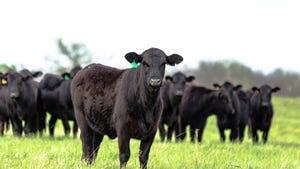
The West Virginia Department of Agriculture (WVDA) is investigating the death of approximately 20 head of cattle in the southern part of the state, and the current prime suspect is toxin contained in reed canarygrass.

“We have ruled out any infectious diseases,” said Commissioner of Agriculture Gus R. Douglass. “Although we are not positive canarygrass is to blame, we want to alert producers and ask them to report any unusual deaths in their herds to their local veterinarian.”

The telltale symptom in these deaths is partial paralysis of rear limbs, according to State Veterinarian Dr. Gary Kinder, although some animals died suddenly without obvious symptoms.

Animal age, nutrition and general health may also be factors, he noted. Producers who note these symptoms in their cattle or sheep herds should contact their veterinarian.

Veterinarians with questions may contact WVDA’s Animal Health Division at 304-558-2214.

 Post-mortem testing performed at Virginia Tech University as part of WVDA’s investigation indicates the animals died from poisoning from reed canarygrass. Although it is a hardy, common species found worldwide — and generally not considered problematic for livestock — potentially dangerous levels of alkaloid toxins can accumulate in the grass during drought conditions and during regrowth after grazing or mowing. 


There currently is no way to test for the toxin levels in feed or grass, and Dr. Kinder advised farmers to exclude animals from stands of canarygrass, which tends to grow best in damp areas.

Information on identifying reed canarygrass is available here, or by calling WVDA’s Plant Industries Division at 304-558-2212.


Dr. Kinder also said producers should increase the cobalt concentration in free choice mineral supplements to approximately 250 ppm. Cobalt will not reverse symptoms in affected animals, but is thought to help prevent absorption of the toxins.

Sheep are also susceptible to reed canarygrass poisoning, and there is no known treatment once animals become symptomatic. WVDA is continuing its investigation in cooperation with Virginia Tech, West Virginia University and the U.S. Department of Agriculture.

DESCRIPTION: Reed canarygrass is a cool-season grass that grows 3-8 feet tall. It forms dense, monospecific stands in wet meadows, riparian areas, and marshes; spreading by means of stout rhizomes. Established plants of reed canarygrass can tolerate prolonged periods of inundation. Other species that might be confused with reed canarygrass include: common reed (Phragmites australis), Canada bluejoint (Calamagrostis canadensis), or orchard grass (Dactylis glomerata).

The long, membranous ligule of reed canarygrass can be helpful in distinguishing it from the others. In addition, unlike common reed, the stems of reed canarygrass do not remain standing through the winter. 


Height: Flowering stems grow from 3-7 feet tall. 


Stem: The stem is smooth, green, and erect.

Leaves: Leaves are 4-8 inches long and about ½ -inch wide; the ligule is unusually large – up to ½ inch long. 


Flowers: Flowering occurs in June and July.

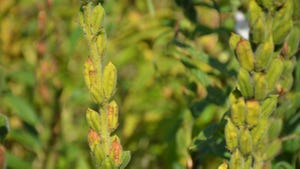
Fruit and seed: The 3-10 inch long branched inflorescence is at the top of an erect stem. It is green with a purplish tinge; although narrow at first, it opens up when in flower. The plume contracts and becomes light tan in color in the fruiting stage. Seeds germinate most readily immediately after they mature.

Roots: Reed canarygrass spreads by rhizomes to form large clonal colonies

Get Copyright ClearanceWant to use this article? Click here for options!
© 2009 Penton Media, Inc.


Latest Jobs

resources

events icon events

product info icon tradeshows

tradeshow icon digests

research icon photos

Continuing Education

Accredited in Florida, Georgia, New Mexico, Oklahoma, Texas, South Carolina and Tennessee:


(New Course)
Weed Resistance Management in Cotton

This course covers a wide range of options to effectively control weeds in cotton and reduce the risk of weed resistance management. It is accredited for hours/units for licensed/accredited applicators in 7 U.S. Cotton Belt states (Florida, Georgia, New Mexico, Oklahoma, Texas, South Carolina an d Tennessee. CCA credit is pending).

(New Course)
New Mode of Action Chemistry for Vegetable Production

Integration of a new mode of action compound like Coragen into IPM and IRM programs to control Lepidoptera in leafy greens, fruiting vegetables, peppers and brassica or cole crops is always welcome. This online CE accredited course details how best to use this new mode of action insecticide in intensive vegetable production. It is accredited by the Certified Crop Adviser (CCA) program and by state agencies for licensed applicators in Texas, Georgia, Florida, New Jersey and Pennsylvania.

(New Course)
Utilizing Calcium as Nutrient That Protects Against Disease Organisms

This online accredited course focuses on Calcium, an important plant nutrient in fertilizer management for maximum, healthy plant development as well as disease and pest prevention. It is accredited by the Certified Crop Adviser (CCA) program and for licensed applicators in licensed Georgia, Florida, Pennsylvania and New Jersey. Credit applications are pending in South Carolina, Tennessee, Virginia, West Virginia and Washington.

This course is accredited in Texas, Oklahoma, New Mexico, Virginia, West Virginia and Wyoming as well as for CCA credits:

(New Course)
Spray Drift Management

Keeping crop protection chemicals on the crop for which they are intended has been a cornerstone of farming not only to protect neighboring crops, but to not waste money allowing products to drift off the intended target. This accredited online continuing education course covers the critical elements of spray drift management.

Back to Top

Browse Print Issues

Additional Resources

subscribe to Farm Press Daily Delta Farm Press Southwest Farm Press Western Farm Press