Good bull provides high pregnancy rates

Oct 23, 2009 9:26 AM, By Peter Hull, Clemson University

Optimizing a bull's performance is the most effective tool in natural breeding.

The keys to a successful cattle breeding program are pregnancy and calving rates, a leading beef cattle expert said at the recent South Carolina 2009 Cattlemen’s Day.

Optimizing a bull’s performance is the most effective tool in natural breeding.

Roger Ellis, a beef cattle veterinarian at the University of Georgia and guest speaker at the 2009 Cattlemen’s Day, said 90 percent of beef producers use bulls in natural breeding. The goal in a planned breeding program is to achieve the highest rate of pregnancy early in the breeding season.

Ellis said the four key attributes a bull must have are that it:

• Is physically capable of breeding.

• Has a willingness to mate.

• Has the capacity to produce semen.

• Has functionally normal spermatozoa.

The health of a bull’s spermatozoa contributes to the survival of the embryo, Ellis said. It’s not a widely published fact, but the beef animal is not a highly fertile animal, and only about 65 percent of fertilizations become pregnancies.

Twenty-five percent to 35 percent of pregnancies are lost in the cows. Those losses often are blamed on the bull, and it can be the bull’s fault in some cases, Ellis said.

For example, genetic deficiencies in the bull’s spermatozoa may mean that though it is capable of fertilization, it is not capable of sustaining an embryo.

“We’re looking to maximize the potential of that bull over its breeding lifetime,” Ellis said.

Clemson University’s Edisto Research and Education Center, Clemson Extension and the South Carolina Cattlemen’s Association hosted the 2009 Cattlemen’s Day at the annual Edisto Forage Bull Test Sale.

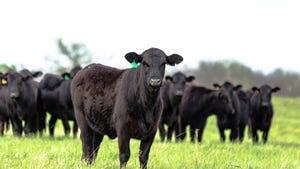
More than 150 people from across the Southeast saw about 50 purebred bulls on display and up for auction. To be included in the sale, all bulls had passed strict tests in the months leading up to the auction.

The average age of the bulls was 20 months and the average weight was about 1,600 pounds.

When all bids were in, 47 bulls sold for a total of $96,100. At an average price of $2,045, the total was 36 percent higher than at last year’s auction. The highest value bull sold for $3,700.

Thirty-five bulls were sold to South Carolina buyers, one each went to Georgia and North Carolina, and 10 went to Florida.

Get Copyright ClearanceWant to use this article? Click here for options!
© 2009 Penton Media, Inc.


Latest Jobs

Subscribe to RSS headline updates from:
Powered by FeedBurner

Continuing Education

Accredited in Florida, Georgia, New Mexico, Oklahoma, Texas, South Carolina and Tennessee:


(New Course)
Weed Resistance Management in Cotton

This course covers a wide range of options to effectively control weeds in cotton and reduce the risk of weed resistance management. It is accredited for hours/units for licensed/accredited applicators in 7 U.S. Cotton Belt states (Florida, Georgia, New Mexico, Oklahoma, Texas, South Carolina an d Tennessee. CCA credit is pending).

(New Course)
New Mode of Action Chemistry for Vegetable Production

Integration of a new mode of action compound like Coragen into IPM and IRM programs to control Lepidoptera in leafy greens, fruiting vegetables, peppers and brassica or cole crops is always welcome. This online CE accredited course details how best to use this new mode of action insecticide in intensive vegetable production. It is accredited by the Certified Crop Adviser (CCA) program and by state agencies for licensed applicators in Texas, Georgia, Florida, New Jersey and Pennsylvania.

(New Course)
Utilizing Calcium as Nutrient That Protects Against Disease Organisms

This online accredited course focuses on Calcium, an important plant nutrient in fertilizer management for maximum, healthy plant development as well as disease and pest prevention. It is accredited by the Certified Crop Adviser (CCA) program and for licensed applicators in licensed Georgia, Florida, Pennsylvania and New Jersey. Credit applications are pending in South Carolina, Tennessee, Virginia, West Virginia and Washington.

This course is accredited in Texas, Oklahoma, New Mexico, Virginia, West Virginia and Wyoming as well as for CCA credits:

(New Course)
Spray Drift Management

Keeping crop protection chemicals on the crop for which they are intended has been a cornerstone of farming not only to protect neighboring crops, but to not waste money allowing products to drift off the intended target. This accredited online continuing education course covers the critical elements of spray drift management.

Back to Top

Browse Print Issues

Additional Resources

subscribe to Farm Press Daily Delta Farm Press Southwest Farm Press Western Farm Press