West Virginia growers urged to practice conservation

May 2, 2008 10:16 AM

A group of state and federal conservation organizations is encouraging farmers throughout West Virginia to implement best management practices to protect the environment — and improve producers’ bottom lines.

“Someone once said that farmers were the first environmentalists,” said West Virginia Commissioner of Agriculture Gus R. Douglass. “And today, they continue to do more as a whole to protect the environment than any other collection of people. From the beginnings of civilization, farmers have understood that clean water and fertile soil are the keys to a good harvest.”

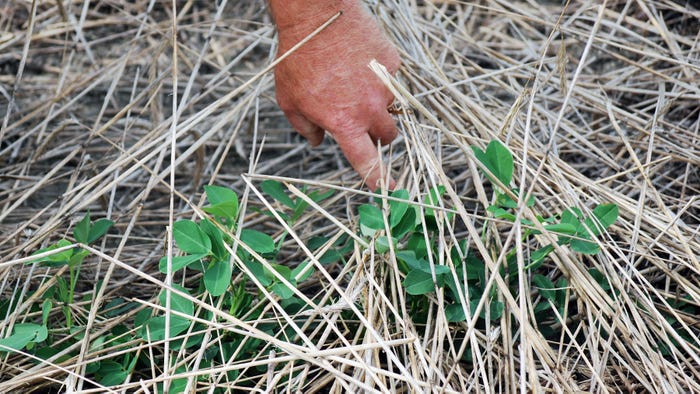
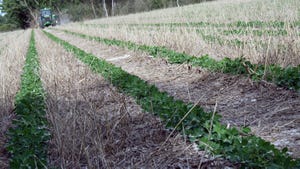
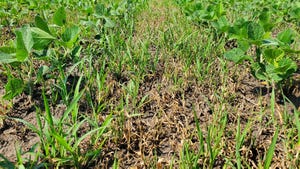
Best management practices, or BMPs, are a collection of methods and practices that preserve soil and water resources while maximizing farm efficiency. BMPs include nutrient management plans to guide land application of nutrients, livestock watering systems to keep animals out of streams, paved feedlots to contain manure, grass or riparian buffer strips and fencing along streams to exclude livestock and to filter runoff from crop fields, cover crops to preserve and build soil, and poultry litter and manure storage systems to protect and hold manure until the proper time for land application.

Alternative water supplies have been shown to help cattle gain more weight than cattle watered from an open stream or pond, proper storage and application of manure cuts fertilizer costs, and limiting soil erosion protects a resource that can take centuries to rebuild.

The state’s downstream neighbors also benefit from agricultural BMPs.

West Virginia signed on to the Chesapeake Bay Program in 2002. The Program is intended to reduce overall pollution entering the bay, in part by reducing nutrient and sediment impacts along its tributary streams. The Program also seeks to reduce urban and residential impacts to water quality.

Commissioner Douglass added that many government conservation programs include cost-share dollars for implementation, or may actually pay farmers rent to take land out of production. “There is really no good reason for farmers not to be involved in BMP programs,” said Commissioner Douglass.

“Each person living along the river has a responsibility to maintain its cleanliness, whether they have a thousand acres of crops, or if they’re just growing a lawn. Each one has an effect on the environment, and each one should take responsibility to minimize his or her impact.”

For information on BMPs, nutrient management plans and conservation programs, contact the West Virginia Department of Agriculture (WVDA), 304-538-2397; West Virginia Conservation Agency (WVCA), 304-558-2204; Natural Resources Conservation Service (NRCS), 304-284-7545; your local Conservation District or your county Extension agent.

Get Copyright ClearanceWant to use this article? Click here for options!
© 2009 Penton Media, Inc.


Latest Jobs

resources

events icon events

product info icon tradeshows

tradeshow icon digests

research icon photos

Continuing Education

Accredited in Florida, Georgia, New Mexico, Oklahoma, Texas, South Carolina and Tennessee:


(New Course)
Weed Resistance Management in Cotton

This course covers a wide range of options to effectively control weeds in cotton and reduce the risk of weed resistance management. It is accredited for hours/units for licensed/accredited applicators in 7 U.S. Cotton Belt states (Florida, Georgia, New Mexico, Oklahoma, Texas, South Carolina an d Tennessee. CCA credit is pending).

(New Course)
New Mode of Action Chemistry for Vegetable Production

Integration of a new mode of action compound like Coragen into IPM and IRM programs to control Lepidoptera in leafy greens, fruiting vegetables, peppers and brassica or cole crops is always welcome. This online CE accredited course details how best to use this new mode of action insecticide in intensive vegetable production. It is accredited by the Certified Crop Adviser (CCA) program and by state agencies for licensed applicators in Texas, Georgia, Florida, New Jersey and Pennsylvania.

(New Course)
Utilizing Calcium as Nutrient That Protects Against Disease Organisms

This online accredited course focuses on Calcium, an important plant nutrient in fertilizer management for maximum, healthy plant development as well as disease and pest prevention. It is accredited by the Certified Crop Adviser (CCA) program and for licensed applicators in licensed Georgia, Florida, Pennsylvania and New Jersey. Credit applications are pending in South Carolina, Tennessee, Virginia, West Virginia and Washington.

This course is accredited in Texas, Oklahoma, New Mexico, Virginia, West Virginia and Wyoming as well as for CCA credits:

(New Course)
Spray Drift Management

Keeping crop protection chemicals on the crop for which they are intended has been a cornerstone of farming not only to protect neighboring crops, but to not waste money allowing products to drift off the intended target. This accredited online continuing education course covers the critical elements of spray drift management.

Back to Top

Browse Print Issues

Additional Resources

subscribe to Farm Press Daily Delta Farm Press Southwest Farm Press Western Farm Press