Corn for ethanol demand driving prices higher

Nov 27, 2006 9:49 AM, By Harry Cline
Farm Press Editorial Staff

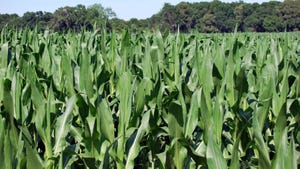
An insatiable demand for corn for ethanol production combined with projected record exports is likely to drive U.S. corn stocks-to-use ratio down to 10 percent this season.

The last two times that happened, prices soared.

CBOT corn futures peaked at $5.545 per bushel in July 1996 when the stocks-to-use ratio fell to 5 percent. When the 2003/04 stocks/use ratio fell to 9.4 percent, it produced a high of $3.3525 in April 2004.

The 15-year stocks-to-use ratio average is 15 percent.

According to Dennis Morrison, trading and transportation manager for Integrated Grain and Milling, Fresno, Calif., there will be many “dramatic forces” in the grain and protein meal markets during the 2006/07 crop marketing year.

Morrison made his observations in a grain and protein meal outlook for the 25th Agribusiness Management Conference held recently in Fresno.

“Adverse global growing conditions have resulted in severe shortfalls in feed grain and wheat supplies in much of the world,” Morrison said. This means export trade in feed grains will be the highest in decades due to the lowest world ending stocks in 30 years.

On the other hand, global soybean supplies are seemingly plentiful. However, world trade in soybeans and products continue to increase, driven mainly by China’s expanding economy and improving diet, Morrison noted.

The United States is harvesting its third consecutive corn crop of more than 11 billion bushels; however, the burgeoning corn ethanol industry is taking an ever increasing share of the U.S. corn production.

USDA projects 2.15 billion bushels of corn will go into producing ethanol this season. However, a private forecaster says the United States will need 2.233 billion bushels of corn to turn out 6.114 billion gallons of ethanol in 2006/07. If realized, this would be a 35 percent one-year increase in corn demand for ethanol and a 240 percent increase since 2000/01.

“If it were not for the robust corn export demand, 2006/07 may have become the first year for the U.S. to send more corn to ethanol production than export sales,” said Morrison. That distinction will likely come by 2007/08 “as new ethanol production continues to come online at breakneck speed.”

U.S. corn exports are expected to rise to levels not seen since 1990 due to foreign feed grain supply shortfalls, added Morrison.

Production of distillers grain (DDG), a byproduct of ethanol production, is also increasing. Most livestock feeders are experimenting with the use of DDG in feed rations, but its gaining in popularity due to its nutritional value, roughly 26 percent protein and 10 percent fat.

Morrison said one private forecaster projects DDG production will increase by about 4 million metric tons this year over 2005/06.

This will be offset by a reduction of some other feed ingredients. The same private analyst says that 527 million bushels of corn will be displaced by DDG this season. This is 185 million more bushels than was displaced last season.

As DDG supplies grow, not only will more corn in rations be displaced but it could result in some protein meals being replaced.

USDA, in its September production report, forecast the 2006/07 average farm price for corn to range from $2.15 per bushel to $2.55. This compares to about $2 when the United States started the crop year with record large corn supplies.

Beginning corn stocks this season are second only to last year’s record. However, projected record usage for ethanol production and large export sales will reduce ending stocks to just 1.220 billon bushels. This will result in the third lowest stocks to use ratio in the past 15 years and set the stage for a volatile futures market.

“World corn trade volume will set a new record and total coarse grain global trade volume will reach the lofty heights last seen near the end of the fabled ‘Russian deals’ of the late 1970s and early 1980s.

Wheat did not fare as well as corn in the United States and joined the rest of the wheat-producing world in a weather-impacted smaller crop. Morrison noted that the poor crops will result in the lowest world wheat ending stocks in the last 25 years.

“Global demand for wheat will keep U.S. exports well supported despite our relatively tight domestic supplies.”

Global demand for wheat for the world’s main wheat exporting countries, excluding the United States will drop by more than 30 percent. “All of these conditions will keep wheat prices highly volatile as we have seen in recent market action.”

e-mail: hcline@farmpress.com

Get Copyright ClearanceWant to use this article? Click here for options!
© 2010 Penton Media, Inc.


Latest Jobs

Subscribe to RSS headline updates from:
Powered by FeedBurner

Continuing Education

Accredited in Florida, Georgia, New Mexico, Oklahoma, Texas, South Carolina and Tennessee:


(New Course)
Weed Resistance Management in Cotton

This course covers a wide range of options to effectively control weeds in cotton and reduce the risk of weed resistance management. It is accredited for hours/units for licensed/accredited applicators in 7 U.S. Cotton Belt states (Florida, Georgia, New Mexico, Oklahoma, Texas, South Carolina an d Tennessee. CCA credit is pending).

(New Course)
New Mode of Action Chemistry for Vegetable Production

Integration of a new mode of action compound like Coragen into IPM and IRM programs to control Lepidoptera in leafy greens, fruiting vegetables, peppers and brassica or cole crops is always welcome. This online CE accredited course details how best to use this new mode of action insecticide in intensive vegetable production. It is accredited by the Certified Crop Adviser (CCA) program and by state agencies for licensed applicators in Texas, Georgia, Florida, New Jersey and Pennsylvania.

(New Course)
Utilizing Calcium as Nutrient That Protects Against Disease Organisms

This online accredited course focuses on Calcium, an important plant nutrient in fertilizer management for maximum, healthy plant development as well as disease and pest prevention. It is accredited by the Certified Crop Adviser (CCA) program and for licensed applicators in licensed Georgia, Florida, Pennsylvania and New Jersey. Credit applications are pending in South Carolina, Tennessee, Virginia, West Virginia and Washington.

This course is accredited in Texas, Oklahoma, New Mexico, Virginia, West Virginia and Wyoming as well as for CCA credits:

(New Course)
Spray Drift Management

Keeping crop protection chemicals on the crop for which they are intended has been a cornerstone of farming not only to protect neighboring crops, but to not waste money allowing products to drift off the intended target. This accredited online continuing education course covers the critical elements of spray drift management.

New Course
The ABCs of MRLs

American agriculture exports 20 to 30 percent of its production annually. For specific commodities, the percentage is much higher. When recommending and applying pest management products for crops, license Pest Control Advisers (PCAs)  and applicators and farmers must be aware of which products applied are in compliance with Maximum Residue Limits (MRLs) established by foreign customers. This CE course details the MRL issue and why compliance is critical to marketing into world trade.

Back to Top

Browse Print Issues

Additional Resources

subscribe to Farm Press Daily Delta Farm Press Southwest Farm Press Western Farm Press