Ethanol will power 2007 IndyCar Series season

Nov 22, 2006 10:28 AM

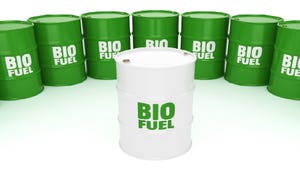
A worldwide racing first, the IndyCar Series is poised to open its 2007 season on March 24 at the Homestead-Miami Speedway with the debut of the new 3.5 liter Honda Indy V-8 engine fueled by 100 percent fuel-grade ethanol.

The ethanol industry is proud to be involved in the most significant racing fuel change in recent history. The cutting edge technology developed for this series has performed flawlessly in extended testing. The combined efforts of the ethanol industry and the IndyCar Series have helped drive consumer awareness of ethanol and its performance and environmental benefits.

The Ethanol Promotion and Information Council (EPIC) is responsible for providing the fuel and has contracted Renova Energy, based in Torrington, Wyo., to supply ethanol to the IndyCar Series throughout the 2007 season.

“At the highest level of auto racing, ethanol proved safer and faster and has proved what auto enthusiasts have known for years,” said Tom Slunecka, executive director of EPIC. “Renova Energy produces ethanol the same way, whether for an IndyCar Series car speeding around the track at 220 or a family sedan traveling 25 mph on Main Street.”

Several IndyCar Series engineers worked with Dan Schwartzkopf, senior vice-president of Renova Energy, who not only oversees his plant’s ethanol production process but also races several dragsters that are fueled on E85, 85 percent ethanol and 15 percent gasoline.

“The process of transitioning over to 100 percent fuel grade ethanol has been seamless from the beginning” said Les Mactaggart, senior technical director for the IndyCar Series. “EPIC, Honda and Renova have been true partners during the process that culminated with successful tests at Daytona International Speedway, Indianapolis Motor Speedway and Iowa Speedway in September and October.”

The Ethanol-IndyCar Series partnership dates back to 2005 and has advanced from ethanol being a team sponsor to working with the league to introduce an ethanol-methanol blend in 2006 to next year’s introduction of 100 percent fuel grade ethanol. The 17-race 2007 IndyCar Series schedule opens in March, runs through September and includes the Indianapolis 500 on May 26.

IndyCar Series drivers Sam Hornish Jr., Tony Kanaan, Vitor Meira and Jeff Simmons each had an opportunity to try out the new 3.5 liter Honda Indy V-8 engine-100 percent fuel grade ethanol combination during the post-season testing sessions.

“There’s a difference, and it’s all been positive so far,” Simmons said. “It’s great to be one of the guys to have the chance to run the new motor next year with the 100 percent ethanol. It seems to me, so far, we’ve got a broader power band. We’re going through the corners better. It allows us to do some things with gearing whereas you had to be really precise with the gearing last year. We’re able to pull some really good speed even if we’re a little off on the gearing.”

“The Renova Energy Racing team has been using ethanol as a high performance race fuel for more than a decade with great success,” said Schwartzkopf, senior vice president of Renova Energy. “We are very excited about our partnership with EPIC and the IndyCar Series and we see this as an excellent platform to promote the use of ethanol as a motor fuel to the wider public.”

For more information about ethanol, visit www.drivingethanol.org. For more information about the IndyCar Series, visit www.indycar.com. For more information about Renova Energy, visit www.renovaenergy.com.

Get Copyright ClearanceWant to use this article? Click here for options!
© 2010 Penton Media, Inc.


Latest Jobs

Subscribe to RSS headline updates from:
Powered by FeedBurner

Continuing Education

Accredited in Florida, Georgia, New Mexico, Oklahoma, Texas, South Carolina and Tennessee:


(New Course)
Weed Resistance Management in Cotton

This course covers a wide range of options to effectively control weeds in cotton and reduce the risk of weed resistance management. It is accredited for hours/units for licensed/accredited applicators in 7 U.S. Cotton Belt states (Florida, Georgia, New Mexico, Oklahoma, Texas, South Carolina an d Tennessee. CCA credit is pending).

(New Course)
New Mode of Action Chemistry for Vegetable Production

Integration of a new mode of action compound like Coragen into IPM and IRM programs to control Lepidoptera in leafy greens, fruiting vegetables, peppers and brassica or cole crops is always welcome. This online CE accredited course details how best to use this new mode of action insecticide in intensive vegetable production. It is accredited by the Certified Crop Adviser (CCA) program and by state agencies for licensed applicators in Texas, Georgia, Florida, New Jersey and Pennsylvania.

(New Course)
Utilizing Calcium as Nutrient That Protects Against Disease Organisms

This online accredited course focuses on Calcium, an important plant nutrient in fertilizer management for maximum, healthy plant development as well as disease and pest prevention. It is accredited by the Certified Crop Adviser (CCA) program and for licensed applicators in licensed Georgia, Florida, Pennsylvania and New Jersey. Credit applications are pending in South Carolina, Tennessee, Virginia, West Virginia and Washington.

This course is accredited in Texas, Oklahoma, New Mexico, Virginia, West Virginia and Wyoming as well as for CCA credits:

(New Course)
Spray Drift Management

Keeping crop protection chemicals on the crop for which they are intended has been a cornerstone of farming not only to protect neighboring crops, but to not waste money allowing products to drift off the intended target. This accredited online continuing education course covers the critical elements of spray drift management.

New Course
The ABCs of MRLs

American agriculture exports 20 to 30 percent of its production annually. For specific commodities, the percentage is much higher. When recommending and applying pest management products for crops, license Pest Control Advisers (PCAs)  and applicators and farmers must be aware of which products applied are in compliance with Maximum Residue Limits (MRLs) established by foreign customers. This CE course details the MRL issue and why compliance is critical to marketing into world trade.

Back to Top

Browse Print Issues

Additional Resources

subscribe to Farm Press Daily Delta Farm Press Southwest Farm Press Western Farm Press