Commentary: Farming is too valuable to give away

Jun 26, 2006 9:15 AM, By Roy Roberson Farm Press Editorial Staff

As a young boy, growing up way too many years ago in east-central Alabama, I remember going to family reunions and hearing my relatives in Birmingham talk about the demise of the steel industry. Giving the steel industry to Japan and other economically emerging nations of the time they reckoned was progress.

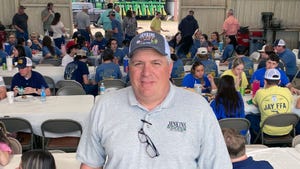
ROBERSON

My question is couldn’t Birmingham, Ala., have had progress AND a vibrant steel industry? Sure, Birmingham is a progressive city now — they even renovated the world’s largest (at the time it was operational) steel furnace, Sloss Furnace, into a major tourist attraction. How much more successful would Birmingham be, if the steel from Sloss Furnace was going into Mercedes automobiles now being assembled just southwest of Birmingham?

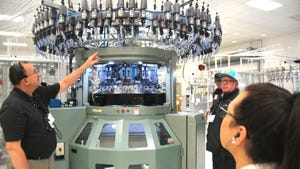
I thought at the time that I was fortunate to grow up in a textile town — we didn’t have to worry about that industry going away. We had plenty of cotton and plenty of demand for cotton products. My mother and father both worked most of their lives in a cotton mill. We weren’t rich, but we always had a couple of paychecks every Thursday. At their economic peak, the six cotton mills that flourished within 10 miles of my hometown, ran three shifts a day, 5-7 days a week and 50 weeks a year. Now, only two of the six mills run part time.

Now, instead of six towns, there is one consolidated town. It seems to be doing well. I guess you could call that progress. Again, my question is how much more progressive would the consolidated town be WITH a strong and vibrant textile industry? If so, maybe three fourths of the cotton grown in America would be used in America, rather than being exported, then coming back in the form of clothes and other cotton products. Instead, it’s the other way around, only about a fourth of American grown cotton is woven or spun into U.S made products.

In the past few months we have all read and heard about the unprecedented layoffs of personnel and closing of General Motors and Ford assembly plants across America. It’s hard to miss that the best selling car in America, for the past decade or so is made by Toyota. It was easy for many of us to say the U.S. auto industry was over-paid and under-worked and produced inferior products, hence we bought cheaper more efficient foreign made cars. We could call that progress, too.

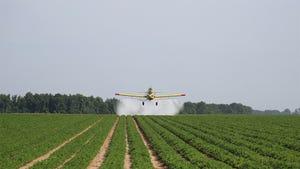
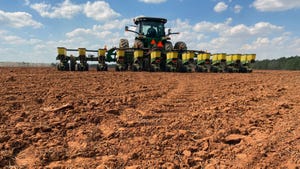
If America is going to give away steel, textiles and automotives, why not throw in the leading industry in the country, agriculture? Wouldn’t that be equally as progressive as depending on other countries for cars, clothes and steel? I’m not an economist, but I can answer that one. NO!

America became the greatest nation in the world not because of our steel producing capabilities, nor our ability to turn cotton into clothes, nor our ability to build cars. Though we have the world’s most technologically advanced military, that didn’t make us the greatest country in the world either. We became the greatest nation in the world because we are able to feed ourselves more efficiently than any country in the world. We are still the only country in the world that spends less than 10 percent of our disposable income on food.

We won two world wars, a cold war and the space race because we had money to spend because we could feed and cloth ourselves so economically. We have boats and summer homes and take nice vacations because such a low percentage of our disposable income goes to buy food. Some Americans and the politicians who represent them may be willing to banish agriculture to the same fate as cars, textiles and steel, but I hope farmers will stand up and not allow that to happen.

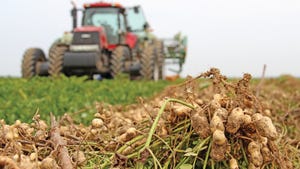
I understand that agriculture has great representation. Some of the best people I know represent agriculture. Randy Griggs in Alabama is in my opinion the best representative that peanut farmers could have. He is knowledgeable, an excellent communicator and a fine person on top of his professional skills. Ditto on a regional level for David Rupernicker, who represents both cotton growers and cotton ginners in the Southeast. I could go on and on with top people who represent various agricultural industries.

The point is, regardless of how passionate and eloquently these folks represent farmers they are just that — representatives. If your marriage was in trouble, would you hire a passionate, eloquent representative to tell your wife, or husband, “honey you mean the world to me, I love you more than life itself and my time with you has meant more than anything in my life and my dreams are based on growing old together with you”? No representative could ever express what that relationship means to you as well as you could do it yourself.

It’s time for farmers to let politicians at the local, state and national levels know just how passionate they are about their profession. If you don’t think agriculture will go away, talk to the folks who USED to work in the steel mills, or cotton mills, or automotive plants. Work with your representatives to tell your story to the politicians who represent you. The time for asking for political consideration is done, the time to demand it is here.

If you think fighting the government is futile, think about this. In my 30 years or so of writing about agriculture subjects, the single biggest response, both in numbers and passion have come from a small article, buried on one of the back pages of a recent issue of Southeast Farm Press. It told about the ongoing battle of a small group of farmers and landowners in eastern North Carolina who have waged a three-year war with the U.S. Navy to prevent the building a landing zone that would condemn 35,000-50,000 acres of farmland.

I won’t go into all the issues, but suffice to say, this small group of people have banded together, have faced insurmountable odds, and are winning the battle. I was traveling in the area recently on election day. Every politician elected in that region was not only anti OLF, but pro-support of the No OLF movement in eastern North Carolina. The No OLF Group’s political pressure has been great enough to garner support from the Governor of the state and high profile national politicians, including Sen. Elizabeth Dole.

Farming is too valuable to farmers and consumers alike. Don’t let it be given away!

e-mail: rroberson@farmpress.com

Get Copyright ClearanceWant to use this article? Click here for options!
© 2010 Penton Media, Inc.


Latest Jobs

Subscribe to RSS headline updates from:
Powered by FeedBurner

Continuing Education

Accredited in Florida, Georgia, New Mexico, Oklahoma, Texas, South Carolina and Tennessee:


(New Course)
Weed Resistance Management in Cotton

This course covers a wide range of options to effectively control weeds in cotton and reduce the risk of weed resistance management. It is accredited for hours/units for licensed/accredited applicators in 7 U.S. Cotton Belt states (Florida, Georgia, New Mexico, Oklahoma, Texas, South Carolina an d Tennessee. CCA credit is pending).

(New Course)
New Mode of Action Chemistry for Vegetable Production

Integration of a new mode of action compound like Coragen into IPM and IRM programs to control Lepidoptera in leafy greens, fruiting vegetables, peppers and brassica or cole crops is always welcome. This online CE accredited course details how best to use this new mode of action insecticide in intensive vegetable production. It is accredited by the Certified Crop Adviser (CCA) program and by state agencies for licensed applicators in Texas, Georgia, Florida, New Jersey and Pennsylvania.

(New Course)
Utilizing Calcium as Nutrient That Protects Against Disease Organisms

This online accredited course focuses on Calcium, an important plant nutrient in fertilizer management for maximum, healthy plant development as well as disease and pest prevention. It is accredited by the Certified Crop Adviser (CCA) program and for licensed applicators in licensed Georgia, Florida, Pennsylvania and New Jersey. Credit applications are pending in South Carolina, Tennessee, Virginia, West Virginia and Washington.

This course is accredited in Texas, Oklahoma, New Mexico, Virginia, West Virginia and Wyoming as well as for CCA credits:

(New Course)
Spray Drift Management

Keeping crop protection chemicals on the crop for which they are intended has been a cornerstone of farming not only to protect neighboring crops, but to not waste money allowing products to drift off the intended target. This accredited online continuing education course covers the critical elements of spray drift management.

New Course
The ABCs of MRLs

American agriculture exports 20 to 30 percent of its production annually. For specific commodities, the percentage is much higher. When recommending and applying pest management products for crops, license Pest Control Advisers (PCAs)  and applicators and farmers must be aware of which products applied are in compliance with Maximum Residue Limits (MRLs) established by foreign customers. This CE course details the MRL issue and why compliance is critical to marketing into world trade.

Back to Top

Browse Print Issues

Additional Resources

subscribe to Farm Press Daily Delta Farm Press Southwest Farm Press Western Farm Press