Parts of Georgia abnormally dry

More About:

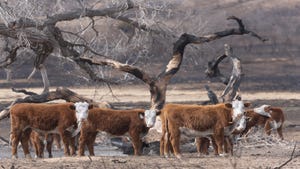
Following a wet winter and early spring, Georgia’s summer has been generally hot and dry.

Much of northwest, north-central, southwest, east and coastal Georgia are abnormally dry. Over the past month, less than half of normal rainfall has fallen in some of these areas.

Over the past two months, many areas in Georgia have received only 70 percent of normal rainfall. For this month through July 19, Athens has received 42 percent, Augusta at Bush Field 29 percent, Columbus 44 percent and Savannah 44 percent of normal rainfall.

Counties in northwest and north-central Georgia currently classified as abnormally dry are Haralson, Polk, Bartow, Cherokee, north-Fulton, Forsyth, Dawson, Lumpkin and Union, inclusive.

In southwest Georgia, counties classified as abnormally dry are Muscogee, Chattahoochee, Stewart, Webster, Sumter, Crisp, Lee, Dougherty, Baker, Decatur, Grady, Thomas and Brooks, inclusive.

In coastal and east Georgia, counties classified as abnormally dry are Madison, Elbert, Clarke, Oglethorpe, Wilkes, Lincoln, Taliaferro, Warren, McDuffie, Columbia, Richmond, Burke, Wilcox, Ben Hill, Dodge, Telfair, Laurens, Wheeler, Montgomery, Treutlen, Emanuel, Jenkins, Candler, Evans, Screven, Bulloch, Effingham, Chatham, Bryan, Liberty, Long, McIntosh, Wayne, Glynn, Brantley and Camden.

Exceptions to the drying trend include much of the central and west piedmont and the north-central and south-central coastal plain. Atlanta has received 102 percent of normal rain over the past month. Macon has received 234 percent of normal rain over the past month.

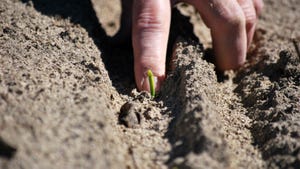
With temperatures remaining in the 90s and low 100s with little or no rain, soils statewide will continue to dry. This will lead to increased plant stress.

As of late July, stream flows and reservoir layers are near normal to above normal across the state. Water resources are anticipated to be near normal over the next few months.

The ocean-atmosphere system has switched into a La Niña pattern. According to the Florida State University’s Center for Ocean-Atmospheric Prediction Studies, the La Niña pattern increases the likelihood that the East Coast will experience a land-falling tropical system compared to normal. If an active tropical storm season develops as forecasted, dry conditions could be relieved by summer and fall tropical systems.

However, the La Niña pattern is associated with dry and warm winters across much of the Southeast. This means that we may have minimal recharge of the hydrologic system this winter. This increases the probability of widespread and significant drought for next year. It is too early to tell exactly how the La Niña pattern will impact Georgia, but we need to be aware of the possible short-term tropical impacts and the long-term drought impacts.

Up-to-date information on dry conditions across Georgia can be found at http://www.georgiadrought.org. Updated weather conditions can be found at http://www.georgiaweather.net.

EDITOR’S NOTE — David Stooksbury is the state climatologist, a professor of engineering and graduate coordinator for atmospheric sciences in the University of Georgia College of Agricultural and Environmental Sciences.

Discuss this article 0

Post new comment

Sign in or Register to use your South East Farm Press ID

(optional)
CAPTCHA
This question is for testing whether you are a human visitor and to prevent automated spam submissions.
Incorrect please try again
Enter the words above: Enter the numbers you hear:
Sign Up
Sign Up!

For the South East Farm Press Newsletter
Keep up with the latest news with our daily newsletter

Continuing Education Courses
New Course

Biopesticides are increasingly being recommended as components of Integrated Pest Management (IPM) programs in the production of non-organic high-value specialty crops like fruit, nut, vegetable, vine, ornamental and turf.

New Course

This course covers a wide range of options to effectively control weeds in cotton and reduce the risk of weed resistance management.

New Course

Integration of a new mode of action compound like Coragen into IPM and IRM programs to control Lepidoptera in leafy greens, fruiting vegetables, peppers and brassica or cole crops is always welcome.