Natural predators tested for stink bug control

The arrival of bacillus thuriengensis-containing seed a few years back created a good environment for stink bug buildups across the Southeast. In recent years, increased use of improved Bt-containing varieties has created a major stink bug problem.

Virginia Tech University researchers, in a cooperative project with the universities of Maryland and Delaware, are looking at some natural control options for stink bugs on soybeans.

Virginia Tech doctoral student Amanda Koppel, working with veteran Virginia IPM leader Ames Herbert, has studied biological control of stink bugs for the past five years.

She raised stink bugs in a laboratory and put them in a soybean field, then collected eggs from the field. Koppel found several species of parasitic wasps in the stinkbug eggs.

Almost half the brown and green stink bug eggs she found were parasitized by these wasps. “That is amazing to think in a few weeks half the stink bugs in a field of newly planted wheat may be parasitized and killed by these wasps,” Koppel says.

Also encouraging, a low percentage (16 percent) of the egg mass of spine soldier bug, a beneficial insect, was parasitized by these wasps. Other beneficial insects showed similar low levels of parasitic wasp activity.

The good news is there are plenty of natural enemies parasitizing stink bugs in the field right now. The bad news is these low numbers came from fields not sprayed with insecticides.

Extending her study to a more real life situation in which crops are treated with insecticides, Koppel looked at four different insecticide classes commonly used on row crops and vegetable crops in the Southeast: Organophosphates, pyrethroids, neonicotinoid, and spinosad.

The results, she says, may be surprising to growers. A high percentage (up to 70 percent) of the stink bug eggs survived the various insecticide treatments. The bottom line, she stresses, is that growers may kill off a high percentage of the nymphs and adults, but you are not killing what is inside these eggs. That means later generations of stinkbugs will be in the field to damage crops.

The worse news is that of the stink bug eggs that contained parasitic wasps, virtually all were killed by insecticide application. “I think what happens in the field is that these parasite-containing eggs are already stressed, then they are hit with an insecticide and that’s the last nail in the coffin,” Koppel explains.

Bottom line is the parasite-containing stinkbug eggs are less hardy than pure stink bugs. Bad weather and any number of environmental factors will take these beneficial parasites out, while the pure stink bugs tend to roll with the punches and survive both environmental and man made obstacles, she says.

Some of the parasitic wasps can be raised in a lab and released in farmer fields. The increase in numbers of these beneficials obviously raises the potential of having more parasitic wasps in the egg mass of stinkbugs. However, the reality is a high percentage of these beneficial insects either leaves the target field or is killed by insecticides or environmental factors.

A better option for farmers, Koppel says, is to understand when and where these beneficials are likely to occur and spray insecticides more wisely to increase the chances of survival.

“One thing I’ve seen is that spraying a high rate of insecticide at the beginning of the crop season takes out a high percentage of these parasitic wasps. If these beneficial wasps are left in the field long enough, they will parasitize first generation stink bug eggs, preventing some of these damaging insects from hatching,” Koppel explains.

In an ideal situation, she says, growers would keep a high number of parasitic wasps in the field. These parasites would keep stinkbug numbers down, and if the wasps remain in high enough numbers to over-winter, they could help keep stink bug damage down in subsequent crops.

On the horizon, Southeastern growers might well have another species of stink bug to worry about. The brown marmorated stink bug, Koppel says, is now an infrequent pest around houses, but has the potential to become a pest of crops. (For an update on the brown marmorated stink bug please visit http://southeastfarmpress.com/management/brown-marmorated-stink-bug-real-threat-southeast-crops.)

This true bug in the insect family Pentatomidae is known as an agricultural pest in its native range of China, Japan, Korea and Taiwan. It becomes a nuisance pest both indoors and out when it is attracted to the outside of houses on warm fall days in search of protected, over-wintering sites. It occasionally reappears during warmer sunny periods throughout the winter, and again as it emerges in the spring.

Koppel recently visited China and found parasitic wasps that are natural enemies of the marmorated stink bugs. So far, this species has not shown up in crops in southeast Virginia. If it becomes a pest of crops, Virginia Tech researchers will have biological head start in figuring out ways to manage it.

Managing stinkbugs in a variety of Southeastern crops is an economic must. In cotton, researchers estimate 3-5 percent of the crop is lost each year to stink bugs. (To get an idea of the problem with dealing with stink bugs, please visit http://southeastfarmpress.com/management/stink-bug-outlook-unpredictable.

The increase in soybean acreage and the increased value of the soybean crop has spurred the increased use of Bt-containing soybean seeds. As expected, stinkbug damage to soybeans continues to increase.

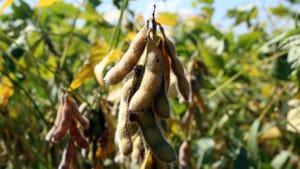
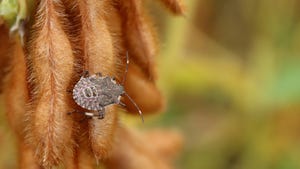
In soybeans, stink bugs inflict mechanical injury to the seed as well as transmit the yeast-spot disease organism. The degree of damage caused by this pest depends to some extent on the developmental stage of the seed when it is pierced by the stink bug's needle-like mouthparts. The younger the seed when damaged, the greater the yield reduction.

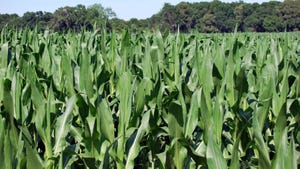
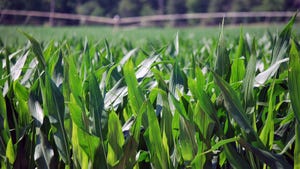
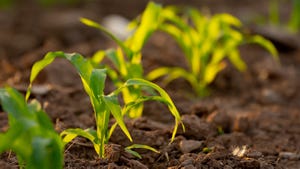
Corn and wheat yields also can be lowered by stink bug damage. In corn, stinkbugs may kill small seedlings, resulting in stand reduction. Surviving corn plants are stunted and have reduced root mass and tillering is reduced. Corn yield losses on plants attacked by stink bugs can reach 10 percent.

Wheat tillering is similarly affected by stink bug damage.

As growers switch to even more effective worm-controlling genetically altered seed, stink bugs are almost certain to become an even bigger problem for Southeastern growers in the coming years. Understanding when and what to spray to kill these bugs, yet maintain beneficial insects, will surely be a big part of stink bug management strategy.

e-mail: rroberson@farmpress.com

Discuss this Article 8

Wen (not verified)
on May 14, 2011

In the area in which we live in Baltimore, robins were robustly going after stinkbugs and eating them as a source of food. I noticed this first in November of 2010 and they are back now in spring of 2011. While I contacted local folks, no one seemed to be interested in following up with this natural preditor.

Anonymous (not verified)
on May 12, 2013

I saw the same thing last summer. There was one big fat Robin hanging around our deck eating the stinkbugs and he's back again. I'm positive that's what he's doing. Only problem, he was making a mess, quite literally, on our deck.

Anonymous (not verified)
on Jun 8, 2011

Twice you state that with increased use of BT crops, the stink bug problem will grow but you never exactly reason this out and explain why this would be so. How will controlling the worms help the stink bugs?

Anonymous (not verified)
on Apr 16, 2012

In Lancaster County, PA, there is a species of spider that can be seen killing and carrying away stink bugs. I wondered why there are so many stink bugs just inside the front screen door. Now I saw this happening. I have not identified the spider but it is a common one about 1/4" considering leg span and seems all black.

Renee chadwick (not verified)
on Oct 7, 2012

This wasp I have seen in Phillipsburg nj. It stung me while I was weeding and another time my daughter brought it into the home on her clothes. She got stung multiple times as she scratched- it stung in a line. I found it on her bed after I removed my screaming child. The sting feels like a bee sting. So looks like they were already introduced into the us. We found this particular wasp in 2008 both times but a few months apart. It was summer.

Anonymous (not verified)
on May 6, 2013

The parasitic wasps that attack stink bug eggs are not much larger than specks of ground pepper and do not sting. Google "Trissolcus halyomorphae" for more information...

Renee chadwick (not verified)
on Oct 7, 2012

These wasps are already in the us. I saw them first in summer 2008 in Phillipsburg bj. They sting and it hurts. I got stung weeding and my daughter got stung multiple tones as it ran down her arm.

Anonymous (not verified)
on May 12, 2013

I live in Howard County Maryland and yes, I've seen the robins eating the stinkbugs. I wonder if other birds eat them.

Post new comment
Sign In or register to use your Southeast Farm Press ID

(optional)

Continuing Education Courses
New Course
The 2,000-member Weed Science Society of America’s (WSSA) Herbicide Resistance Action...
New Course
The course details six of the primary diseases affecting citrus: Huanglongbing (Citrus...
Potassium nitrate has a positive effect in controlling plant pests and diseases when applied...

Newsletter Sign Up