Squeeze fertilizer dollar hard

May 4, 2005 12:00 PM, By Paul L. Hollis Farm Press Editorial Staff

As fuel prices have skyrocketed, fertilizer prices have followed close behind, making it more important than ever for cotton producers to get the most from their fertilizer dollar. There are several things growers can do, says University of Georgia Extension agronomist Glen Harris, to manage their fertility economical and still make a good crop.

First and foremost is to soil test, he says. Soil testing, says Harris, still is the best way to guide your fertilizer program. “It should take into account yield goals and tell you when you need an element and when you don't. Most soil test labs in the Southeast use the same chemical extractants, so the numbers for soil test levels should be comparable,” he says.

On the other hand, he adds, recommendations can vary depending on if you follow a “feed the plant” or “feed the soil” philosophy. “If you've been feeding the soil with maintenance fertilizer, it may be a good year to withdraw on some of that investment,” he says.

Growers also should maintain proper soil pH, says Harris. Liming to the proper soil pH can help you get the most from the fertilizer you apply, plus nutrients that already are in the soil. This, he says, is due to the effect of pH on nutrient availability.

“Letting your pH get too high can tie up nutrients such as manganese and zinc, and letting it get too low will decrease yields due to aluminum toxicity. With 40 percent of Georgia's cotton now under conservation-tillage, remember to catch the drop in pH early by taking a shallow soil sample, say 2 to 3 inches,” he says.

This also will be a good year to know the value of chicken litter, says Harris. Based on current fertilizer prices, a ton of chicken litter is worth approximately $35 per ton. This is based on nitrogen, phosphorus and potassium, and it does not give any credit for other nutrients, organic matter, or slight liming capacity.

“It does account for the nitrogen only being about 60-percent available compared to commercial fertilizer,” he says. “If you do not need phosphorus, it also reduces the value to about $20 per ton. And remember that not all litter is created equal, and that it can vary in nutrient content, especially nitrogen. Some reports show only 20 pounds of nitrogen instead of 60 pounds per ton of chicken litter.”

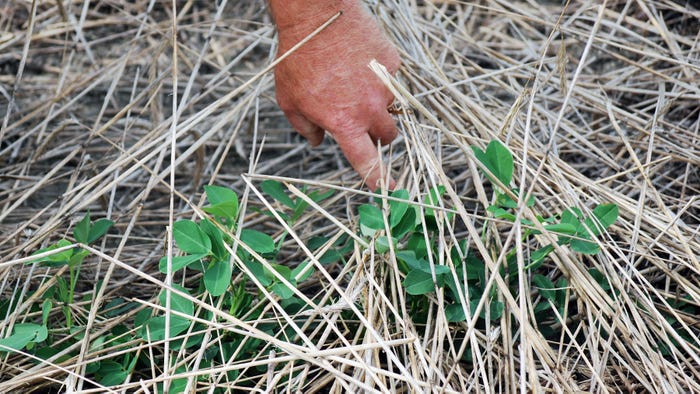
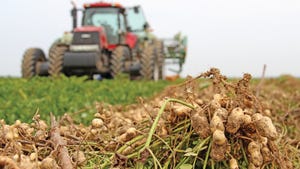
Cotton producers also shouldn't be afraid to adjust their total nitrogen rate based on the previous crop, growth history, and yield potential, says Harris. If you're following peanuts or a legume cover crop, you can give yourself a 30-pounds of nitrogen per acre credit, he says.

Nitrogen is probably the most important fertilizer used on cotton, yet it is the most difficult to manage, he says. Low nitrogen rates can reduce yield and quality while excessive nitrogen rates can cause rank growth, boll rot, delayed maturity, difficult defoliation and poor quality and yield.

The University of Georgia Soil Testing Lab recommends the following nitrogen rates for the corresponding yield goals: 60 pounds of nitrogen per acre for a 750-pound per acre yield goal, 75 pounds of nitrogen per acre for a 1,000-pound yield goal, 90 pounds of nitrogen per acre for a 1,250-pound yield goal, and 105 pounds of nitrogen per acre for a 1,500-pound yield goal.

These nitrogen rates then should be adjusted according to other factors, says Harris. For example, you can increase your nitrogen rate by 25 percent if you're planting in deep sandy soil, if cotton is following cotton, or if a field has a history of inadequate stalk growth. You can decrease the nitrogen rate by 25 percent if cotton is following peanuts or soybeans, if cotton is following good stands of winter legumes such as clover or vetch, or if the field has a history of rank or excessive vegetative growth.

Yield goals, says Harris, always should be realistic, preferably based on past production records. For nitrogen rates above 100 pounds per acre, cotton should be highly managed in terms of insect control, plant height, and boron fertilization. Total nitrogen rates above 120 pounds per acre should be needed only on deep sands or in special cases with a history of inadequate stalk growth, or where excessive leaching has occurred, he says.

The recommended nitrogen rates for 1,250 and 1,500-pound per acre yield goals assume that the grower is irrigating his cotton crop.

One of the best thing growers can do to get the most efficiency from their nitrogen fertilizer is to split their nitrogen applications, he says. The standing University of Georgia recommendation is to apply one-fourth to one-third of your total nitrogen at planting, followed by the remainder at side-dress, sometime between first square and first bloom.

The preplant or at-planting nitrogen application is critical, says Harris, for getting the crop off to a good start and insuring adequate nitrogen nutrition prior to side-dressing.

“If you want to increase your efficiency even more, consider foliar feeding about 10 pounds of nitrogen at about the fourth week of bloom. At this growth stage, which is peak bloom, it is more efficient to foliar feed nitrogen directly through the leaves than to apply more nitrogen to the soil. In fact, soil nitrogen applications are not recommended after the fourth week of bloom since they will not increase yield.

“Finally, foliar feeding dryland cotton is a good way to catch up if you cut back on your preplant or sidedress nitrogen, and then you receive good rainfall and have a good yield potential.”

e-mail: phollis@primediabusiness.com

Get Copyright ClearanceWant to use this article? Click here for options!
© 2010 Penton Media, Inc.


Latest Jobs

Subscribe to RSS headline updates from:
Powered by FeedBurner

Continuing Education

Accredited in Florida, Georgia, New Mexico, Oklahoma, Texas, South Carolina and Tennessee:


(New Course)
Weed Resistance Management in Cotton

This course covers a wide range of options to effectively control weeds in cotton and reduce the risk of weed resistance management. It is accredited for hours/units for licensed/accredited applicators in 7 U.S. Cotton Belt states (Florida, Georgia, New Mexico, Oklahoma, Texas, South Carolina an d Tennessee. CCA credit is pending).

(New Course)
New Mode of Action Chemistry for Vegetable Production

Integration of a new mode of action compound like Coragen into IPM and IRM programs to control Lepidoptera in leafy greens, fruiting vegetables, peppers and brassica or cole crops is always welcome. This online CE accredited course details how best to use this new mode of action insecticide in intensive vegetable production. It is accredited by the Certified Crop Adviser (CCA) program and by state agencies for licensed applicators in Texas, Georgia, Florida, New Jersey and Pennsylvania.

(New Course)
Utilizing Calcium as Nutrient That Protects Against Disease Organisms

This online accredited course focuses on Calcium, an important plant nutrient in fertilizer management for maximum, healthy plant development as well as disease and pest prevention. It is accredited by the Certified Crop Adviser (CCA) program and for licensed applicators in licensed Georgia, Florida, Pennsylvania and New Jersey. Credit applications are pending in South Carolina, Tennessee, Virginia, West Virginia and Washington.

This course is accredited in Texas, Oklahoma, New Mexico, Virginia, West Virginia and Wyoming as well as for CCA credits:

(New Course)
Spray Drift Management

Keeping crop protection chemicals on the crop for which they are intended has been a cornerstone of farming not only to protect neighboring crops, but to not waste money allowing products to drift off the intended target. This accredited online continuing education course covers the critical elements of spray drift management.

New Course
The ABCs of MRLs

American agriculture exports 20 to 30 percent of its production annually. For specific commodities, the percentage is much higher. When recommending and applying pest management products for crops, license Pest Control Advisers (PCAs)  and applicators and farmers must be aware of which products applied are in compliance with Maximum Residue Limits (MRLs) established by foreign customers. This CE course details the MRL issue and why compliance is critical to marketing into world trade.

Back to Top

Browse Print Issues

Additional Resources

subscribe to Farm Press Daily Delta Farm Press Southwest Farm Press Western Farm Press