Improved varieties lead fight against peanut diseases

Mar 23, 2005 12:00 PM, By Doreen Muzzi

Varieties have become an increasingly important weapon in the Southeastern peanut grower's continuing battle against diseases. Nowhere is this more true than in the lower Southeast, where growers spend millions of dollars each year controlling and attempting to prevent a myriad of peanut diseases.

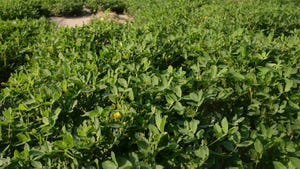
Varieties such as the tomato spotted wilt virus-resistant runner-type Georgia Green have been credited with rescuing peanut farmers from devastation in states such as Georgia, Alabama and Florida, and varieties with even greater disease resistance are making their way through the research pipeline and onto the market.

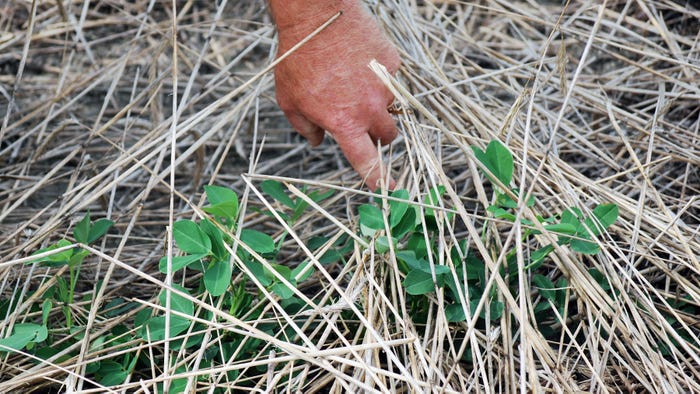
According to University of Georgia Plant Breeder Bill Branch, the first and most important step growers should take to control diseases, especially tomato spotted wilt virus (TSWV), is to plant a resistant variety.

“It's extremely important that peanut growers choose resistant varieties and plant high quality seed to insure an adequate stand for growth and development,” he says. “Planting a high quality plant material with good germination during the recommended planting time will help compensate for any potential losses.”

In addition, Branch says having an adequate stand early in the season is vital. “It is very critical to have an adequate stand to start out with in order to end up with at least four plants per foot at the end of the growing season. We recommend planting six seeds per foot of row,” he says.

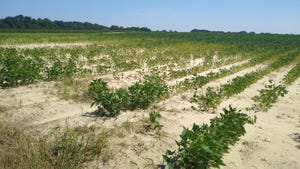
While no variety of peanut is immune to the ravages of such diseases as TSWV, a few have consistently demonstrated moderate levels of resistance. In addition to resistance, some varieties appear to have some degree of tolerance as well. Higher levels of resistance and tolerance are anticipated since peanut breeding programs are now evaluating potential new varieties for response to tomato spotted wilt virus.

Peanut varieties also can have a major impact on fungal disease. The variety Georgia Green currently is planted on the majority of the peanut acreage in the Southeast. However, new varieties from breeding programs at the University of Georgia and the University of Florida not only have improved resistance to spotted wilt but to fungal diseases as well.

For example, the varieties DP-1 and Georgia-01R have some of the best leafspot resistance ever available in commercial varieties. Varieties Georgia-02C and Carver have a level of resistance to cylindrocladium black rot (CBR) that is superior to that of Georgia Green. Just as none of the current varieties is immune to spotted wilt, none is completely immune to fungal diseases either. However, improved resistance will likely lead to reductions in disease severity.

It is important to remember that improved resistance to one disease does not mean that the variety also possesses superior resistance to other diseases. For example, DP-1 and C99-R have greater resistance to leaf spot than Georgia Green. However Georgia Green has greater resistance to rhizoctonia limb rot.

“Rhizoctonia limb rot disease pressure fluctuates from year to year and field to field, but it can be a major problem depending on growing conditions,” says Branch.

Producers in the lower Southeast will have approximately 10 peanut cultivars to choose from to plant during the 2005 production season, according to University of Georgia Extension specialists. In 2004, seed of 14 cultivars were planted, but several have been dropped for this year. It is best, say Extension specialists, to consider all factors — disease resistance, maturity, seed availability, marketability — when selecting which cultivars to plant in 2005.

Seed are expected to be available for the following cultivars in the lower Southeast this year: Georgia Green, Georgia-03L, Anorden, Andru II, Georgia-02C, C-99R, Tifrunner, Georgia-01R, Carver and AP-3.

For some of these cultivars, the seed supply will be limited. These include Georgia-03L, AP-3, and Tifrunner. There is the possibility that there may be seed of ViruGard and Hull.

Peanut varieties for 2005:

Georgia Green is a TSWV-resistant runner-type peanut variety released in 1995 by the Georgia Agricultural Experiment Stations. Georgia Green is highly productive and has very good stability across many different environments. In state yield tests conducted at multi-locations in Georgia during 2003 and 2004, Georgia Green was found to have a higher yield, grade, and dollar value return per acre than four other new medium maturing runner-type varieties: AP-3, Carver, Andru II, and ANorden. After more than a decade of research tests, Georgia Green still maintains a stable high level of resistance to TSWV. It also has a high level of rhizoctonia limb rot resistance, which most other varieties do not. It has a medium maturity, which is about two to three weeks earlier than the later maturing runner varieties.

Georgia-01R is a new multiple pest resistant runner-type peanut variety that was released in 2001 by the Georgia Agricultural Experiment Station. Georgia-01R has shown good resistance to TSWV, both early and late leafspots, stem rot or white mold, CBR, and leafhoppers, which should be beneficial in lowering production costs. Georgia-01R has late maturity and spreading runner growth habit as do these other varieties, and it has a larger seed size.

Georgia-02C is a new high-oleic runner-type variety that was released in 2002 by the Georgia Agricultural Experiment Stations. Georgia-02C can have later maturity than Georgia Green with seed and pod size slightly larger. It also has the high oleic and low linoleic fatty acid oil chemistry with spreading runner growth habit similar to AgraTech 201. Georgia-02C has excellent TSWV resistance as well as CBR resistance.

Georgia-03L is a new large-podded runner-type peanut variety that was released in 2003 by the Georgia Agricultural Experiment Stations. Georgia-03L has similar maturity as Georgia Green with pods and seed significantly larger, requiring more calcium. Georgia-03L also has a high level of resistance to tomato spotted wilt TSWV and moderate resistance to soilborne diseases white mold or stem rot and CBR.

Andru II is an early maturity variety but not as early as Andru 93 or ViruGard. Because it has high oleic oil chemistry, excellent TSWV resistance, and good white mold resistance, it will probably replace Andru 93 as an important early maturity variety. Anderson Peanut Company is the major supplier of Andru II seed.

ANorden is a medium maturity variety, with good TSWV resistance and high oleic oil chemistry. ANorden has the same level of resistance to white mold, leaf spot, and rhizoctonia limb rot as Georgia Green. ANorden will be a replacement for SunOleic 97R.

AP-3 is a recent release by the University of Florida that has been licensed to Anderson Peanuts. It is a sister line to Carver. AP-3 has excellent resistance to TSWV and white mold, the highest available in a medium maturity variety. Yields and grades were very good at Marianna and Gainesville.

Carver is a medium maturity variety with good resistance to TSWV and white mold. It has some resistance to CBR and rhizoctonia limb rot. Carver has good yield potential. A good leafspot spray is needed for this variety.

C-99R has been one of the higher-yielding entries in tests at multiple locations, and usually ranks as one of the best in resistance to TSWV. C-99R has resistance to leafspot, white mold, rust, and has a small amount of resistance to CBR. It is a late-maturing variety with large seed, and calcium needs are similar to a Virginia type.

Hull is a late maturity, jumbo runner seed size, and high oleic variety with good to excellent resistance to TSWV, late leaf spot, and white mold. It also has good resistance to CBR and some resistance to root-knot nematodes.

ViruGard was released by AgraTech Seeds in 1997. It has resistance to TSWV and has produced good yields. ViruGard varies in maturity, being 125 to 135 days. This may be due to weather conditions, but growers of this variety should be sure to use the hull-scrape or peanut maturity profile method of predicting maturity.

Get Copyright ClearanceWant to use this article? Click here for options!
© 2010 Penton Media, Inc.


Latest Jobs

Subscribe to RSS headline updates from:
Powered by FeedBurner

Continuing Education

Accredited in Florida, Georgia, New Mexico, Oklahoma, Texas, South Carolina and Tennessee:


(New Course)
Weed Resistance Management in Cotton

This course covers a wide range of options to effectively control weeds in cotton and reduce the risk of weed resistance management. It is accredited for hours/units for licensed/accredited applicators in 7 U.S. Cotton Belt states (Florida, Georgia, New Mexico, Oklahoma, Texas, South Carolina an d Tennessee. CCA credit is pending).

(New Course)
New Mode of Action Chemistry for Vegetable Production

Integration of a new mode of action compound like Coragen into IPM and IRM programs to control Lepidoptera in leafy greens, fruiting vegetables, peppers and brassica or cole crops is always welcome. This online CE accredited course details how best to use this new mode of action insecticide in intensive vegetable production. It is accredited by the Certified Crop Adviser (CCA) program and by state agencies for licensed applicators in Texas, Georgia, Florida, New Jersey and Pennsylvania.

(New Course)
Utilizing Calcium as Nutrient That Protects Against Disease Organisms

This online accredited course focuses on Calcium, an important plant nutrient in fertilizer management for maximum, healthy plant development as well as disease and pest prevention. It is accredited by the Certified Crop Adviser (CCA) program and for licensed applicators in licensed Georgia, Florida, Pennsylvania and New Jersey. Credit applications are pending in South Carolina, Tennessee, Virginia, West Virginia and Washington.

This course is accredited in Texas, Oklahoma, New Mexico, Virginia, West Virginia and Wyoming as well as for CCA credits:

(New Course)
Spray Drift Management

Keeping crop protection chemicals on the crop for which they are intended has been a cornerstone of farming not only to protect neighboring crops, but to not waste money allowing products to drift off the intended target. This accredited online continuing education course covers the critical elements of spray drift management.

New Course
The ABCs of MRLs

American agriculture exports 20 to 30 percent of its production annually. For specific commodities, the percentage is much higher. When recommending and applying pest management products for crops, license Pest Control Advisers (PCAs)  and applicators and farmers must be aware of which products applied are in compliance with Maximum Residue Limits (MRLs) established by foreign customers. This CE course details the MRL issue and why compliance is critical to marketing into world trade.

Back to Top

Browse Print Issues

Additional Resources

subscribe to Farm Press Daily Delta Farm Press Southwest Farm Press Western Farm Press