USDA report confirms tightening corn, soybean supplies

Heat has reduced yields

What is in this article?:

• Economists with the American Farm Bureau Federation continue to stress that tight supplies mean the U.S. needs every bushel of corn farmers can produce this year.

• Tight supplies are also becoming a concern for soybean farmers.

• USDA estimated soybean ending stocks to be 155 million bushels, compared to 175 million bushels in the July report.

More About:

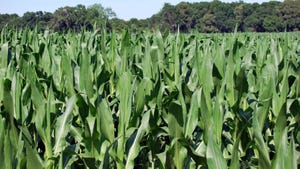
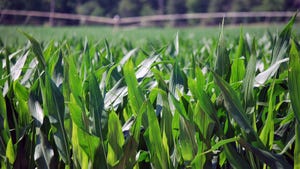
As expected, the Agriculture Department lowered the corn production forecast in its August crop report released Aug. 11 due to heat stress over much of the Corn Belt.

Economists with the American Farm Bureau Federation continue to stress that tight supplies mean the U.S. needs every bushel of corn farmers can produce this year.

“Analysts were expecting to see a drop in both average yield and production compared to the July report, but the yield and production numbers actually came out lower than what market watchers were anticipating,” said Todd Davis, AFBF crops economist.

“This tells us we still have a very tight supply situation in corn this year. We will need a good harvest this fall to meet market demands and add to our very tight stocks.”

USDA forecast corn production at 12.9 billion bushels in its August report, which is 4 percent larger than 2010 production, and if realized, will be the third largest corn crop on record. However, the August estimate is 5 percent lower than USDA’s July crop estimate, when production was forecast to be 13.5 billion bushels.

“The big drop in production, compared to the July report, is clearly due to the summer heat wave that slammed the corn crop during pollination,” Davis said.

USDA forecasts the average yield for corn to be 153 bushels per acre this year. In July, the average yield was pegged at 158.7 bushels per acre by the agency. Davis said analysts were expecting yields to average 155-158 bushels per acre.

“It is a tale of two cities with the corn crop this year,” Davis said. “The western Corn Belt is faring better weather-wise than the eastern Corn Belt. The corn crop is doing better in Illinois, Iowa, Minnesota, Nebraska and Wisconsin, while it is below average in Indiana, Colorado, the Dakotas and the Southern states.”

However, Davis said tight corn supplies are still a concern, which is why corn farmers are hoping for a big harvest this year.

“USDA is pegging 2011-2012 ending corn stocks at 714 million bushels, which represents just 20 days of supply. We are on the razor’s edge when it comes to reserves,” Davis said.

Discuss this article 1

In consideration to this article and due to the fact that the demand for such products are increasing, yet because of the recent tightening how do we intend to have enough supply to feed our growing nation? Taking into consideration also the fact that our population will grow deramatically in the next few years. If we are struggling to provide for our nation now due to the constant tightening, how will we be able to feed the additional people?

By curious and questionable (not verified)  on Feb 27, 2012
Post new comment
Sign In or register to use your Southeast Farm Press ID

(optional)

Continuing Education Courses
New Course

The 2,000-member Weed Science Society of America’s (WSSA) Herbicide Resistance...

New Course
The course details six of the primary diseases affecting citrus: Huanglongbing (Citrus...
Potassium nitrate has a positive effect in controlling plant pests and diseases when applied...
Farmer-to-Farmer Used Equipment