Plant breeders focus on organic crops

Nov 16, 2009 10:30 AM, By Dave Caldwell, North Carolina State University

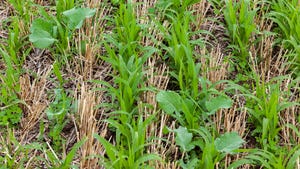
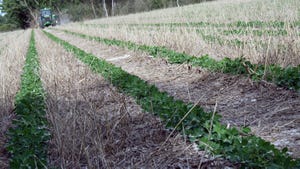
Growing organic field crops such as corn, peanuts, soybeans and wheat is a niche market in North Carolina. But it is expanding.

Growers of organic crops in North Carolina and across the Southeast will get some much needed help as plant breeders at North Carolina State University launch an effort to develop corn, peanut, soybean and wheat varieties adapted to being grown organically.

A $1.2 million U.S. Department of Agriculture grant will fund the effort, said Chris Reberg-Horton, assistant professor of crop science in the College of Agriculture and Life Sciences at North Carolina State.

Reberg-Horton and George Place, crop science research associate at North Carolina State, will coordinate the effort.

Reberg-Horton said the three-year grant will be used to develop corn, soybean, peanut and wheat varieties with traits identified by farmers as necessary for organic production.

Growing organic field crops such as corn, peanuts, soybeans and wheat is a niche market in North Carolina, Reberg-Horton said, but is expanding.

He said the state now grows about 8,000 acres of organic field crops, estimating that 60 growers are involved in organic crop production.

That’s a drop in the bucket compared to the acreage devoted to field crops grown using conventional methods.

North Carolina farmers typically grow more than 1 million acres of corn and soybeans each year and roughly half a million acres of cotton and wheat, according to the North Carolina Department of Agriculture and Consumer Services.

Organic crops are gown without the chemical herbicides and insecticides that growers of conventional crops use to protect their plants.

Reberg-Horton said most of the organic corn and soybeans produced in North Carolina are used to make animal feed, which is fed to chickens and dairy cows that produce organic eggs and milk. Organic wheat is used to make organic flour. There is little organic peanut production in the state.

Reberg-Horton said North Carolina has become something of a center for organic field crop production in the Southeast. A number of organic crop processors have located in the state. North Carolina also is home to the largest organic egg producer in the nation along with two mills that produce organic flour and an organic soybean crusher.

The presence of organic crop processing facilities may have aided North Carolina State in securing the grant, but Reberg-Horton also pointed out that North Carolina State has one of the largest if not the largest public plant breeding programs in the world.

Four plant breeders will be involved in the organic breeding effort. Major Goodman, William Neal Reynolds and distinguished university professor of crop science, will work on corn. Tommy Carter, research geneticist with the U.S. Department of Agriculture Agricultural Research Service and professor of crop science, will work on soybeans. Paul Murphy, professor of crop science, will work on wheat, and Tom Isleib, professor of crop science, will work on peanuts.

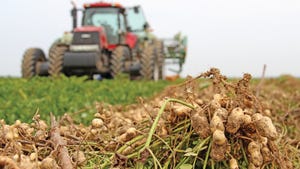
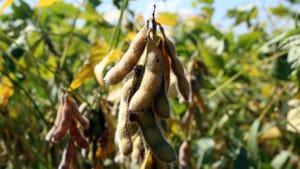
Reberg-Horton said breeding will focus on developing varieties with the traits growers need to be successful. Soybean breeding will likely focus on developing varieties better able to compete with weeds. Resistance to seedling diseases, diseases that attack the plant just after seeds germinate, will be important in peanuts. Peanut growers treat their seeds with pesticides before planting, but that option isn’t open to organic growers.

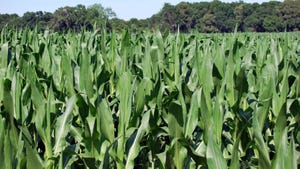
Corn breeding will focus on preventing contamination, or cross pollination, with genetically modified corn. Pollen from fields in which genetically modified corn is grown can drift on the wind for several miles and end up cross pollinating corn in a field where organic corn is grown.

Reberg-Horton said corn that contains what are known as gametophytic genes cannot be pollinated by non-gametophytic corn types. Breeding efforts will focus on developing organic corn varieties with gametophytic genes.

Early maturity will also be important because organic corn growers like to plant later in the growing season in order to avoid seed diseases that are aided by cold soil. Wheat breeding will focus on developing allelopathic wheat plants. Allelopathy is the ability of some plants to produce biochemicals that discourage the growth of other plants, such as weeds.

As part of the breeding effort, Reberg-Horton said annual forums will be held at which growers will be asked what they would find useful in new crop varieties. The first forum will be next Jan. 15 in New Bern, while a second will be in late January in Chattanooga, Tenn.

In addition, Reberg-Horton plans to ask plant breeders at other universities for samples of plant material being developed for conventional farming. These samples will be tested on North Carolina farms to see if some of them have characteristics that may be useful to organic growers. Daryl Bowman, associate professor of crop science, will be in charge of this testing effort.

Reberg-Horton and growers will work with Michael Sligh of the Rural Advancement Foundation International (RAFI-USA) to reach out to farmers throughout the Southeast, to connect the broader farming community to public breeders and to ensure that the needs and concerns of organic farmers are addressed by breeding efforts. RAFI-USA is a non-governmental organization (NGO) in Pittsboro, N.C., whose mission is to ensure a safe and healthy food system by supporting family farms and rural communities.

e-mail: dave_caldwell@ncsu.edu

Get Copyright ClearanceWant to use this article? Click here for options!
© 2010 Penton Media, Inc.


Latest Jobs

resources

events icon events

product info icon tradeshows

tradeshow icon digests

research icon photos

Continuing Education

Accredited in Florida, Georgia, New Mexico, Oklahoma, Texas, South Carolina and Tennessee:


(New Course)
Weed Resistance Management in Cotton

This course covers a wide range of options to effectively control weeds in cotton and reduce the risk of weed resistance management. It is accredited for hours/units for licensed/accredited applicators in 7 U.S. Cotton Belt states (Florida, Georgia, New Mexico, Oklahoma, Texas, South Carolina an d Tennessee. CCA credit is pending).

(New Course)
New Mode of Action Chemistry for Vegetable Production

Integration of a new mode of action compound like Coragen into IPM and IRM programs to control Lepidoptera in leafy greens, fruiting vegetables, peppers and brassica or cole crops is always welcome. This online CE accredited course details how best to use this new mode of action insecticide in intensive vegetable production. It is accredited by the Certified Crop Adviser (CCA) program and by state agencies for licensed applicators in Texas, Georgia, Florida, New Jersey and Pennsylvania.

(New Course)
Utilizing Calcium as Nutrient That Protects Against Disease Organisms

This online accredited course focuses on Calcium, an important plant nutrient in fertilizer management for maximum, healthy plant development as well as disease and pest prevention. It is accredited by the Certified Crop Adviser (CCA) program and for licensed applicators in licensed Georgia, Florida, Pennsylvania and New Jersey. Credit applications are pending in South Carolina, Tennessee, Virginia, West Virginia and Washington.

This course is accredited in Texas, Oklahoma, New Mexico, Virginia, West Virginia and Wyoming as well as for CCA credits:

(New Course)
Spray Drift Management

Keeping crop protection chemicals on the crop for which they are intended has been a cornerstone of farming not only to protect neighboring crops, but to not waste money allowing products to drift off the intended target. This accredited online continuing education course covers the critical elements of spray drift management.

New Course
The ABCs of MRLs

American agriculture exports 20 to 30 percent of its production annually. For specific commodities, the percentage is much higher. When recommending and applying pest management products for crops, license Pest Control Advisers (PCAs)  and applicators and farmers must be aware of which products applied are in compliance with Maximum Residue Limits (MRLs) established by foreign customers. This CE course details the MRL issue and why compliance is critical to marketing into world trade.

Back to Top

Browse Print Issues

Additional Resources

subscribe to Farm Press Daily Delta Farm Press Southwest Farm Press Western Farm Press