Oil spill plan deadline 10 weeks away

• Farms in operation on or before Aug. 16, 2002, must maintain or amend their existing plan by Nov. 10, 2011.

• Any farm that began operation after Aug. 16, 2002, but before Nov. 10, 2011, must prepare and use a plan on or before Nov. 10, 2011.

EPA's Oil Spill Prevention, Control and Countermeasure (SPCC) program requires farms and other regulated facilities to prepare a SPCC Plan to prevent oil spills into U.S. waters.

Farms in operation on or before Aug. 16, 2002, must maintain or amend their existing plan by Nov. 10, 2011. Any farm that began operation after Aug. 16, 2002, but before Nov. 10, 2011, must prepare and use a plan on or before Nov. 10, 2011.

The SPCC program applies to a farm which:

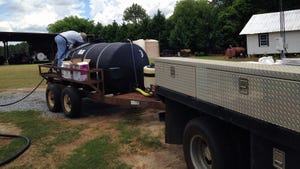
• Stores, transfers, uses or consumes oil or oil products, such as diesel fuel, gasoline, lube oil, hydraulic fluid, adjuvant oil, crop oil, vegetable oil or animal fat; and

• Stores more than 1,320 U.S. gallons in above-ground containers larger than 55 gallons or stores more than 42,000 U.S .gallons in completely buried containers; and

• Could reasonably be expected to discharge oil to waters of the U.S. or adjoining shorelines, such as interstate waters, and intrastate lakes, rivers and streams.

SPCC plans include measures such as using suitable containers, identifying contractors to clean up an oil spill, secondary containment for spills and periodic inspections of pipes and containers.

Many farmers will need to have their plan certified by a professional engineer. However, a farmer may be eligible to self-certify his plan if the farm has a total oil storage capacity between 1,320 and 10,000 gallons in aboveground containers with no single container larger than 5,000 gallons and the farm has a good spill history.

More information is on the NCC’s web site at www.cotton.org/tech/safety/oilsp.cfm.


Discuss this article 1

With the deadline to become compliant with the EPA so close, there are far too many farmers and ranchers that have not acted. As an environmental regulatory compliance company, the feedback we have been given is that many don’t fully understand the law. Their primary source of information has been back and forth discussions with their peers, which fuel resentment, but doesn’t really help them to manage the issue.

For several months now we have been offering free seminars to farmers that outline the law and how it will affect them. We discuss secondary containment, cleanup and compliance guidelines. Many farmers that must have a spill plan can do so without a professional engineer, which is a self certification. We can provide the tools to do this at a minimal cost with guaranteed results.

For those that need a Professional Engineered plan, the NRCS has $3 Million in a Pilot Initiative to help farmers and ranchers get into compliance. The states participating are Idaho, Louisiana, Nevada, New York, North Dakota, Oklahoma, Texas, Utah and the Caribbean area. This money can both help cover the expenses of the PE spill plan and secondary containment construction costs. There are stipulations that will have to be met, for example, your PE must be on an approved list before your plan will be considered for reimbursement. There’s lots of misinformation out there unfortunately and the farmers are suffering because of it.

Interested in setting up a seminar or prefer a one-on-one consult? Both are free of charge!

The Compliance Group
Edmond, Oklahoma
(855) 755-7526
www.agCompliance.com

By Tim Warner (not verified)  on Oct 13, 2011
Post new comment
Sign In or register to use your Southeast Farm Press ID

(optional)

Continuing Education Courses
New Course
The course details six of the primary diseases affecting citrus: Huanglongbing (Citrus...
Potassium nitrate has a positive effect in controlling plant pests and diseases when applied...
This online CE course details sound mechanical irrigation design and management practices to...
Farmer-to-Farmer Used Equipment