Harvest delays create potential crisis

Nov 6, 2009 10:00 AM, By Paul L. Hollis, Farm Press Editorial Staff

"Prior to September, many producers were expecting to harvest a bumper crop and were very optimistic for the upcoming harvest season. Uncommon and unfavorable precipitation during September and October have degraded various crops and caused poor harvesting conditions, which caused the harvest to be behind schedule by around four to six weeks."

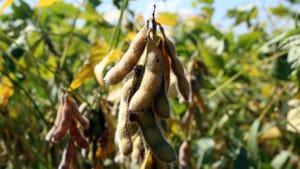
Alabama Commissioner of Agriculture Ron Sparks is calling it a “potential crisis” — the rainy weather conditions throughout most of September and October that have frustrated growers who were eyeing pretty good cotton, peanut, soybean and corn crops.

SOME PRODUCERS IN the lower Southeastern states finally saw enough clear skies during the first week of November to harvest cotton, peanuts and soybeans, following almost two months of rainy weather. Harvest in parts of Alabama, Georgia and north Florida has been delayed anywhere from two to four weeks this year due to excessive moisture.

The same holds true for producers in Georgia and north Florida, where harvest has been delayed by almost continuous rainfall, during what is usually the driest months of the year.

“Prior to September, many producers were expecting to harvest a bumper crop and were very optimistic for the upcoming harvest season,” says Sparks. “Uncommon and unfavorable precipitation during September and October have degraded various crops and caused poor harvesting conditions, which caused the harvest to be behind schedule by around four to six weeks.”

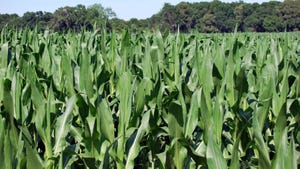
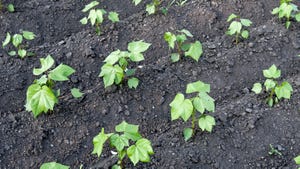
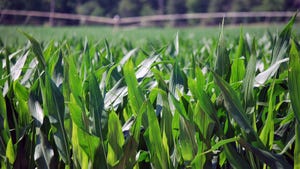
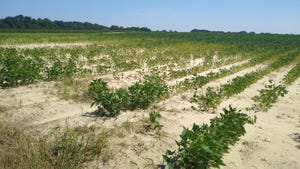
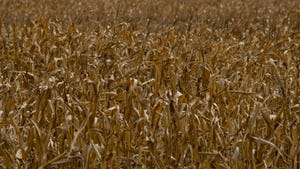
The major crops affected by the recent rainfall are cotton, soybeans, corn and peanuts, says the Commissioner. “Reports indicate that our state is in dire need of dry weather within the next two weeks, which may eliminate a potential state disaster,” he said in early November. “Producers are already suffering from heavy September and October rainfall and dry conditions will not eliminate damage that has already taken place to crops across the state. Many producers are experiencing a sharp decrease in crop yield, lower grading, and crop damage from recent rainfall.”

On top of poor weather and harvesting conditions, producers will likely see decreased income for their commodities, according to a press release from Sparks’ office. “With the current economic times, Alabama agricultural producers from various commodity levels will likely face decreased profits for the 2009 growing season. According to a recent USDA release, net farm income is forecast to be $54 billion in 2009, down $33.2 billion (38 percent) from the preliminary estimate of $87.2 billion for 2008. The 2009 forecast is $9 billion below the average of $63.2 billion in net farm income earned in the previous 10 years.”

Sparks says costs of necessities such as fuel and fertilizer have decreased as compared to the past two seasons. However, most all agriculture commodity market prices have dropped tremendously over the past eight to 12 months, which may contribute to farm profit losses.

“The bottom line is that Alabama producers are uncertain as to what the commodity markets will bring forth and where agriculture in our state is going,” says Sparks. “The recent weather conditions over the past two months will definitely have a negative impact on Alabama’s crop harvest.”

In Alabama, corn was being rated 14 percent poor, 37 percent fair and 41 percent good while cotton was 20 percent poor, 40 percent fair and 33 percent good. Peanuts were 3 percent poor, 40 percent fair and 52 percent good and soybeans were 7 percent poor, 35 percent fair and 48 percent good. Very little of the state’s crops were rated as excellent.

Harvest was running behind the five-year average, especially for peanuts and soybeans. During the last week of October, most Alabama farmers were kept out of their fields due to rainy conditions.

Donald Mann, Extension director for Alabama’s Jackson County, said farmers in his area were in dire need of dry weather in late October. The crops were heavily damaged with high moisture, and combines and cotton pickers were getting stuck and ruining the cropland. Some soybean yields were good, while others suffered damages, he said.

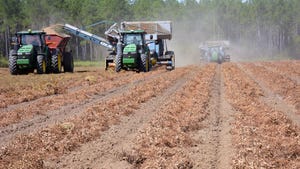
Leonard Kuykendall, regional Extension agent for Autauga County in central Alabama, added that his area experienced another wet week in late October. Most cotton was defoliated, peanuts had been dug but not combined, and soybean yields were fair with less weather damage than previously expected, he said. Corn harvest was still ongoing he added.

William Birdsong, agronomist at the Wiregrass Research and Extension Center in southwest Alabama, reported that wet and rainy conditions continued to delay harvest for row crops. Cotton yields and lint quality continued to suffer as a result of the wet conditions, he said. Less than 5 percent had been harvested in his area, and this could go down as the worst crop in years if the rain does not subside.

Weather conditions also were devastating to potential peanut yields, said Birdsong. Some producers may have lost up to a ton per acre due to the inability to successfully harvest peanuts in a timely manner.

In Georgia, late October rains also slowed field work and many growers were waiting for fields to dry so they could continue harvest. Some producers were unable to harvest their last cutting of hay due to excess moisture, and cotton, soybean and peanut harvests were still running behind schedule. In some areas, crop quality has suffered from high moisture.

Georgia’s cotton crop, during the final week in October was rated as 10 percent poor, 37 percent fair and 42 percent good. The state’s peanut crop was rated 4 percent poor, 28 percent fair and 49 percent good.

e-mail: phollis@farmpress.com

Get Copyright ClearanceWant to use this article? Click here for options!
© 2010 Penton Media, Inc.


Latest Jobs

resources

events icon events

product info icon tradeshows

tradeshow icon digests

research icon photos

Continuing Education

Accredited in Florida, Georgia, New Mexico, Oklahoma, Texas, South Carolina and Tennessee:


(New Course)
Weed Resistance Management in Cotton

This course covers a wide range of options to effectively control weeds in cotton and reduce the risk of weed resistance management. It is accredited for hours/units for licensed/accredited applicators in 7 U.S. Cotton Belt states (Florida, Georgia, New Mexico, Oklahoma, Texas, South Carolina an d Tennessee. CCA credit is pending).

(New Course)
New Mode of Action Chemistry for Vegetable Production

Integration of a new mode of action compound like Coragen into IPM and IRM programs to control Lepidoptera in leafy greens, fruiting vegetables, peppers and brassica or cole crops is always welcome. This online CE accredited course details how best to use this new mode of action insecticide in intensive vegetable production. It is accredited by the Certified Crop Adviser (CCA) program and by state agencies for licensed applicators in Texas, Georgia, Florida, New Jersey and Pennsylvania.

(New Course)
Utilizing Calcium as Nutrient That Protects Against Disease Organisms

This online accredited course focuses on Calcium, an important plant nutrient in fertilizer management for maximum, healthy plant development as well as disease and pest prevention. It is accredited by the Certified Crop Adviser (CCA) program and for licensed applicators in licensed Georgia, Florida, Pennsylvania and New Jersey. Credit applications are pending in South Carolina, Tennessee, Virginia, West Virginia and Washington.

This course is accredited in Texas, Oklahoma, New Mexico, Virginia, West Virginia and Wyoming as well as for CCA credits:

(New Course)
Spray Drift Management

Keeping crop protection chemicals on the crop for which they are intended has been a cornerstone of farming not only to protect neighboring crops, but to not waste money allowing products to drift off the intended target. This accredited online continuing education course covers the critical elements of spray drift management.

New Course
The ABCs of MRLs

American agriculture exports 20 to 30 percent of its production annually. For specific commodities, the percentage is much higher. When recommending and applying pest management products for crops, license Pest Control Advisers (PCAs)  and applicators and farmers must be aware of which products applied are in compliance with Maximum Residue Limits (MRLs) established by foreign customers. This CE course details the MRL issue and why compliance is critical to marketing into world trade.

Back to Top

Browse Print Issues

Additional Resources

subscribe to Farm Press Daily Delta Farm Press Southwest Farm Press Western Farm Press