Herbicide resistance ominous threat to cotton

Feb 7, 2007 10:18 AM, By Paul L. Hollis
Farm Press Editorial Staff

“This Palmar amaranth stuff makes me glad I am 18 months from retirement.” That recent quote from Alan York, North Carolina State University weed scientist, underscores the urgency of the current herbicide resistance problem facing U.S. cotton growers, says Stanley Culpepper, University of Georgia Extension weed scientist.

Culpepper presented a herbicide resistance status report at the recent Beltwide Cotton Conferences held in New Orleans.

Herbicide-resistant weeds are not a new problem, having been around for about 40 years, but the problem has grown rapidly since 1990, says Culpepper. Growers’ reliance on a small number of herbicides across a wide range of crops has intensified the problem, he adds.

The Weed Science Society of America, says Culpepper, defines herbicide resistance as an “inherited ability of a biotype of a weed to survive and reproduce following exposure to a dose of herbicide normally lethal to the wild type.” That definition, he says, now applies to a significant number of troublesome weeds throughout most of the United States, but especially in the South.

The reported cases of herbicide-resistant weeds have exploded in recent years, he says, with the most recent numbers being triple that seen in the early 1990s.

Some of the most significant cases included the discovery in 1973 of goosegrass that was resistant to dinitroaniline (Prowl, Treflan) in an area of North Carolina. By 1994, this resistance had been noted in seven Mid-South and Southeastern states.

Then, in 1985, cocklebur resistant to MSMA and DSMA was discovered in South Carolina. By 1994, this resistance had been confirmed in seven Southern states.

From this history, resistance now has grown to be an issue of great significance, says Culpepper. “The current round of resistance includes tougher weeds, and they are resistant to a narrower selection of herbicides — mainly ALS herbicides and glyphosate — that are used by most farmers across multiple crops,” he says.

This resistance includes ALS-resistant pigweeds and glyphosate-resistant horseweed and ragweed. In addition, there’s suspected but not confirmed resistance to glyphosate in lambsquarters and Italian ryegrass.

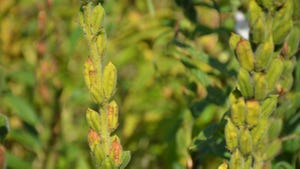
But Culpepper saves the label “potentially devastating” for glyphosate-resistant Palmer amaranth or pigweed.

Palmer amaranth, he says, is in a class of its own in terms of herbicide resistance. Since 1991, ALS-resistant pigweed has been confirmed in 19 states, and it’s found on an estimated 400,000 acres. Growers no longer can control the weed just by shifting among the various ALS-type compounds, he says.

“Once you have ALS-resistant pigweed, none of the products on the ALS herbicide list works,” he says. This list includes such commonly used products as Accent, Ally/Cimarron, Beacon, Beyond, Cadre, Classic, Envoke, Exceed, Express, Finesse, FirstRate, Glean, Harmony Extra, Maverick Pro, Osprey, Peak, Permit, Pursuit, Python, Scepter, Staple and Strongarm.

In a 2005 ALS-resistant pigweed survey that included 61 locations and 21 counties in Georgia, 84 percent of the treated plants survived, says Culpepper. “It’s a tough competitor that makes a big plant with the means to propagate and survive. A lone female Palmer amaranth plant can produce 400,000 to 600,000 seed per plant,” he says.

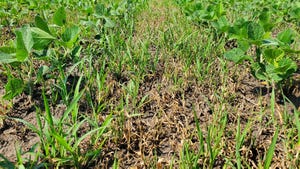
Palmer amaranth also has shown resistance to glyphosate, and this could be a devastating development for growers, says Culpepper. Glyphosate-resistant Palmer amaranth has now been confirmed in four locations in Georgia and five in North Carolina. Suspected examples also have been found in Arkansas, South Carolina and Tennessee.

“As farmers continue to plant successive seasons of Roundup Ready cotton, Roundup Ready soybeans and Roundup Ready corn, it’s only a matter of time before glyphosate resistance occurs,” says Culpepper.

The adoption of Roundup Ready technology has been rapid in recent years, accounting for about 10 million acres of cotton in 2006. The percentage of cotton planted to Roundup Ready varieties has especially risen in the South. This past year, it’s estimated that 100 percent of the cotton planted in South Carolina was Roundup Ready, while Tennessee and North Carolina planted 99 percent Roundup Ready technology. Georgia, Florida and Mississippi planted 98 percent Roundup Ready varieties and Alabama had 97 percent.

Yet another problem — glyphosate-resistant horseweed — has been confirmed in 14 states, says Culpepper. It was initially discovered in 2000. “Horseweed spreads easily, and it’s light, wing-like seed are carried by wind, equipment and other means.”

Culpepper recommends that growers follow a preventative resistance management plan as they set their weed control programs for the 2007 crop.

Among his recommendations are the following:

• Reducing herbicide reliance, as is practical.

• Diversifying modes of action (MOA), including using multiple MOAs within a crop and rotating crops to introduce new MOAs.

• Detecting resistance early to deal with problem populations before they can spread in a field.

e-mail: phollis@farmpress.com

Get Copyright ClearanceWant to use this article? Click here for options!
© 2009 Penton Media, Inc.


Latest Jobs

resources

events icon events

product info icon tradeshows

tradeshow icon digests

research icon photos

Continuing Education

Accredited in Florida, Georgia, New Mexico, Oklahoma, Texas, South Carolina and Tennessee:


(New Course)
Weed Resistance Management in Cotton

This course covers a wide range of options to effectively control weeds in cotton and reduce the risk of weed resistance management. It is accredited for hours/units for licensed/accredited applicators in 7 U.S. Cotton Belt states (Florida, Georgia, New Mexico, Oklahoma, Texas, South Carolina an d Tennessee. CCA credit is pending).

(New Course)
New Mode of Action Chemistry for Vegetable Production

Integration of a new mode of action compound like Coragen into IPM and IRM programs to control Lepidoptera in leafy greens, fruiting vegetables, peppers and brassica or cole crops is always welcome. This online CE accredited course details how best to use this new mode of action insecticide in intensive vegetable production. It is accredited by the Certified Crop Adviser (CCA) program and by state agencies for licensed applicators in Texas, Georgia, Florida, New Jersey and Pennsylvania.

(New Course)
Utilizing Calcium as Nutrient That Protects Against Disease Organisms

This online accredited course focuses on Calcium, an important plant nutrient in fertilizer management for maximum, healthy plant development as well as disease and pest prevention. It is accredited by the Certified Crop Adviser (CCA) program and for licensed applicators in licensed Georgia, Florida, Pennsylvania and New Jersey. Credit applications are pending in South Carolina, Tennessee, Virginia, West Virginia and Washington.

This course is accredited in Texas, Oklahoma, New Mexico, Virginia, West Virginia and Wyoming as well as for CCA credits:

(New Course)
Spray Drift Management

Keeping crop protection chemicals on the crop for which they are intended has been a cornerstone of farming not only to protect neighboring crops, but to not waste money allowing products to drift off the intended target. This accredited online continuing education course covers the critical elements of spray drift management.

Back to Top

Browse Print Issues

Additional Resources

subscribe to Farm Press Daily Delta Farm Press Southwest Farm Press Western Farm Press