USDA, China sign biofuels agreement

Aug 21, 2008 10:28 AM

The U.S. Department of Agriculture (USDA) and the Ministry of Science and Technology (MOST) of the People’s Republic of China have signed an important agreement to collaborate on biofuels research.

The signing came during a meeting of over 200 scientists, industry leaders and government officials in Houston, Texas during the International Conference on Sorghum for Biofuel.

“We have an existing cooperation between USDA and the Chinese Ministry for Science and Technology,” said Eileen Herrera, Acting Deputy Director for the Office of International Research Programs at USDA’s Agriculture Research Service (ARS).

“We cooperate on several initiatives. Signing this protocol represents formal cooperation in the area of biofuels research.”

Existing cooperation between the U.S. and China on science and technology was originally signed in 1979. In 2002, USDA and MOST signed a specific agreement paving the way for this agreement between Tsinghua University in Bejing and ARS’s National Center for Ag Utilization Research (NCAUR).

The agreement establishes the intent to cooperate in establishing processes and infrastructure for conversion of sweet sorghum and other feedstocks to ethanol. This agreement represents an important step forward in the collaboration of some of the world’s top scientists to contribute to alternative energy research through the development of alternative feedstocks.

“Today’s signing establishes a virtual joint center for a series of projects that are very specific to the two centers,” said Michael Abbey, International Affairs Specialist and Asia Program Coordinator for ARS. “We also intend to include universities and business in both China and the United States. We can now focus on specific areas of cooperation.”

Shi-Zhong Li of the Institute of New Energy Technology at Tsinghua University affirmed the focus of this collaboration. “We will work on sweet sorghum conversion to ethanol and the use of cellulosic sorghum for ethanol.”

“Whether it’s for grain, sugar or a high-tonnage source of lignocelluose, most in attendance at this conference are committed to making sorghum the preferred dedicated feedstock for production of ethanol and other liquid fuels,” said Mark Hussey, Interim vice-chancellor for Agriculture and Life Sciences at Texas A&M University and Director of Texas AgriLife Research.

Tim Lust, CEO of the National Sorghum Producers noted the importance of such an agreement.

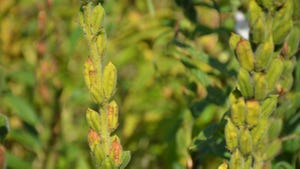
“This is a milestone for the sorghum industry and for our members as the world turns its attention to sorghum. Sorghum’s water sipping qualities, short growing season and ability to grow on 80 percent of the world’s land, including some marginal agricultural areas, really lends it to biofuels production as the U.S. and the world face pressing issues with energy independence and economic difficulties.”

NSP represents U.S. sorghum producers. The organization works to ensure the profitability of sorghum production coast to coast through legislative representation, regulatory representation, and education. To learn more visit National Sorghum Producers.

Get Copyright ClearanceWant to use this article? Click here for options!
© 2009 Penton Media, Inc.


Latest Jobs

resources

events icon events

product info icon tradeshows

tradeshow icon digests

research icon photos

Continuing Education

Accredited in Florida, Georgia, New Mexico, Oklahoma, Texas, South Carolina and Tennessee:


(New Course)
Weed Resistance Management in Cotton

This course covers a wide range of options to effectively control weeds in cotton and reduce the risk of weed resistance management. It is accredited for hours/units for licensed/accredited applicators in 7 U.S. Cotton Belt states (Florida, Georgia, New Mexico, Oklahoma, Texas, South Carolina an d Tennessee. CCA credit is pending).

(New Course)
New Mode of Action Chemistry for Vegetable Production

Integration of a new mode of action compound like Coragen into IPM and IRM programs to control Lepidoptera in leafy greens, fruiting vegetables, peppers and brassica or cole crops is always welcome. This online CE accredited course details how best to use this new mode of action insecticide in intensive vegetable production. It is accredited by the Certified Crop Adviser (CCA) program and by state agencies for licensed applicators in Texas, Georgia, Florida, New Jersey and Pennsylvania.

(New Course)
Utilizing Calcium as Nutrient That Protects Against Disease Organisms

This online accredited course focuses on Calcium, an important plant nutrient in fertilizer management for maximum, healthy plant development as well as disease and pest prevention. It is accredited by the Certified Crop Adviser (CCA) program and for licensed applicators in licensed Georgia, Florida, Pennsylvania and New Jersey. Credit applications are pending in South Carolina, Tennessee, Virginia, West Virginia and Washington.

This course is accredited in Texas, Oklahoma, New Mexico, Virginia, West Virginia and Wyoming as well as for CCA credits:

(New Course)
Spray Drift Management

Keeping crop protection chemicals on the crop for which they are intended has been a cornerstone of farming not only to protect neighboring crops, but to not waste money allowing products to drift off the intended target. This accredited online continuing education course covers the critical elements of spray drift management.

Back to Top

Browse Print Issues

Additional Resources

subscribe to Farm Press Daily Delta Farm Press Southwest Farm Press Western Farm Press