Sweet potatoes enter biofuels arena

Nov 18, 2008 9:43 AM, By Dave Caldwell
North Carolina State University

It’s too early just yet to divine the future of the sweet potato, but a team of College of Agriculture and Life Sciences researchers at North Carolina State University is working on several fronts to make what the scientists call industrial sweet potatoes a viable crop for the state’s growers.

Making a fuel like ethanol from sweet potatoes is a relatively straight-forward process. To begin with, sweet potatoes are a good source of starch. Just process sweet potatoes to turn that starch into sugars, ferment the sugars, and you can make ethanol. The drawback is the cost.

At this point, sweet potatoes are not an economically competitive fuel source. It costs more to grow and process sweet potatoes than many other fuel sources. Indeed, Craig Yencho, associate professor of horticultural science and sweet potato breeder, estimates it costs eight times as much to grow an acre of sweet potatoes as an acre of corn. But Yencho and others are out to change that.

Yencho and a colleague, Ken Pecota, horticultural science researcher, are working both to breed industrial sweet potatoes with high starch content and to lower growing costs.

They have developed industrial sweet potatoes with around 32 percent dry matter content. Dry matter refers to what is left after a sweet potato is dried in an oven to remove the water, Pecota explains. Much of what is left is starch, so dry matter content is a good indication of starch content. So-called table stock sweet potatoes, the kind that end up on your table, are typically around 20 percent dry matter. Industrial sweet potatoes produce about 30 percent more starch per acre than corn.

But higher starch content doesn’t get at the high production cost for sweet potatoes. That’s where what Yencho and Pecota call their “cut seed piece project” comes in.

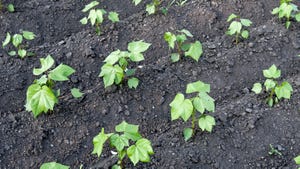
Sweet potatoes are typically planted as small plants by hand. They’re also harvested by hand. To reduce planting costs, Yencho, Pecota and Blake Bowen, a graduate student working on his master’s degree with the team, are conducting experiments to see if they can plant sweet potatoes the same way white potatoes are planted, using cut seed pieces. They point out that seed pieces, pieces of the potato, can be planted mechanically, which has the potential to cut production costs by as much as 20 percent.

When a typical table stock sweet potato is cut into pieces and the pieces planted, these “mother pieces” often “size up” as they grow, Pecota says. When the mother pieces become particularly large, they tend to crack and often the center rots away, leaving a hollow core, reducing biomass.

But some sweet potato mother pieces don’t size up and instead produce daughter storage roots that look like normal sweet potatoes and produce lots of biomass. Yencho and Pecota are breeding high-starch industrial sweet potatoes for this trait. The result: several promising sweet potato lines with high starch content that can be planted mechanically, producing quantities of biomass that can be turned into ethanol.

And turning sweet potatoes into fuel is where Mari Chinn, assistant professor of biological and agricultural engineering, comes into the picture. Chinn and her graduate students, William Duvernay and E. Nicole Hill, have been working with some success on developing more efficient ways to process sweet potatoes to produce ethanol and, perhaps, other products.

Chinn is experimenting with various enzymes and combinations of enzymes to find the recipe that most efficiently converts the starch in sweet potatoes to sugars. She has been able to convert up to 90 percent of the starch in the dry matter to fermentable sugars. She’s working on that last 10 percent.

But all Chinn’s work has been done in the lab, on a small scale. She anticipates challenges in scaling up from the lab to an industrial scale. She’s pretty sure that what works in the lab won’t work exactly the same way in large-scale production.

Yet she also estimates that what she and her students have done in the lab equates to producing 700 gallons of ethanol per acre of sweet potatoes. By comparison, an acre of corn typically produces around 400 gallons of ethanol.

A USDA Agricultural Research Service study showed that sweet potatoes yielded two to three times as much carbohydrate for fuel ethanol production as field corn (see http://www.ars.usda.gov/is/pr/2008/080820.htm.

Chinn emphasizes there are still many questions. For example, in an industrial setting, is it more efficient to process fresh sweet potatoes or to dry sweet potatoes and make them into flour, which would then be processed? It takes more energy to dry sweet potatoes and process them into flour, but the flour would be easier to store and require less processing volume. And the conditions needed for the starch conversion process would be different with flour.

Chinn is also working on sweet potatoes with purple flesh. Purple sweet potatoes tend to be high in anthocyanins, pigments that are also powerful antioxidants, and high in dry matter. It might be possible, Chinn thinks, to extract anthocyanins, which would have value as a natural food colorant, then process the remaining starch to produce sugar and ethanol, thus producing two valuable products from the same sweet potato.

Why are sweet potatoes considered a good biofuel for North Carolina? To begin with, North Carolina already grows a lot of sweet potatoes. Close to 40 percent of the nation's sweet potatoes come from North Carolina. Sweet potatoes are grown in North Carolina by a range of farmers: small, medium, and large. There's plenty of sweet potato-growing expertise in the state.

Sweet potatoes are well-adapted to North Carolina and the Southeastern U.S. Sweet potatoes are drought-tolerant and can produce high yields with minimal fertilizer inputs on a variety of soils. Sweet potatoes can be stored year round.

Then there’s the work of Bryon Sosinski, associate professor of horticultural science. Sosinski and Monica Santa-Maria, a Ph.D. candidate in horticulture, have inserted into sweet potato plants genes from hypothermophilic bacteria.

The genes don’t become active unless they are heated. Heat up sweet potatoes containing the genes, and the starch in the sweet potatoes should hydrolyze into sugars, effectively self-processing.

The next step, Sosinski says, is a large-scale greenhouse test of the transgenic plants. He’ll grow transgenic and non-transgenic plants side-by-side in a greenhouse to see if insertion of the genes has altered yield or other characteristics.

If the greenhouse test is successful, Sosinski plans to begin working to produce transgenic industrial sweet potatoes. The plants he’s working with now are not high dry matter sweet potatoes.

It’s a step-by-step process, but then so, too, is the work of Yencho, Pecota and Chinn. At the end of all those steps may be an agricultural opportunity for North Carolina farmers and a big step toward energy independence for the nation.

Get Copyright ClearanceWant to use this article? Click here for options!
© 2009 Penton Media, Inc.


Latest Jobs

resources

events icon events

product info icon tradeshows

tradeshow icon digests

research icon photos

Continuing Education

Accredited in Florida, Georgia, New Mexico, Oklahoma, Texas, South Carolina and Tennessee:


(New Course)
Weed Resistance Management in Cotton

This course covers a wide range of options to effectively control weeds in cotton and reduce the risk of weed resistance management. It is accredited for hours/units for licensed/accredited applicators in 7 U.S. Cotton Belt states (Florida, Georgia, New Mexico, Oklahoma, Texas, South Carolina an d Tennessee. CCA credit is pending).

(New Course)
New Mode of Action Chemistry for Vegetable Production

Integration of a new mode of action compound like Coragen into IPM and IRM programs to control Lepidoptera in leafy greens, fruiting vegetables, peppers and brassica or cole crops is always welcome. This online CE accredited course details how best to use this new mode of action insecticide in intensive vegetable production. It is accredited by the Certified Crop Adviser (CCA) program and by state agencies for licensed applicators in Texas, Georgia, Florida, New Jersey and Pennsylvania.

(New Course)
Utilizing Calcium as Nutrient That Protects Against Disease Organisms

This online accredited course focuses on Calcium, an important plant nutrient in fertilizer management for maximum, healthy plant development as well as disease and pest prevention. It is accredited by the Certified Crop Adviser (CCA) program and for licensed applicators in licensed Georgia, Florida, Pennsylvania and New Jersey. Credit applications are pending in South Carolina, Tennessee, Virginia, West Virginia and Washington.

This course is accredited in Texas, Oklahoma, New Mexico, Virginia, West Virginia and Wyoming as well as for CCA credits:

(New Course)
Spray Drift Management

Keeping crop protection chemicals on the crop for which they are intended has been a cornerstone of farming not only to protect neighboring crops, but to not waste money allowing products to drift off the intended target. This accredited online continuing education course covers the critical elements of spray drift management.

Back to Top

Browse Print Issues

Additional Resources

subscribe to Farm Press Daily Delta Farm Press Southwest Farm Press Western Farm Press