Biofuels not just about corn

Jun 25, 2008 9:50 AM, By Jim Langcuster
Auburn University

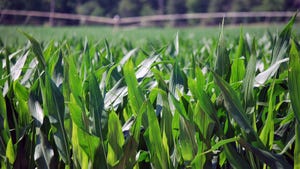
Experts are confident a new generation of biofuel technologies under development at Auburn University no longer will require a tradeoff between U.S. energy self-sufficiency and the steep food prices currently associated with corn-based ethanol.

Currently, the rising cost of food and the growing inability to pay for it have left many consumers not only angry but also eager to pin the blame on ethanol — namely the growing demand for corn as an ethanol feedstock as well as federal fuel mandates that promote ethanol use.

But as two Auburn University experts stress, this doesn’t have to be a balancing act between more biofuels and higher food prices — a fact that will become more apparent to Americans when a new generation of biofuel technologies under development at Auburn becomes commercially available in the next few years.

“One of the misconceptions is that the entire alternative energy program is solely dependent on corn as a feedstock and that you’ve got this natural competition between biofuel and food and feed,” says Larry Fillmer, director of Auburn University’s Natural Resources Management and Development Institute.

But as Fillmer and Steve Taylor, director of the NRMDI’s Center for Bioenergy and Bioproducts, have stressed time and again, the bioenergy picture includes more than just corn.

“It’s not just about corn, and in the long-run, our potential is to get way beyond corn,” says Taylor.

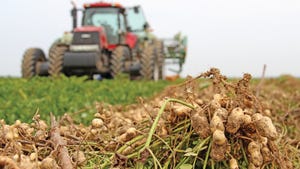
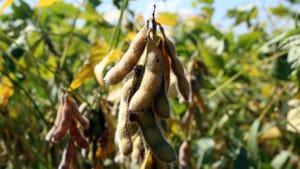
For now, corn and, to a lesser extent, soybeans are used because they are the low-hanging fruit on the bioenergy landscape. They currently hold an advantage because they can be grown widely and be profitably converted into biofuels in some regions of the United States.

While several factors have combined into a sort of perfect storm to account for spiking food prices, this low-hanging fruit has come with a bitter taste for some, especially consumers, because of the role growing bioenergy demand may have played in rising prices.

But again, Fillmer and Taylor say it’s important for consumers to look at the bigger picture, including the fact that none of the new biofuel sources that will be used with these emerging new technologies is a food crop — an important distinction.

“We’re focusing on potential bioenergy sources beyond the food and feed products that are readily available throughout the state — sources that don’t necessarily take arable land used for feed crops out of production,” he says.

And because many of the stocks used to make this new generation of biofuels are readily available in Alabama, the implications for the state’s economy could be far reaching.

A prime example is forestry by-products, especially the residue — limbs, tops and small-diameter trees, for example — not used in most commercial timber operations.

Auburn researchers hope to develop a cost-effective way to gasify this biomass material and ultimately convert it into fuel and other valuable products.

And when this and other approaches become commercially viable, Alabama and neighboring Southern states will be poised to become some of the nation’s leading biofuel producers.

According to data from the Alabama Forestry Commission and the U.S. Department of Agriculture Forest Service, Alabama could take advantage of roughly 14.6 million tons of unused logging residue and small diameter trees each year. From those 14.6 million tons, Taylor believes it may be possible for Alabama to produce 2 billion gallons of ethanol or other liquid fuels.

To put it another way, Alabama one day may produce as much ethanol from woody biomass and similar types of biomass sources as Iowa produces from corn.

“It’s a theoretical number, but it underscores the potential in this state,” Taylor says.

Get Copyright ClearanceWant to use this article? Click here for options!
© 2009 Penton Media, Inc.


Latest Jobs

resources

events icon events

product info icon tradeshows

tradeshow icon digests

research icon photos

Continuing Education

Accredited in Florida, Georgia, New Mexico, Oklahoma, Texas, South Carolina and Tennessee:


(New Course)
Weed Resistance Management in Cotton

This course covers a wide range of options to effectively control weeds in cotton and reduce the risk of weed resistance management. It is accredited for hours/units for licensed/accredited applicators in 7 U.S. Cotton Belt states (Florida, Georgia, New Mexico, Oklahoma, Texas, South Carolina an d Tennessee. CCA credit is pending).

(New Course)
New Mode of Action Chemistry for Vegetable Production

Integration of a new mode of action compound like Coragen into IPM and IRM programs to control Lepidoptera in leafy greens, fruiting vegetables, peppers and brassica or cole crops is always welcome. This online CE accredited course details how best to use this new mode of action insecticide in intensive vegetable production. It is accredited by the Certified Crop Adviser (CCA) program and by state agencies for licensed applicators in Texas, Georgia, Florida, New Jersey and Pennsylvania.

(New Course)
Utilizing Calcium as Nutrient That Protects Against Disease Organisms

This online accredited course focuses on Calcium, an important plant nutrient in fertilizer management for maximum, healthy plant development as well as disease and pest prevention. It is accredited by the Certified Crop Adviser (CCA) program and for licensed applicators in licensed Georgia, Florida, Pennsylvania and New Jersey. Credit applications are pending in South Carolina, Tennessee, Virginia, West Virginia and Washington.

This course is accredited in Texas, Oklahoma, New Mexico, Virginia, West Virginia and Wyoming as well as for CCA credits:

(New Course)
Spray Drift Management

Keeping crop protection chemicals on the crop for which they are intended has been a cornerstone of farming not only to protect neighboring crops, but to not waste money allowing products to drift off the intended target. This accredited online continuing education course covers the critical elements of spray drift management.

Back to Top

Browse Print Issues

Additional Resources

subscribe to Farm Press Daily Delta Farm Press Southwest Farm Press Western Farm Press