Corn to share center stage in ethanol's future

Aug 30, 2007 6:33 PM, By Cary Blake
Farm Press Editorial Staff


While corn and oilseeds will continue as dependable, renewable sources for manufacturing ethanol and biodiesel in the future, these well known crops will likely share the stage with other plants destined for energy greatness.

The ultimate technology to shape and mold long-term plant-based energy production is either in development or hasn’t been invented yet, according to Stephen Kaffka, an Extension agronomist with the University of California, Davis (UCD), Davis, Calif.

“The plant species to be used will be subject to work by molecular biologists, agronomists, and plant breeders,” Kaffka said. “We’re not clear what the best species will be or the nature of that plant, but it will likely be transformed in the future.”

That’s the snapshot for renewable fuels, according to Kaffka who has his pulse on producing improved plants for biofuels production.

Kaffka is the director of the UCD Long-Term Research on Agricultural Systems Project at the Russell Ranch located between Winters and Davis, Calif. The project is part of UCD’s Agricultural Sustainability Institute where a long-term, large-scale experiment is under way to evaluate the impact of biofuels feedstock production in semi arid and Mediterranean soils.

“We will add new biofuels treatments this year emphasizing the removal of larger amounts of carbon from soils than before. The 14-year project will provide empirical, experimental data for evaluating the consequences of removing more carbon from soils than in the past,” Kaffka said.

Kaffka’s research has focused on oilseeds, sugar, and natural precursor feed stocks for ethanol and biodiesel. His interest also lies in salinity management, working to grow more salt tolerant crops like sugar beets and safflower within salty water that should be evaluated for the use in generating ethanol.

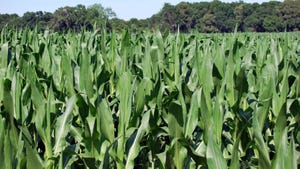
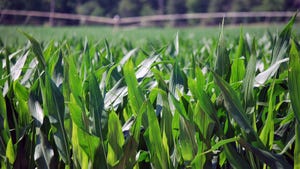
“Corn for ethanol development is here to stay,” Kaffka said. “Corn is grown in large amounts with high efficiency — it’s easy to handle, it’s dried, and can be stored and shipped readily. Corn is a concentrated little nugget of starch that is energy. Farmers can feed the distiller’s grain co-product to cattle.”

“Since California has the largest dairy herd in the nation, corn-based ethanol plants in California remain a good idea,” Kaffka said. “I’ve come to the conclusion that plant-based fuels address a serious need and have a serious prospect for continuity in the future.”

Currently most corn used in California ethanol plants is railed in from other states.

Oilseeds also have a continued bright horizon for biodiesel. Perks of oil seed-biodiesel include easy manufacturing and a higher energy return on investment compared to corn ethanol starch. Oils are easily converted into diesel or other liquid fuels. It’s a better match for smaller companies interested in less complicated technology and less capital-intensive outlays, Kaffka said.

In California, there’s a lot of scrambling in the biofuels industry to lock down sources of waste grease and plant production, Kaffka said.

“These biofuels companies would love to have oilseeds produced within California or nearby at a low enough price to make them suitable feed stocks.”

Other crops holding promise are sugarcane, sugarbeets, and grain sorghum. The Europeans are currently utilizing wheat, barley, and sugarbeets as ethanol sources.

Cellulosic ethanol is a biofuels industry buzzword about producing ethanol from grasses and agricultural wastes versus feedstocks.

“An important fact about grasses and straws is that the cellulose in the plant wall must be broken down to its component sugars. There’s a terrific amount of effort under way on how to efficiently do that,” Kaffka said. “Currently the costs to achieve this is much greater than making ethanol from corn or biodiesel from oilseeds. We haven’t had the breakthrough there yet.”

Growing bermudagrass in saline soils with wastewater for cattle grazing in the San Joaquin Valley (SJV), Calif. is another Kaffka project. “Bermudagrass and other salt tolerant grasses could work as feed stocks once cellulosic technologies are worked out, Kaffka said.

“Switchgrass, a native perennial from the prairie states, is the grass most commonly mentioned for ethanol production. Because switchgrass is not grown in California, we don’t know yet if the grass could efficiently be grown here,” Kaffka said.

Another possible grass source for ethanol is a 10 to 12-foot tall perennial called miscanthus. While generally grown in colder climates, miscanthus dies back in autumn, and the nutrients are returned to the crown. The dry matter is cut off once a year. The Europeans have experimented with miscanthus for almost a decade.

“What I’m trying to push is the idea of using salt tolerant grasses to use salty water in the SJV and elsewhere to help reduce the amount of salty water we have to manage,” Kaffka said. “In my view, combining the solution of one environmental problem with biomass production for energy makes complete sense in the West. There is a large amount of waste water that might be used for biomass production.”

Alfalfa is sometimes discussed as a potential cellulosic energy source packed with advantages. It’s readily fermentable with low amounts of resistant lignin compounds, and doesn’t require high-energy nitrogen input costs. In California, alfalfa for energy production could conflict with other needs since the state is alfalfa deficient due to the dairy industry’s feed demands, Kaffka said.

Other factors that will impact future plants for fuels include public policy and the world price of oil.

“Unless there is a major policy change on ethanol, related subsidies, and import restrictions, the growth of corn-based ethanol production will continue in the U.S. as the primary source of alternative transportation fuels,” Kaffka said.

Policy such as the 2007 farm bill will send a signal to the renewable fuels industry on where to make investment decisions, Kaffka said.

e-mail: cblake@farmpress.com

Get Copyright ClearanceWant to use this article? Click here for options!
© 2008 Penton Media, Inc.


Latest Jobs

resources

events icon events

product info icon tradeshows

tradeshow icon digests

research icon photos

Continuing Education

For National Certified Crop Advisers

A free, accredited, self-study 1-CEU on spray drift management for all for all American Society of Agronomy Certified Crop Advisers in the U.S. and Canada.

ACCREDITED IN CALIFORNIA ONLY:


Almond Pest Management

Get the latest info on almond insect pest management and earn 2 hrs. CE DPR and CCA credit in California.

California Groundwater Protection Regulations

Earn 2 hrs. in California laws and regs CE and learn how to protect California groundwater supplies.

Powdery Mildew Control in California Grapevines

Learn about the No. 1 grape disease in California; earn 2 California CE hours.

ACCREDITED IN CALIFORNIA AND ARIZONA:


Insecticide Resistance Management in Agronomic and Row Crops

A 3-hr. CE approved for California and Arizona licensees and CCAs in both states.

Agronomic Weed Resistance Management in Row Crops, Trees Nuts and Vines

Weeds Resistance Management is approved for 3 hours of CE credit for all California and Arizona licensees and Certified Crop Advisers.

Lepidopterous Pest Management/ Pesticide Safety

This course is approved for 2 hours in Arizona and California (1 hr. of laws/regs; 1 hour Other) and for CCAs.

Managing Spray Drift to Minimize Problems

2-hrs laws and regs for California licensees; 2 hours in Arizona and for CCAs.

Back to Top

Browse Print Issues

Additional Resources

subscribe to Farm Press Daily Delta Farm Press Southwest Farm Press Western Farm Press